
NEWS
North Central Devt Commission ‘ll Drive Regional Transformation, Restructuring – Golu


By David Torough, Abuja
Former member of the House of Representatives from Plateau State, Hon. Timothy Golu, has described the establishment of the North Central Development Commission (NCDC) and similar regional development commissions across Nigeria’s six geopolitical zones as one of the most significant developments in the country’s quest for balanced development.
Golu spoke on the sidelines of a stakeholders’ development summit with the theme, “The Great Leap Forward: A 20-Year Economic, Infrastructural and Social Development Plan for the North Central Region.
”According to the former federal lawmaker, the idea of regional development commissions gained prominence with the establishment of the North East Development Commission (NEDC), following a bill sponsored by the then Speaker of the House of Representatives, Rt.
Hon. Yakubu Dogara, in 2018.He said Dogara personally sponsored the bill in response to the devastating effects of insurgency and underdevelopment in the North East, adding that all 48 members representing the region in the National Assembly supported the initiative.
Golu noted that Dogara’s decision to personally sponsor the bill was unusual because it required him to temporarily step down from the Speaker’s chair and allow the Deputy Speaker to preside over proceedings.
“He had a passion for the North East because he saw that his zone was the most devastated at that time as a result of the activities of Boko Haram,” Golu explained.
He said the commission was conceived to give the region focused attention in areas including security, agriculture, infrastructure and economic development, with funding provided through deductions from the Federation Account in addition to the regular allocations accruing to the states.
However, Golu alleged that the bill suffered delays at the executive level for political reasons before it was eventually assented to by former President Muhammadu Buhari.
He attributed the eventual assent partly to interventions by then First Lady, Aisha Buhari, who, according to him, recognised the implications of allowing the North East to remain without the intervention mechanism.
The former lawmaker said the experience of the North East Development Commission inspired him to introduce a bill for the establishment of the North Central Development Commission.
Golu recalled that the North Central region was already experiencing worsening insecurity, particularly in Plateau, Benue, Taraba and parts of the Middle Belt, even before the scale of insecurity later witnessed in the North West.
“I was attracted, and we have similar problems with the North East. The banditry and insurgency were moving to the North Central,” he said.
He disclosed that he secured support from lawmakers across the North Central, irrespective of religious or political affiliation, but encountered resistance arising from tensions surrounding other legislative and constitutional issues at the time.
According to him, the development commission bill proposed by lawmakers from the South East had been rejected by the House shortly before he was scheduled to present the North Central bill.
Golu said the development led the then Speaker to advise him to withdraw his own bill temporarily to avoid suffering a similar fate.
“After talking to my colleagues, the then Minority Leader from Kogi State supported me, and I had taken all the suggestions and signatures from North Central, both Christians and Muslims. Everybody within the North Central was supporting the bill,” he recalled.
He said the establishment of development commissions for all six geopolitical zones eventually received greater political acceptance under the present administration, culminating in the passage and assent of the relevant legislation.
Golu stressed that the regional commissions represented more than development agencies, arguing that they could eventually become an important component of a broader restructuring of Nigeria’s political and administrative system.
According to him, the commissions could create a framework in which governance operates at four levels — local government, state, geopolitical zone and federal government.
“We now have four levels of government instead of three: you have the local government, the states, the zones and then the federal government,” he said.
He proposed that governors within each geopolitical zone could periodically elect a leader to coordinate regional affairs, while legislative structures at the regional level could provide oversight and representation.
Golu argued that such a system would enable issues peculiar to individual regions to be addressed closer to the people, while state and federal institutions would retain responsibility for matters within their respective jurisdictions.
He predicted that future constitutional amendments could further devolve powers from the federal government to the geopolitical zones and states.
“There will be a complete restructuring, while there will be exclusive items that only the federal government will do. There will be concurrent issues that both the zones, the federal and the state will do,” he said.
The former lawmaker described the establishment of the North Central Development Commission as timely, arguing that the commission would complement existing federal ministries and agencies by bringing development interventions closer to the people.
He said the impact of the North East Development Commission already offered an indication of what could be achieved through targeted regional intervention.
“They are just taking off,” Golu said when asked about measurable impacts of the commissions, noting that the North East commission had, however, recorded progress in employment generation, skills acquisition, agriculture and economic empowerment.
He described the intervention as an important non-kinetic approach to addressing insecurity, arguing that providing jobs, skills and economic opportunities could reduce the pool of unemployed young people vulnerable to recruitment by criminal and extremist groups.
“This is one of the non-kinetic measures of fighting insecurity. Those who would have been involved because they were jobless are now engaged,” he said.
Golu also cited the intervention in the Niger Delta as an example of how targeted regional development programmes could contribute to reducing insecurity.
He recalled that following the escalation of militancy in the Niger Delta, the administration of late President Umaru Musa Yar’Adua introduced an amnesty programme for militants and established the Ministry of Niger Delta Affairs, alongside other interventions.
According to him, the approach demonstrated that security operations alone cannot permanently resolve conflicts rooted in economic deprivation and underdevelopment.
He acknowledged concerns over the management of resources allocated to regional intervention agencies but maintained that effective leadership could turn the commissions into powerful engines of infrastructure, employment and economic development.
“If you have good people who manage well, you see the number of roads in the Niger Delta, at least there is an increase, and then the level of attention,” Golu said.
He therefore urged stakeholders in the North Central to take ownership of the NCDC and develop a long-term development agenda capable of transforming the region economically, socially and infrastructurally.
The former lawmaker said the proposed 20-year development plan for the North Central should serve as a roadmap for leveraging the commission to address the region’s infrastructure deficit, insecurity, unemployment, agricultural challenges and other structural impediments to development
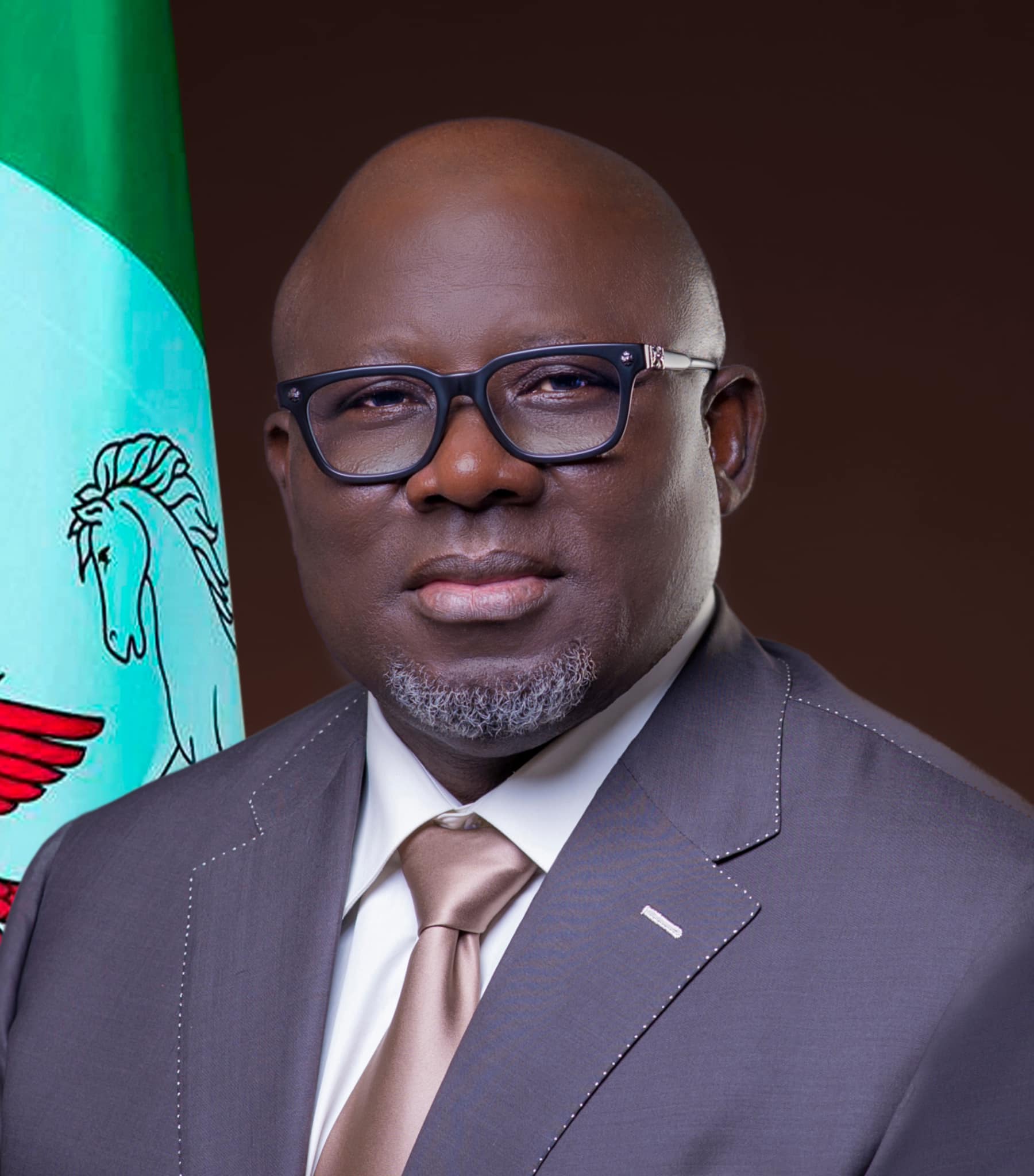
From Francis Sadhere, Delta
Delta State has emerged as the best-performing state in liquidity rating among Nigeria’s 36 states, Commissioner for Finance, Sir Fidelis Okenmor Tilije, has disclosed.
Tilije attributed the development to fiscal discipline, improved internally generated revenue and prudent management of public funds by the administration of Governor Sheriff Oborevwori.
The commissioner made the disclosure during a meeting with management and staff of the Ministry of Finance in Asaba, where he outlined the financial policies and strategies supporting the state government’s development agenda.
He said the administration’s M.O.R.E Agenda had strengthened the state’s financial position through responsible borrowing practices, revenue diversification and reforms designed to improve public financial management.
According to him, Delta State is currently financing its 2026 procurement cycle and implementing major projects across the road, bridge, healthcare and education sectors without taking on new loans.
Tilije described the government’s zero-borrowing approach as a deliberate fiscal policy aimed at meeting development needs with available resources while preventing the accumulation of additional debt.
He explained that the expansion of the state’s revenue base, particularly through non-oil economic activities and improved internally generated revenue, had contributed significantly to its financial stability.
The commissioner stressed that the increase in IGR was not achieved through higher tax rates but through reforms that strengthened revenue collection, widened the tax net, improved compliance and checked leakages.
He added that the government was also working towards introducing more economically sustainable empowerment programmes to improve livelihoods, stimulate economic activities and create greater opportunities for residents.
On workers’ welfare, Tilije said the state had maintained regular salary payments to more than 60,000 public servants, with salaries consistently paid between the 24th and 25th of every month.
He also cited the institutionalisation of the 13th-month salary for public servants as evidence of the administration’s commitment to workers’ welfare and financial security.
In the health sector, the commissioner said the government had sustained free medical services for pregnant women and children below five years of age in government hospitals.
He noted that efforts were also ongoing to upgrade primary healthcare centres across the state to improve access to essential medical services.
Tilije assured residents that the administration would continue to prioritise fiscal responsibility, infrastructure development and investment in human capital, maintaining that prudent management of public resources remained central to achieving its development objectives.
He urged Deltans to support Governor Oborevwori’s re-election bid in 2027, expressing confidence that a continuation of the administration would enable it to consolidate its achievements and pursue further development across the state.

By Tambaya Julius, Abuja
The Nigeria Customs Service (NCS) and the Joint Admissions and Matriculation Board (JAMB) are considering areas of cooperation to improve their operations and strengthen service delivery.
The Comptroller-General of Customs, Adewale Adeniyi, received the JAMB Registrar, Professor Segun Aina, and his delegation at the Service’s Operational Headquarters in Maitama, Abuja, on Friday, October 16, 2026.
During the meeting, Adeniyi praised JAMB for its progress over the years, particularly its use of technology, timely release of examination results and improved placement of candidates into tertiary institutions.
He said the Board’s adoption of technology had made its operations more efficient and improved the process of placing candidates in higher institutions.
“The improvement JAMB has recorded over the years, particularly through the integration of technology into its operations, is commendable,” Adeniyi said.
He expressed confidence in Aina’s ability to sustain the gains and urged the Board’s management team to support his leadership.
The Customs chief also welcomed JAMB’s offer to make its electronic facilities available to the Service.
He explained that Customs officers serving across the country sometimes need designated centres to sit examinations and carry out other official activities.
He said access to the facilities would make it easier for the Service to organise such exercises when necessary.
On JAMB’s request for operational vehicles, Adeniyi acknowledged the importance of transportation to the Board’s nationwide activities.
He said the Service would explore possible ways to assist, depending on available resources and the applicable framework.
Aina said the visit was aimed at establishing a working relationship between the two organisations and identifying areas of mutual support.
“We want to formally come and introduce ourselves. We recognise the important work the Nigeria Customs Service is doing and are aware of the operations you carry out,” he said.
The JAMB registrar disclosed that the Board serves about five million people annually, operates Computer-Based Test (CBT) centres across Nigeria and conducts examinations in more than 15 countries.
He added that JAMB provides electronic services to government agencies and professional bodies, noting that its nationwide operations require adequate vehicles to reach communities, including local government areas, for candidate verification and monitoring of examination standards.
Aina stressed that effective transportation was necessary to ensure proper supervision, protect the integrity of examinations and maintain compliance with established procedures.
Both organisations expressed their willingness to explore practical areas of cooperation, share available resources and support each other in addressing their operational needs.

The Nigeria Labour Congress (NLC), Federal Capital Territory (FCT) Council, has suspended its indefinite strike and directed all affected workers, particularly primary and secondary school teachers to resume work on Wednesday.
Chairman of the union in FCT, Knabayi Adalo announced the suspension in a communique issued in Abuja on Tuesday.
Adalo explained that the decision followed the conclusion of conciliatory talks between the labour union, the Nigeria Union of Teachers (NUT), the Management of the Federal Capital Territory Administration (FCTA), and the Federal Ministry of Labour and Employment.
He said that the resolutions were formally adopted at the end of an emergency State Executive Council (SEC) meeting held at the Labour House, Central Business District, Abuja.
According to him, the suspension was agreed upon in the spirit of social dialogue and industrial harmony following key concessions reached regarding teachers’ career progression and administrative directives.
“On vacancy provision for education officers, it was resolved that promotion vacancies for education officers will align with established positions declared by the FCT Education Secretariat.
“The council noted that an upcoming exit of directorate officers would clear the path for the upward mobility of eligible officers.
“Also, following approval from the FCT Executive Council and subsequent communication to the FCT Civil Service Commission on the 2025 promotion examination, a new date will be announced to allow qualified candidates to take the examination.
“Regarding the deployment of officers benefiting from the Harmonised Retirement Age for Teachers back into classrooms, stakeholders agreed to maintain the FCT Executive Council’s directive, stepping down the process until further notice,” he said.
Adalo, however, issued conditions to guarantee full compliance by authorities.
He said that the NLC would set up a dedicated monitoring committee tasked with enforcing the agreed terms within specified timelines.
He warned that any failure by the FCTA or relevant authorities to implement the agreements would trigger an automatic resumption of the strike without prior notice.
He informed workers who participated in the strike that the union had secured a binding agreement that no worker or teacher would face reprisals, penalties, or victimisation for participating in the industrial action.
He commended the resilience of FCT teachers and praised the solidarity displayed by affiliate unions, the Ministry of Labour, and the FCTA management during negotiations.
The NLC had on Oct. 7, directed all workers in the FCT Administration, including those in the private sector, to commence an indefinite strike over unresolved labour disputes and policy grievances affecting teachers. (NAN)




Delta Tops States in Liquidity Rating, Says Tilije
ShareFrom Francis Sadhere, Delta Delta State has emerged as the best-performing state in liquidity rating among Nigeria’s 36 states, Commissioner...

Wasted Years In The Printing Profession: Can Clement Koko’s Bold Leadership Usher In A New Dawn?
ShareAfter Years of Leadership Crises and Missed Opportunities, the New CIPPON President, Clement koko Takes the Battle to Paper Manufacturers...
Adeniyi, JAMB Registrar Seek Operational Synergy
ShareBy Tambaya Julius, Abuja The Nigeria Customs Service (NCS) and the Joint Admissions and Matriculation Board (JAMB) are considering areas...

NLC Suspends FCT Indefinite Strike
ShareThe Nigeria Labour Congress (NLC), Federal Capital Territory (FCT) Council, has suspended its indefinite strike and directed all affected workers,...


APC Dismisses Alleged Plot to Assassinate Atiku
ShareThe All Progressives Congress (APC) Presidential Campaign Council (PCC) has dismissed allegations that the Federal Government is plotting to assassinate...

2027: We’ll Deliver Rivers, FCT for Tinubu – Wike
ShareBy Laide Akinboade, Abuja The Minister of the Federal Capital Territory (FCT), Nyesom Wike, has declared that the All Progressives...

Tinubu’s Three Bills and the Burden of Government
ShareBy Tom Chiahemen A government that asks its citizens to endure the pain of economic reform must demonstrate a corresponding...

DMO Raises N2.02trn As FGN Bond Yields Rise To 17.29 Per Cent
ShareBy Tony Obiechina, Abuja Yields on Federal Government of Nigeria (FGN) bonds increased by as much as 50 basis points...

Anxiety Grips FCT Residents As FG Confirms Ebola Disease Case
ShareBy Laide Akinboade, Abuja The Federal Government (FG), on yesterday confirmed one case of Ebola disease in the Federal Capital...

Again, Tinubu Rules Out Return to Petrol Subsidy Regime
ShareBy Tambaya Julius, Abuja President Bola Ahmed Tinubu has ruled out a return to petrol subsidy, insisting that his administration...