
Health
Pediatrician Explains Dangers of ‘Hidden Hunger’ in Children

Dr Olufemi Olaniyi, a Consultant Pediatrician and Neonatologist, has warned about the dangers of “hidden hunger” – micronutrient deficiencies – and their negative consequences on children’s optimal growth and development.
Olaniyi, a Consultant at the Department of Child Health, University of Benin Teaching Hospital, gave the warning during an interview with the News Agency of Nigeria in Benin on Monday.
He explained that hidden hunger was a form of malnutrition that did not present with obvious symptoms in children.
“Hidden Hunger is caused by lack of adequate qualities of micro nutrients like iron, zinc and iodine in a child’s food.
“A lack of major calories like protein and carbohydrates is visible in a child, but micronutrient deficiencies can be “hidden” even when a child is eating large quantities of food,” he said.
The pediatrician noted that micronutrients were essential for proper physical and cognitive development.
He said: “If a child is not getting enough iron, their blood might become short and their blood cells might be smaller than they ought to be.
“Such children may have poor cognitive functions. They are not sharp, their brains are not developing optimally.”
“Iodine deficiency can lead to goiter, while zinc deficiency also has detrimental effects.
According to the pediatrician, the remedy for hidden hunger in children is to give them a balanced diet.
“It is not enough to be giving a child carbohydrates all the time,” he warned, adding that “consideration should be given to sources of micronutrients.”
Olaniyi stressed that:”Fruits, green vegetables, protein and liver are good sources of micro nutrients. Often times, we advocate that a child’s food should be coloured; green, yellow, red, orange,
“Children should be given different sources of food to have a balanced diet that will supply both the major calories and micronutrients for optimal growth.
He advised that “for children diagnosed with specific micronutrient deficiencies, targeted supplementation may be necessary,
“For children who have been evaluated to have micronutrients deficiency, if iron deficiency, iron supplementation is encouraged.
“if it is Iodine deficiency, iodised salt is recommended while zinc supplementation should be given for zinc deficiency.
The pediatrician added that it was critically important to address hidden hunger in children, as it could have long-lasting impacts on their physical and cognitive development. (NAN)
People living close to the epicentre of an Ebola outbreak which has killed 131 people have expressed their fear, as a World Health Organization (WHO) representative warned cases may be spreading faster than originally thought.
One man in the Democratic Republic of Congo’s Ituri province, the epicentre of the outbreak, said infected people were dying “very fast”, and added: “Ebola has tortured us.
”Officials said more than 513 cases were suspected in DR Congo as of Tuesday, while one person has died in neighbouring Uganda.
The WHO’s Dr.
Anne Ancia said that the more the agency investigates the outbreak, the clearer it becomes that cases have spread to other areas.Modelling by the London-based MRC Centre for Global Infectious Disease Analysis released on Monday suggested there had been “substantial” under-detection, and that it could not rule out there had already been more than 1,000 cases.
The study suggested that the current outbreak is “larger than currently ascertained” and that its “true magnitude remains uncertain”.
A man who spoke to journalists and identified himself as Bigboy said people are “really scared” and doing what they can to protect themselves.
He said locals are taking precautions such as washing hands with clean water, but added that he wished they could get access to other protective supplies such as face masks.
Another Ituri local, Alfred Giza, said people in the community are aware of the threat and waiting to receive face masks to protect themselves, but that he would not know what to do if a family member or friend contracted the disease.
The Red Cross warned that Ebola can escalate quickly if cases are not identified early, communities lack information and health systems are overwhelmed, adding that “we are seeing all those conditions” in the current outbreak.
On Tuesday, DR Congo President Félix Tshisekedi called for “calm” and urged Congolese citizens to remain vigilant, after holding a crisis meeting on Monday evening.
WHO chief Tedros Adhanom Ghebreyesus, who declared the outbreak an international emergency last week, said he was “deeply concerned about the scale and speed of the epidemic”.
It is feared the outbreak may have been ongoing for several weeks before it was first detected on 24 April.
There is no vaccine for the strain of Ebola virus fuelling the latest rise in cases, but the WHO is evaluating whether other drugs may provide protection.
Ancia said DR Congo’s Ituri province was a “much unsecured area with lots of movement of population”, making it difficult for the agency to investigate and help control the disease.
She continued: “The more we investigate this outbreak, the more we realise that it has already spread at least a little bit across borders and also in other provinces.”
The outbreak has spread to the province of South Kivu, where the population has been affected by a humanitarian crisis for many years, she added.
There has also been a case in eastern DR Congo’s biggest city, Goma, which has a population of around 850,000 people and is under the control of Rwandan-backed rebels.
High levels of insecurity in several provinces mean people move around often, increasing the risk and spread of the virus, she said.
Several African countries are taking precautions by tightening border screenings and preparing health facilities. Neighbouring Rwanda has also closed its borders with DR Congo. Uganda has told people to avoid hugging and shaking hands.
An American citizen, believed to be missionary group doctor Peter Stafford, is being evacuated from DR Congo after developing symptoms over the weekend.
Germany’s health ministry told the BBC a US citizen was being taken to the country for treatment.
The US Centers for Disease Control and Prevention (CDC) said it was working to evacuate at least six other Americans who were exposed.
WHO and other agencies are working with governments and communities to try to stop the spread of the virus, urging residents to follow preventative measures and report to the nearest health facility if they experience any symptoms.
Ebola is caused by a virus and initially causes symptoms similar to the flu, with fever, headache and tiredness.
As the disease progresses, vomiting and diarrhoea develop and it can lead to organ failure. Some, but not all, patients develop internal and external bleeding.
The virus spreads from one person to another by contact with infected bodily fluids such as blood or vomit.
The Bundibugyo strain fuelling this rise in cases is rare, and has previously only caused two outbreaks, when it killed about a third of those infected.
Between 2014 and 2016, more than 28,600 people were infected by Ebola in West Africa, the largest outbreak of the virus since its discovery in 1976.
It was caused by the Zaire strain, for which there is an approved vaccine.
The disease spread to a number of countries in West Africa and beyond, including Guinea, Sierra Leone, the US, UK and Italy, killing 11,325 people.
President of the Nigerian Hypertension Society (NHS), Prof. Simeon Isezuo, has called for collective action to combat hypertension and other non-communicable diseases in Nigeria.
Isezuo made the call in a statement to mark the 2026 World Hypertension Day on Sunday in Sokoto.
He said the society was joining the global community to commemorate the day on May 17, as a reminder that hypertension remains the leading preventable cause of death and disability in Nigeria and worldwide.
“This year’s theme: ‘Controlling Hypertension Together: Check your blood pressure regularly and defeat the silent killer,’ signals that no single group can win the fight against hypertension alone.
“Controlling hypertension requires coordinated action by government, health workers, civil society, the private sector, spiritual and traditional leaders, and families, especially in Nigeria.
“The burden of hypertension in Nigeria is enormous, with 1 in 3 adults affected. Yet fewer than 1 in 5 people living with hypertension achieve target blood pressure,” Isezuo said.
He described the situation as unacceptably low, adding: “Hypertension remains a “silent killer” because it rarely causes symptoms until it leads to complications such as stroke, kidney failure, heart failure, heart attack, and premature death.
“Yet hypertension is largely preventable and treatable if detected early. The silent killer can be defeated.”
According to Isezuo, efforts to defeat hypertension in Nigeria are hampered by low awareness, late diagnosis, poverty, poor adherence to medication, a weak primary healthcare system, and unhealthy lifestyles, including high salt intake, physical inactivity, and stress.
He noted that current economic pressures had worsened the situation by driving up the cost of medicines, transport to health facilities, and healthy foods.
“These have forced many people with hypertension to skip doses, take under-dosages, or abandon treatment entirely,” he said.
“The Nigerian Hypertension Society is committed to working with government, professional bodies, patient groups, and all stakeholders to scale up screening and push for policies that promote hypertension control.
“As part of World Hypertension Day, society members nationwide will conduct free blood pressure screenings and public awareness campaigns through print and electronic media.”
Isezuo commended the Nigerian government’s efforts in hypertension control and called for subsidised essential medicines and expanded health insurance coverage.
He urged health workers to screen every adult at every opportunity, counsel on lifestyle changes, and follow evidence-based guidelines for treatment.
He also expressed concern over low awareness among people with hypertension, noting that many remain undiagnosed or untreated. He urged the media to use their platforms to spread accurate information.
“Families should support relatives to adhere to medication, attend follow-up clinics regularly, and adopt healthy diets.
“Every individual should know their ‘numbers’—blood pressure, weight, blood sugar, and cholesterol. Together, hypertension control is achievable, and we can defeat this silent killer,” he said.
The Nigeria Centre for Disease Control and Prevention (NCDC) has stepped up surveillance and emergency response following an Ebola outbreak in the Democratic Republic of the Congo and a confirmed imported case in Uganda.
Although Nigeria has recorded no confirmed case of Ebola, NCDC emphasised that they were maintaining heightened vigilance due to increasing regional mobility and the risk of cross-border transmission.
In a public health advisory signed by NCDC Director-General, Dr. Jide Idris, the agency said it was closely monitoring developments in affected countries and coordinating preparedness efforts with the Port Health Services and other stakeholders.
“Response activities are ongoing in affected areas, and we are ensuring continued vigilance within Nigeria’s public health system,” Idris said.
Highlighting preparedness measures activated, Idris said NCDC had strengthened nationwide surveillance systems for Ebola and other epidemic-prone diseases, while intensifying event-based monitoring and coordination with state health authorities.
Other measures include enhancing laboratory and diagnostic readiness, strengthening infection prevention and control awareness in healthcare settings, and expanding community engagement and public risk communication.
He further said the agency was closely tracking global and regional developments to ensure a rapid response if the situation changed.
Ebola Virus Disease is a severe and often fatal viral infection transmitted through direct contact with the blood, bodily fluids or contaminated materials of infected persons or animals.
According to the NCDC, the disease has an incubation period ranging from two to 21 days.
It typically begins with symptoms such as fever, weakness, headache, muscle pain and sore throat before progressing to vomiting, diarrhoea and, in severe cases, unexplained bleeding.
The director-general warned that early detection and isolation are critical in preventing outbreaks from escalating.
Idris advised healthcare workers across the country to maintain a high index of suspicion for Ebola in patients presenting symptoms consistent with the disease, particularly those with recent travel or exposure history linked to affected areas.
He urged medical personnel to strictly adhere to infection prevention protocols, including hand hygiene, use of personal protective equipment, early isolation of suspected cases and prompt reporting through established surveillance channels.
Idris appealed to Nigerians against panicking or spreading misinformation, stressing that there was currently no confirmed Ebola case in the country.
“Residents are advised to maintain regular hand hygiene, avoid contact with bodily fluids of sick persons and refrain from handling dead animals or bushmeat from unknown sources.”
He also encouraged members of the public to promptly report unusual illnesses to health facilities and rely only on verified information from official public health authorities.
The latest alert has renewed concerns about the possibility of regional spread, particularly in countries with high levels of movement and trade across borders.
Nigeria’s extensive travel connections and large population make preparedness essential, especially given the country’s previous experience managing Ebola outbreaks.
Nigeria was internationally praised for containing the 2014 Ebola outbreak after swift tracing and isolation measures prevented widespread transmission following the arrival of an infected traveller from Liberia.
The World Health Organisation (WHO) declared the ongoing Ebola outbreak linked to the Bundibugyo virus in the DRC and Uganda a Public Health Emergency of International Concern (PHEIC), warning of significant regional and global risks.
The decision, announced on May 16 by the WHO Director-General Tedros Ghebreyesus under the International Health Regulations (2005), follows rising infections and deaths, alongside evidence of cross-border transmission.
However, the organisation clarified that the situation did not yet meet the threshold for a pandemic emergency.
Data from WHO showed that as of May 16, eight laboratory-confirmed cases, 246 suspected infections, and 80 suspected deaths have been recorded in Ituri Province in eastern DR Congo.
The affected areas include Bunia, Rwampara and Mongbwalu, where clusters of unexplained community deaths have raised alarm.
In Uganda, two confirmed cases including one fatality were reported in the capital, Kampala, within 24 hours of each other.
Both individuals had recently travelled from DR Congo, marking confirmed international spread of the virus.
Unlike other strains of Ebola, there are currently no approved vaccines or targeted treatments for the Bundibugyo variant, raising concerns among global health authorities.


Organization Raises the Alarm over Rising Insecurity in Kogi East
ShareFrom Joseph Amedu, Lokoja The Ukomu Igala Organization has cried out over the rising cases of insecurity – banditry, kidnapping and brutal killings involving...
Nigeria Intensify Prep Ahead Canada Squash Tourney
ShareThe Nigeria Squash Federation has stepped up preparations ahead of the 2026 World Junior Team Squash Championship scheduled to take place in Ontario, Canada, from...

Ebola Outbreak May be Spreading Faster than First Thought, WHO Doctor Warns
SharePeople living close to the epicentre of an Ebola outbreak which has killed 131 people have expressed their fear, as a World...
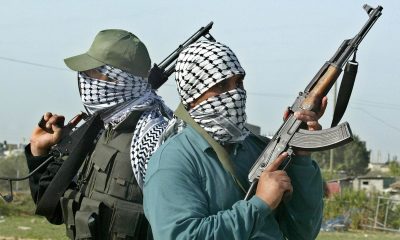

Oyo School Abductions: Time for Concrete Action Against Terrorism
ShareBy Tochukwu Jimo Obi The recent kidnapping of students and teachers in Oriire Local Government Area of Oyo State has once again exposed the...

FG Okays N4bn to Settle Stranded Nigerian Scholars’ Allowances
ShareThe Federal Government has approved N4bn for the payment of allowances to Nigerian students studying abroad under the Bilateral Education Agreement. The approval follows...


CBN Retains Lending Rate at 26.5 Per Cent
ShareBy Tony Obiechina, Abuja Governor of the Central Bank of Nigeria (CBN), Olayemi Cardoso, on Wednesday announced that the Monetary...


2027: Fubara Pulls Out of APC Governorship Primaries
ShareBy Mike Odiakose, Abuja Governor Siminalayi Fubara of Rivers State has withdrawn from the governorship primaries of the All Progressives...
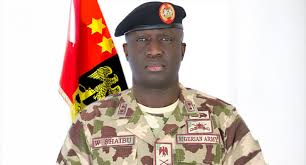

Army Acquires More Drones, Reconfigures Aviation Assets for Combat
ShareBy David Torough, Abuja The Nigerian Army has acquired additional protracted TP-2 drones and reconfigured its aviation assets for combat...
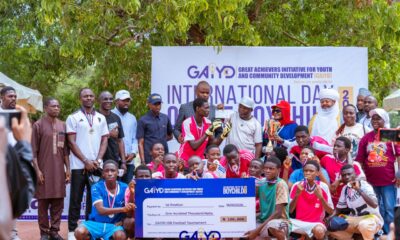

GAIYD, EFCC Task Boy-child on Integrity as World Marks Int’l Day
ShareBy David Torough, Abuja Stakeholders at the commemoration of the International Day of the Boy Child on Saturday in Abuja...
AFCON Qualifiers: Nigeria to Face Madagascar, Tanzania, Guinea-Bissau
ShareNigeria have been drawn in Group L of the 2027 Africa Cup of Nations qualifiers, where they will face Madagascar,...