
Education
Prospects and Challenges of Tertiary Education in Contemporary Nigeria

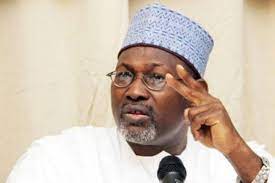
By Attahiru M. Jega Professor Department of Political Science Bayero University, Kano
The 24th Convocation Lecture, University of Maiduguri, November 16th, 2023
Introduction
Education is, no doubt, the most important instrument of change in any modern nation-state.
The major difference between developed and underdeveloped (sometimes described as developing or less developed) countries today lies in the quality and utility of their educational provisioning. Countries that are now regarded as having knowledge-based economies are essentially those that have paid remarkable attention to providing, especially tertiary level, educational opportunities to their citizens, through which researched knowledge is taught and reproduced.In general, perceptions of the essence of tertiary education vary among individuals, groups, and nations. In Nigeria, most students and parents, perceive access to university education largely as a gateway to better-paying jobs and a higher quality of life. Other tertiary education sectors, such as polytechnics and mono-technics and colleges of education are ignored. Focus is primarily on university education. Unfortunately, and increasingly, less and less applicants get admitted, and less and less graduates get employment. Meanwhile, Nigerian universities are increasingly losing their capacity to create and reproduce researched knowledge due to declining national investment in education generally and in the tertiary education sector in particular.Hence, while globally, tertiary education has remained the catalyst for economic growth and development, through research, innovation and technology development, the Nigerian tertiary education sector leaves much to be desired in its contribution to national development. Since the return to civil rule in 1999, and despite the rapid increase in the number of tertiary education institutions, particularly at the university level, the value and contribution of tertiary education in Nigeria has declined remarkably. Staff and facilities for learning and research are grossly inadequate, staff are poorly remunerated and, ironically, accused of ‘teaching what they are not paid to teach’, and profit-motivated private universities are cashing in, through extortionate fees from desperate pool of those who couldn’t access public universities, and reckless poaching of senior academics from the public universities. Nigerian universities are no longer as globally competitive as they were in the 1970s and early 1980s. Given this situation, a lot needs to be done to revive, revitalize and reposition the tertiary education in general and the Nigerian universities in particular.It is in the context of this brief introduction that the presentation is structured into six sections, viz: conceptualizing tertiary education; background and context of tertiary education in Nigeria; current / persistent challenges of tertiary education in Nigeria; prospects of tertiary education in Nigeria; recommendations; and conclusion.Conceptualizing Tertiary Education For a proper understanding of what is meant by tertiary education, it is expedient to start with a broader definition of education. According to Fafunwa (1977), “education is the aggregate of all the processes by which the child or young adult develops his abilities, attitudes and other forms of behaviour, which are of positive value to the society in which he lives”. While tertiary education to him is a process of pursuing research for exploration of the natural and social development of the society.According to World Bank (2021), tertiary education refers to all formal post-secondary education, including public and private universities, colleges, technical training institutes, and vocational schools. Or, tertiary education refers to any type of education pursued beyond the high school level. This includes diplomas, undergraduate and graduate certificates, and associate’s, bachelor’s, master’s and doctoral degrees. In other words, what can be seen as tertiary education is any educational levels following the completion of secondary education.It is worth noting that the education of an individual is measured in terms of his/her positive impact on the social life of his/her community, and no nation can develop to its fullest or keep pace with emerging trends in science and technology, without effective and functional education.While tertiary education may refer to the whole gamut of post-secondary education, it is also used synonymously with higher education. Thus, tertiary education is provided by such educational institutions as universities, polytechnics, colleges of education, and mono-technics / post-secondary vocational/skills training centers. According to a document issued by the Federal Government the goals of tertiary education encompass the development of relevant high-level manpower, the advanced development of the intellectual capability of individuals, and the acquisition of physical and intellectual skills (FRN, 2004). Others are to promote and encourage scholarship as well as community service. Tertiary educational institutions pursue these goals through teaching, research, generation, and dissemination of knowledge, which they achieve through a variety of programs such as certificates, diplomas, undergraduate, and postgraduate courses.Specifically, tertiary education and, in particular, university education contributes to the production of high-level manpower in diverse professional callings as dictated by national development requirements. The goals of university education also focus on inculcating community spirit in students through projects and action research.Ideally, one of the major roles of tertiary education as a driver and propeller of the economy is to produce a production-oriented rather than consumption-oriented citizenry.It is significant to note that this assumed definition of tertiary education by the federal government, is derived from the colonial objectives for which tertiary educational institutions, especially universities, were launched in the colonies, as articulated, for example in the Ashby Report, which laid the foundation for the establishment of university colleges and subsequently universities, such as University of Ibadan. The goal was to produce ‘high-level’ manpower for ‘national development’, to especially populate public sector ministries and agencies. But this definition ignores the primary objective of knowledge production and reproduction for its own sake, which was the framework under which the first universities in the world originated (see Jega, 2007).It is therefore significant to emphasize that, the objectives of tertiary education need to be holistically appreciated for its contribution to societal progress and development, which goes much beyond just producing ‘High-level’ manpower in a post-colonial country. Indeed, it can be argued that sticking to such a narrow perspective of what the purpose of tertiary education is, is responsible for the crisis, which has contemporarily engulfed this sector in countries, such as Nigeria. Background and Context of Tertiary Education in Nigeria Without doubt, countries that have been able to create and maintain an effective and functional tertiary education system are distinguished in the area of science and technology, making relatively fast progress in all indicators of social and economic growth and development.In most developed societies, tertiary education is acknowledged and respected as the most significant catalyst for research and innovations that are fundamental to social and economic transformation of a country. Responsible and informed governments look to tertiary institutions for empirically based studies and ideas to support policies rather than base such policies on common sense or political expediency. On the contrary, countries such as Nigeria mostly formulate policies without appropriate recourse to research-based knowledge and empirical evidence, only relying of the idiosyncrasies, predispositions and inclinations of public officials. Governments in nation-states that are serious appropriately and substantially fund tertiary institutions to enable them to, in addition to teaching, also carry out research on national priorities such as security, warfare, health, agriculture, etc., to guide and inform policy making.While the University College Ibadan was established during the colonial era (1948), the formal establishment of higher educational institutions, specifically universities, in independent Nigeria started with the establishment of the University of Nigeria, at Nsukka, in 1960. In 1962, the University of Lagos, Akoka, Ahmadu Bello University, Zaria, and the University of Ife were created, among others (Amadi, 2011).The Nigerian tertiary education sector, in particular the universities, have grown phenomenally, if not exponentially, especially since the early 2000s, when it was widely opened up for private sector investment and participation. In recent times, Nigeria has witnessed an astronomical increase in the number of universities. The federal, state, and private proprietorships have established a vast number of such institutions. According to the National Universities Commission (NUC), as of November 2023, the number of universities in Nigeria stood at 270, consisting of 61 federal, 63 state, and 146 private universities. The latter are owned by individuals and corporations, including religious denominations, and are essentially for-profit institutions. The total enrollment, however, is put at approximately 1.9 million (NUC, 9th November 2023).It seems to me that this rapid expansion and growth has happened without adequate planning, funding, and careful, effective regulation. As a result, there has not been a remarkable expansion of enrolment, in spite of the almost exponential increase in the number of institutions. Indeed, growth in the sector has not positively addressed the critical issues of access and quality; rather, it has complicated them negatively. And, as the sector expanded, seemingly uncontrolled, so have the challenges bedeviling it, such as inadequacies of qualified staff, teaching and research facilities, and all types of corruption, and irregularities, both from within and from outside.To the federal and state governments, creation of new universities and other tertiary institutions has become a way of dispensing patronage and for political considerations, rather than evidence-based cost-benefit analysis, while the main attraction seems to be profit making for the private proprietors. Evidence points to the poor state of many of such newly created institutions in terms of poor and authoritarian governance, and inadequacy of qualified manpower, as well as inadequacy of requisite infrastructure and facilities.The recurrent face-off between the Academic Staff Union of Universities (ASUU) and the Federal Government of Nigeria (FGN) on conditions of service and of work, as well as on the revitalization of the universities and education policies, such as the introduction of exorbitant tuition fees the new student loan scheme, which has cumbersome, poorly sought out conditions, is indicative of the government’s unwillingness to recognize the need for a functioning university system, and especially the need to fund it appropriately and adequately. Indeed, the recent circular requiring universities to remit to the coffers of the federal government 40% of their internally generated ‘revenues’ is a further illustration of the insensitive neglect and gross underfunding of public universities.Consequently, the sorry state of our tertiary educational institutions, especially the universities, as Nebo (2017) once drew our attention, clearly shows how the world has left Nigeria behind in terms of how education and adequate tapping of its potentials is used to change society. For example, Nigerian students are still consigned to obsolete knowledge and methods of teaching that their counterparts in many countries left perhaps a decade or more ago. Nigerian tertiary education lags behind, and its graduates are ill-prepared for effective functioning in an increasingly competitive global political economy. These are rooted in the neglect that the system, especially public institutions, have suffered over the years. Governments pay lip service to the need to provide public institutions with what they require to be effective. Any wonder then, how numerous and formidable challenges persistently bedevil the tertiary education sector, especially universities, in Nigeria.Challenges of Tertiary Education in NigeriaGiven the background and context in the preceding paragraphs, there is ample evidence that Nigerian universities are bedeviled by numerous recurrent challenges. In general, the challenges of tertiary education in Nigeria cannot be isolated from those that have bedeviled Nigeria over the years: lack of vision, reckless leadership, bad governance, inappropriate / inadequate planning, misplacement of priorities, humongous corruption, perpetual crises, etc. However, for the purpose of this presentation, the following specific challenges of the university education in Nigeria are noteworthy:Inadequate budgetary allocation, in other words, underfunding: Over the years, the government has grossly underfunded education to the extent that annual budgetary appropriation falls far below the UNESCO recommended annual allocation of 26% of the budget. The consequences of chronic underfunding are, of course, grave for national development.Policy inconsistency or policy somersault due to some discontinuity in national policy between one political dispensation and the other. If one government starts an education program or project, another incoming government will abandon it and start a new one, which it may also not complete. Hence, there are many abandoned projects. In some other cases, lobbying and the influence of political heavyweights and influential traditional rulers make governments backpedal on enunciated policies.There is also the challenge emanating from the localization of academics and student admissions. Ideally, tertiary, especially university, education has certain universal characteristics: Universities are supposed to be universal communities of scholars, both students and lecturers. As such, limiting the recruitment of staff and management officers to people from the contiguous communities of the university is a global bad practice, which regrettably is prevalent in Nigeria. It has resulted globally uncompetitive low-quality performance and inefficient operations. There are also challenges of inadequate and decaying infrastructure, both as a result of poor funding, misplacement of priorities and corruption. Poor regulation, supervision and monitoring of tertiary education by the government is yet another major challenge. Quite often, in many cases, statutory accreditation exercises, as well as visitations, are stage-managed, and in the case of visitations, not only are they not conducted in the time frame statutorily provided for, no efforts are made to put the reports and recommendations into good use even after the exercise is done.There is also the lack of autonomy at the university level in many fundamental respects. For example, the NUC imposes a carrying capacity rule on each university, and a CCMAS, all of which in many ways impose unwholesome uniformity and undermine the autonomy and statutory responsibilities of Senate of universities. And the FGN issues circulars and introduces measures, such as the IPPIS, and centralization of recruitment, which undermine the roles of governing councils. Inadequacy of high-level manpower remains another major challenge. There are not enough qualified academic staff, with a gap of up to 40% of required PhD holders, which seriously affects quality. Then, there is an imbalance in terms academic – non-academic staff ratio due poor compliance and ineffective regulation. There is increasing evidence of poor governance at the level of university administration and Management, and how corrupt practices rooted in the wider public sector affect, influence, induce, and compels corrupt practices in the tertiary education sector, especially universities, which statutorily are supposed to enjoy some relative autonomy (See Jega, 2022). There are many examples of how reform policies formulated with good intentions are often circumscribed by endemic corruption in the public sector, and their application in the education sector creates their own dynamics of corrupt practices. This can be illustrated with examples of how three reform policies by the federal government compel many vice chancellors of federal universities to become somewhat ‘compulsorily, even if, in some cases, reluctantly, involved in or with endemic corrupt practices in the wider public sector. The first reform policy or measure is the Procurement Act 2007, which requires that contracts exceeding certain thresholds should seek approval either at the Ministerial Tenders Board (MTB) or at the Bureau for Public Procurement (BPP). The second is the requirement by members of the National Assembly that Vice Chancellors (VCs) must appear before them to defend their budgetary proposals before funds are appropriated to their universities. The third, which is relatively more recent, is the requirement by the federal government that no university should recruit any staff, even to fill existing vacancies, without at least three layers of approvals by the federal bureaucracy: at the NUC, at the Office of the Head of the Civil Service of the Federation, and at the Office of the Accountant General of the Federation (see Jega, 2022). All these three policies and measures, in spite of the good intentions, which may have underlined them, not only undermined the relative autonomy of the universities but also introduced extraneous relations and influences laden with corrupt practices. Submissions made by Vice Chancellors to, especially, MTBs often returned with reversed contract awards for extraneous and inexplicable reasons. In the past, the NUC presented and defended the budget for federal universities, and appropriated funds were shared or allocated to universities transparently using a widely known (at least within the university system) formula. Nowadays, Vice-Chancellors who go to the National Assembly to present or defend their universities’ budgets are ‘compelled’ or ‘induced’ to make deals in order to either prevent cuts in their budgetary proposals or so as to get substantial padding in their appropriations for ‘projects’ to be executed solely by the Senator or House of Representatives member who negotiated the deal. Many of our federal universities are now populated with literally abandoned ‘constituency’ projects (see Jega, 2022). With regards to obtaining approval, prior to recruitment or replacement of staff, there is evidence to suggest that VCs have to guarantee slots for the approving authorities to secure approvals. In filling those slots, no regard is paid to advertised vacancies and required qualifications for the positions, with the result that, almost invariably, more unrequired non-academic staff are employed, further distorting the ratio of non-academic staff to academic staff in the NUC guidelines.Incessant strikes by tertiary education sector unions, which lead to closure of institutions for long periods is a major challenge requiring appropriate solution. Such periodic and prolonged disruptions of academic calendar, as justified as the reasons bringing them about may be, impacts negatively on the extent and quality of knowledge acquired by the students and ultimately on the potential of tertiary education to add remarkable, if not tremendous value, to national development. Deeper reflection and national conversation on how this phenomenon could be mitigated and overcome is required in the task of revitalization and repositioning of our tertiary education sector towards greater and more meaningful contributions to Nigeria’s national socio-economic development.In general, as I once argued, any discussion of the Nigerian education sector invariably focuses on the profound challenges and a mountain of problems, which together are said to be reflective of “a crisis” in the sector, threatening its collapse (Jega, 2022).Basically, tertiary education is characterized by an input-output relationship. In that sense, it is what you put in, in terms of quantity and quality of resources, that determines what you get as output. This includes the quality of learning, leadership, and so on.In the past, lecturing was the job of academically outstanding people. Tertiary institutions observed almost the same tradition and procedure in the selection of would-be academic staff. Vacancies were advertised, and interviews were rigorous. The selection was based on merit. Such a process produced very sound lecturers capable of providing the needed academic competence, quality, and leadership. Today, such a highly revered tradition has been abandoned, and the selection and appointment of academic staff have become political with virtually little if any reference to merit. Today, regrettably, a number of academics in Nigerian tertiary education do not deserve to be there. So much has gone wrong in terms of their academic competence, quality, and leadership, besides their moral dispositions.In summary, the challenges of tertiary education in Nigeria are numerous; these include poor funding, resulting in poor infrastructure and facilities; poor conditions of service and a poor working environment; the inadequacy of teaching staff, classrooms, and laboratories; and the poor quality of teachers. All of these dimensions of the ‘crisis’ in the education sector are further complicated and intensified by persistent and pervasive corrupt practices, which include deals with contractors and suppliers to rig contracts; extortion of contractors and suppliers; extortion of students for admission, grades, and issuance of transcripts; certificate racketeering; exploitation of students through the sale of substandard ‘handouts’; and sexual harassment of especially female students (Jega, 2022).Prospects of Tertiary Education in NigeriaI argue that tertiary education sector cannot fulfill its mandate and actualize its potentials unless it is organized and made to function according to global best practices. This can only be possible, as a first step, if they are adequately funded. Objectively speaking, the condition of most tertiary education institutions in Nigeria in terms of facilities and the right caliber of lecturers is pitiable. Most of these institutions lack adequate quantity and quality of academic staff. As a consequence of the poor condition of our tertiary education, they have not been able to make the desired impact on society. In most cases, state and private tertiary institutions rely on poaching of qualified academic staff to boost their profile during accreditation.Given the foregoing, the prospects of tertiary education sector in contemporary Nigeria can only be bright if they are revitalized, reinvigorated and repositioned, consistent with global best practices of setting up competitive universal community of qualified and well-motivated scholars, both students, their lecturers and other support staff. In this regard, they need to be consistently adequately funded, and endowed with quality infrastructure, facilities and well-developed capacity for research and development.In other words, tapping the potentials of tertiary education is conditional upon Nigerian leaders at both the state and federal levels acquiring the knowledge, the disposition and the political will to institute the reforms necessary to reform, reposition and revitalize our national education system in general and the tertiary level educational institutions, in particular, especially the universities.RecommendationsHaving profiled the current state of tertiary education in Nigeria, particularly at the university level, the prospects are achievable if all hands are on deck, with a national leadership with requisite political will to make things right, drawing upon global best practices. In addition, the following specific recommendations are noteworthy:There is a need for a comprehensive, dispassionate and thorough, evidence-based analysis of the state of Nigerian tertiary education sector as a basis for drawing up an appropriate strategic plan with short-, medium- and long-term goals and objectives of its reform and revitalization so as to bring it up to speed and keep it on par with the best in the world.The government at all levels must demonstrate seriousness and commitment to positive people-oriented and comprehensive process of reforms of the Nigerian educational system and especially the university sector.To incentivize public officials to pay attention to improving public educational institutions, all public officials should be banned for the next 20 years from sending their wards to any private schools at home and abroad. There is the need for a remarkably improved funding framework for the education sector in general, and the tertiary education sector in particular. Funding commitments to tertiary level education must not fall below 26% of the total annual budget, and there must be competitive, merit-based scholarships schemes managed by the institutions, in addition to bursary awards, as well as interest-free and transparently managed loan schemes. Of course, it must be ensured that there is judicious utilization of the allocated resources by the institutions. Hence, there is the need for recruitment and appointment of persons with integrity into the management, as well as councils of these institutions, plus adequate mechanisms for holding them accountable. Furthermore, a culture of whistle-blowing to expose corrupt practices and their perpetrators should be encouraged and nurtured, with appropriate incentives for and protection for whistle-blowers.A very good legal framework for the fight against corruption, especially with the aid of whistleblowing, needs to be enacted, with appropriate incentives and sanctions/punishment, as well as strong institutional mechanisms and agencies for enforcement. In this regard, the already existing anti-corruption institutions, need to be strengthened, depoliticized, adequately resourced, and incentivized to increase the tempo and effectiveness of their activities.Universities, with the help of the TETfund must increase the training of Masters and PhDs both at home and abroad, in order to within a decade acquire the requisite qualified teaching staff for the tertiary education sector.A moratorium should be imposed on the creation of new public universities both state and federal for the next 10 years, while existing institutions should be provided with additional infrastructure and facilities, laboratory, as well ICT based teaching and research, equipment, etc., so as to enable them satisfy their current needs, as well as remarkably expand their students’ enrollmentThe Statues and legal framework for public universities should be urgently reviewed to strengthen their autonomy, while all obnoxious legislations and policies/circulars, which undermine their autonomy should be revised appropriately and/or repealed.Conclusion Without doubt, no nation develops without adequate and appropriate investment in education. Regrettably, the Nigerian education sector has suffered neglect, has been chronically underfunded, and has been engulfed in crisis, compounded by the impact of corruption both within the education sector itself and in the wider public sector. Aside from fighting corruption, the decadence in reading culture among the students of tertiary institutions needs to be seen by all as a national concern that needs serious attention.Nigerian tertiary education, particularly at the university level, cannot continue to be institutions for the certification of ‘educated illiterates’! They need to be repositioned to be repositories of researched knowledge, centers of innovation, incubation and technology development, as well as excellent trainers of entrepreneurship and creativity for self- and national development.Therefore, in spite of the currently numerous daunting challenges, the future prospects of Nigeria’s tertiary education institutions would be bright, provided we get our act together and get those in leadership positions to gather the courage and political will to undertake the desired reforms for revitalization and repositioning of the Nigerian education system in general, and the tertiary education sector in particular, especially the university component of this sector.References Amadi, M. N. (2011). Current issues and trends in Nigeria higher education. Lagos: Vitaman Educational Books.FRN (2014). National Policy on Education. Federal Ministry of Education, Abuja.Fafunwa, A. B. (1977). History of education in Nigeria. London: Routledgehttps://www.worldbank.org/en/topic/tertiaryeducationJega, A. M. (2007 ). The Public University and National Development in a Globalized World: Role, Relevance and Prospects, the 45th Anniversary and Convocation Lecture, Organized by the Obafemi Awolowo University, OAU, Ife, December 13.Jega, A. M. (2022). Corruption and the education sector in Nigeria. Keynote Address, presented at the 4th National Summit on the Theme: Diminishing Corruption in the Public Sector, Organized by ICPC, in collaboration with Office of the SGF and JAMB, at the State House Conference Centre, Abuja, October 4.Nebo, C.O. (2017). Education at crossroad in Nigeria. A convocation lecture at the University of Benin.NUC (2023). Office of the Ag. Executive Secretary. November 9th.Oyelade, F. A. (2017). Aliu Babatunde Fafunwa’s philosophy of education. Makerere Journal of Higher Education. 9(1). pp. 87-96.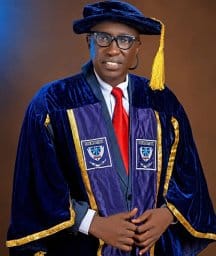
From Joseph Amedu, Lokoja
A Professor of Entrepreneurship and Corporate Strategy at the Federal University, Lokoja, John Alabi has called for more investment in the entrepreneurship/innovation sector to tackle Nigeria’s dwindling economy.
Professor Alabi who made the call while delivering the 46th Inaugural Lecture series of the University at its Felele Campus in Lokoja,on Wednesday, also stressed the need for government at all levels to prioritize investment in the sector to take care of the rising unemployment situation in Nigeria.
In his Lecture titled “Entrepreneurship Leadership through Entrepreneurial Education and Empowerment: Building an Entrepreneurial Economy in Vuca World” Professor Alabi advised that governments must provide enabling policies, universities must produce innovative graduates, industries must become active partners, financial institutions must support enterprise growth, and entrepreneurs themselves must embrace continuous learning, resilience, ethical leadership, and technological adaptation.
He explained that through entrepreneurial education and empowerment, nations can transform uncertainty into opportunity and build inclusive, resilient, and globally competitive economies.
“Governments should position entrepreneurship as a national development strategy rather than an employment intervention.
“Align entrepreneurship policies with national industrial and digital transformation agendas and investment in entrepreneurship ecosystems at federal, state, and local government levels.
“Building an entrepreneurial economy in a VUCA world requires more than increasing the number of entrepreneurs; it demands developing entrepreneurial leaders who can envision opportunities amid uncertainty, inspire innovation, mobilize resources, and create sustainable value
Professor Alabi also advocated that universities should focus on producing job creators rather than job seekers, establish functional entrepreneurship centres linked to industry, reward commercialization of research and innovation and encourage faculty-industry collaboration.
Other recommendations advanced by Professor Alabi includes, “Integration of entrepreneurship education across all levels of education, from primary to tertiary institutions.
“Shift from certificate-oriented learning to competency and problem-solving-based education.
“Promotion of interdisciplinary learning combining entrepreneurship, digital technology, leadership, and sustainability.
“Strengthen experiential learning through internships, incubators, business simulations, and enterprise projects.
“Developing a National Entrepreneurial Leadership Policy as well as establishment of a coordinated national framework for entrepreneurial leadership development.
“Encouragement of collaboration among government, academia, industry, and civil society”
In his welcome address, the Vice Chancellor of the Federal University, Lokoja, Professor Gbenga Ibileye gave an assurance that his administration would continue to encourage delivery of inaugural Lecture to ensure sustainability in the academic system.
Professor Ibileye said that the essence of the academic tradition is an opportunity for the academic staff to showcase their intellectual capacity in their field of study.
The Vice Chancellor described the topic of the lecture as timely and a welcome development that would go a long way in addressing the current economic reality in Nigeria.
He extolled Professor John Alabi, the Inaugural Lecturer, for his choice of contemporary topic that would add value to the people and the nation at large.

The Joint Admissions and Matriculation Board (JAMB) said its Central Admissions Processing System (CAPS) has been fully restored and is now operational after being unavailable for 96 hours.
The board made this known in its weekly Bulletin issued on Monday in Abuja.
It said the platform was restored on Sunday, Sept.
27, and urged tertiary institutions to speed up their admission processes to recover the time lost during the disruption.“The Board consequently urges all institutions to immediately accelerate their admission processes to recover the time lost during the period of the disruption and ensure compliance with the admission deadlines agreed at the 2026 Policy Meeting on Admissions,” it said.
It said the temporary unavailability of CAPS was caused by an administrative challenge involving its hosting organisation.
The board said it had worked with relevant service providers to restore the platform and ensure its stability.
It also apologised to candidates, institutions and other stakeholders for the inconvenience caused by the disruption.
“The Board sincerely regrets the inconvenience the temporary unavailability of the platform may have caused candidates, institutions and other stakeholders,” it said.
It said institutions should now intensify their admission processes, while candidates should promptly accept admission offers made to them.
It recalled that stakeholders at the 2026 Policy Meeting agreed that admissions for the 2026/2027 academic session should be concluded within specified deadlines.
According to the board, public universities are expected to conclude admissions on or before Oct. 31, private universities by Nov. 30, while other tertiary institutions have until Dec. 31.
“Consequently, all admissions for the 2026/2027 academic session are expected to be concluded by Dec. 31, 2026,” it said.
It particularly urged public universities to intensify their admission processes following the release of the 2026 Senior School Certificate Examination (SSCE) results by the National Examinations Council (NECO).
It said the development had provided institutions with the results needed to process more admissions before the Oct. 31 deadline.
“Following the release of the 2026 NECO results, the Board urges universities, especially public universities, to intensify admissions and meet the Oct. 31 deadline,” it said.
JAMB also advised candidates who had been waiting for their NECO results to immediately upload or verify their results on the appropriate platform.
It assured stakeholders that it would also speed up the consideration and approval of admission recommendations submitted by institutions through CAPS.
It said the Board was also working on measures to make CAPS more stable and reliable and reduce the impact of possible future disruptions.
It said the measures would include having alternative systems and arrangements to ensure that the admission process could continue if one hosting or service environment experienced problems.
“The Board remains committed to building systems that work reliably for the people we serve,” It said. (NAN)
From Dan Amasingha, Minna
The National Examinations Council (NECO) has released the results of the 2026 Senior School Certificate Examination (SSCE) Internal, with 804,948 candidates, representing 58.67 per cent of those who sat for the examination, obtaining at least five credits including English Language and Mathematics.
The figure represents a 1.
59 percentage-point decline from the 60.26 per cent recorded in 2025, when 818,492 candidates met the same benchmark.Announcing the results yesterday at the council’s headquarters in Minna, Niger State, NECO Registrar and Chief Executive, Prof.
Dantani Ibrahim Wushishi, said 1,378,048 candidates registered for the 2026 examination, comprising 682,352 males and 695,696 females.He said 1,371,992 candidates eventually sat for the examination, including 678,903 males and 693,089 females.
Wushishi, however, disclosed that the overall five-credit performance improved slightly, with 1,162,118 candidates, representing about 84.67 per cent, obtaining five credits and above irrespective of English Language and Mathematics.
The figure compares with 1,144,496 candidates, or 84.26 per cent, recorded under the same benchmark in 2025.
In absolute terms, the number of candidates who secured five credits including the two core subjects fell by 13,544, from 818,492 in 2025 to 804,948 in 2026. By contrast, the number who obtained five credits irrespective of English and Mathematics increased by 17,622.
The number of candidates who sat for the examination also rose by 13,653, from 1,358,339 in 2025 to 1,371,992 in 2026.
Malpractice records sharp decline
The council also reported a substantial reduction in examination malpractice, with 1,406 candidates implicated in various forms of malpractice in 2026, compared with 3,878 candidates in 2025.
The latest figure represents a 63.74 per cent decline from the previous year’s record. NECO had recorded 10,094 malpractice cases in 2024.
Wushishi attributed the reduction to improved examination processes, strengthened monitoring and collaboration with security agencies and other stakeholders.
He specifically acknowledged the support of the Nigeria Security and Civil Defence Corps and the Department of State Services, saying their involvement helped reinforce discipline, deter malpractice and safeguard the examination process.
Kano leads state figures
Kano State recorded the highest number of candidates who obtained five credits and above, including English Language and Mathematics, with 74,413 candidates.
Lagos followed with 72,496, while Oyo recorded 55,543 candidates under the same benchmark.
At the geopolitical-zone level, the Southwest accounted for the largest share of candidates with five credits and above irrespective of English and Mathematics, at 24.60 per cent. It was followed by the Northwest with 22.10 per cent, North Central with 19.00 per cent, Northeast with 14.70 per cent, South-South with 10.53 per cent and Southeast with 9.07 per cent.
The council also released separate state, geopolitical-zone and gender rankings based on the different performance benchmarks.
In the North Central, Benue led with 3.82 per cent, followed by Nasarawa with 3.66 per cent. Anambra led the Southeast with 2.92 per cent, ahead of Enugu with 2.14 per cent.
Rivers topped the South-South ranking with 3.03 per cent, followed by Edo with 2.17 per cent, Delta with 1.84 per cent, Akwa Ibom with 1.61 per cent and Cross River with 1.30 per cent.
Wushishi also disclosed that candidates at NECO examination centres in Saudi Arabia and Niger Republic recorded no candidate with five credits and above under the stated benchmark.
Exam held in Nigeria, six countries
The 2026 SSCE Internal examination was conducted from June 15 to July 23 across the 36 states, the Federal Capital Territory and six foreign countries—Benin Republic, Equatorial Guinea, Niger Republic, Côte d’Ivoire, Togo and Saudi Arabia.
The nationwide marking exercise was conducted between August 17 and September 4.
A total of 1,334 candidates with special needs participated in the examination, with the council maintaining that measures were put in place to promote inclusiveness.
Wushishi thanked the Federal Government, education authorities, the NECO Governing Board, National Assembly, security agencies, state governments, schools and other stakeholders for their support.
He declared the results released and said candidates could access them through the NECO website using their examination registration numbers.
The registrar urged candidates to remain focused on their academic pursuits, assuring stakeholders that the council would continue to uphold the credibility, fairness and integrity of its examinations.




Jonathan Receives Bayelsa East APC Candidates
ShareFrom Mike Tayese, Yenagoa Former President of Nigeria, His Excellency, Dr. Goodluck Ebele Jonathan, has commended the quality, experience and...


2027: Delta APC Inaugurates Support Groups for Tinubu, Oborevwori
ShareFrom Francis Sadhere, Delta The Delta State chapter of the All Progressives Congress (APC) has inaugurated two political support groups...

‘Transformative Agenda to Critical Sectors are My Rescue Mission’ – Dauda
ShareFrom Ifeanyichukwu Nwannah, Gusau. Governor Dauda Lawal of Zamfara State, Dauda Lawal has declared that his administration’s rescue mission is...

Yari Urges Northerners to Honour Power Rotation, Back Tinubu’s Eight-Years Presidency
ShareFrom Rabiu Sanusi Kano Former Zamfara State Governor and Director-General of the All Progressives Congress (APC) Presidential Campaign Council, Senator...

Otu Reinstates 3,000 Sacked LG Workers
ShareFrom Ene Asuquo, Calabar Cross River State Governor, Senator Prince Bassey Edet Otu, has approved the restoration of about 3,000...


First Lady Mobilises Women for Tinubu’s Re-election
ShareNigeria’s First Lady, Sen. Oluremi Tinubu, is set to host more than 20,000 women stakeholders in Abuja today as part...
NAFDAC Seeks International Support to Revive Vaccine Manufacturing in Nigeria
ShareThe National Agency for Food and Drug Administration and Control (NAFDAC) has solicited international partners’ support for establishing vaccine manufacturing...


IOM Empowers IDPs with Skills, Cash in Zamfara
ShareFrom Ifeanyichukwu Nwannah, Gusau Over one hundred residents, persons with disabilities, Internally Displaced Persons (IDPs), and other vulnerable groups in...
Diagnosis at 66: Nigeria’s Healthcare Landscape
ShareBy Racheal Abujah When Nigeria gained independence on Oct. 1, 1960, it held immense promise. Sixty-six years later, healthcare delivery...


Flight Delays, Cancellations: Assessing Nigeria’s Efforts to Improve Air Travel
ShareBy Gabriel Agbeja In spite of arriving on time, checking in, and waiting at the boarding gate, many air travelers...