
NEWS
SON Urges Business Owners to Seek Assistance on Product’s Quality

The Head of Mechanical department of the Standards Organisation of Nigeria (SON), Mr Ijacha Ego, has urged stakeholders, especially, manufacturers to always seek its assistance in the area of quality control for their products.Delivering a lecture titled: “The Impact of SON Activities on the Nation’s Economy Development” at its sensitisation workshop in Asaba on Friday, Mr Ego noted that the main task of SON is to ensure quality of products in the country.
Giving an overview of activities of SON, Ego disclosed the organisation has multiple testing laboratories tor products and urged the stakeholders to get closer to the organisation for quality control of their products and goods.”Get close to SON, SON is available and willing to support your businesses, ” he emphasised.In his presentation titled: ”Promoting Quality and Standards Culture via Self- Regulation And Ethic Codes”, The Head of Department, Science Laboratory Technology, Delta State Polytechnic, Ogwashi-ukwu, Mr Timothy Oni, emphasised the need for owners of businesses to establish clear policy and procedures to ensure better compliance.Oni, a guest speaker, advised them to always ensure they educated their employees through regular training as well as regular auditing.Also, the Director of SON in charge of the South South Zone, Mrs Patience Kussy-Wanza, in her presentation, urged the participants to prioritise promotion of quality standards through self-regulation and observations of ethics to increase their organisation’s profit.“It will earn you tremendous respect, unquantifiable goodwill and global recognition, all of which significantly ensure globally competitiveness.”She emphasised that apart from being a regulatory agency, “we are indeed your partner in this critical imperative.”We are willing and available to support you to embrace standards and qualify assurance in your operations with just a visit or a call for necessary support or information”.(NAN)



From Francis Sadhere, Delta
Delta State Governor, Rt. Hon. Sheriff Oborevwori, has directed Julius Berger Nigeria Plc to immediately commence remedial works on the washed-out section of the East-West Road at Agbarho in Ughelli North Local Government Area of the state.
The State Commissioner for Works (Rural Roads) and Public Information, Charles Aniagwu, disclosed this in a statement issued on Thursday in Asaba.
Aniagwu said the Governor’s directive followed the collapse of a section of the Federal Government-owned highway, which has caused significant hardship to motorists, residents, businesses and other road users.
He explained that the affected portion of the road was washed out following strong erosion triggered by heavy rainfall, creating serious challenges for commuters and disrupting movement along the busy corridor.
According to him, although the East-West Road is under the jurisdiction of the Federal Government, Governor Oborevwori was concerned about the immediate impact of the development on Deltans and other Nigerians who depend on the road.
He said the Governor had therefore directed Julius Berger, one of the major construction companies handling infrastructure projects in the state, to intervene and undertake remedial works on the failed section.
Aniagwu said the intervention reflected the administration’s commitment to ensuring that critical infrastructure within Delta remained functional, irrespective of whether such facilities were owned by the state or Federal Government.
He said the Governor’s action demonstrated the administration’s belief that governance should focus on addressing the immediate needs of the people rather than being constrained by bureaucratic boundaries.
The Commissioner described the East-West Road as a major economic artery linking communities across the Niger Delta and facilitating the movement of people, agricultural produce, goods and services.
He warned that prolonged disruption of the route could have far-reaching consequences for commuters, transport operators, traders and businesses that depend on the highway for their daily activities.
Aniagwu assured motorists and other road users that the intervention would help ease the difficulties currently being experienced and restore smoother traffic flow along the affected section.
He added that the Oborevwori administration would continue to work with relevant Federal Government agencies and private-sector partners to tackle infrastructure challenges capable of affecting economic activities and the wellbeing of residents.
According to him, the intervention was also in line with the administration’s broader infrastructure development programme under the MORE Agenda, with emphasis on meaningful development and improved quality of life for Deltans.
Aniagwu urged motorists and other road users to exercise caution when approaching the affected area while the remedial works are being carried out.

From John Lamma, Jalingo
Taraba State Governor, Dr. Agbu Kefas, has announced fresh interventions worth ₦2.5 billion to support vulnerable households, empower youths and assist communities affected by crises in the state.
Kefas made the announcement in a statewide broadcast on Thursday to mark Nigeria’s 66th Independence Anniversary.
The package comprises ₦500 million for the six-month TARABA CARES Social Investment and Poverty Relief Programme, an additional ₦1 billion for the Taraba State Youth Development Agency and another ₦1 billion for relief and recovery in crisis-affected communities, particularly in Karim Lamido and other affected areas.
The governor said TARABA CARES would run from October 2026 to March 2027 and would provide practical support to vulnerable families while creating opportunities for people to sustain their livelihoods.
He said the programme was first announced during activities marking Taraba State’s 35th anniversary in August.
Kefas also announced the Taraba State 168-Ward Quick Impact Development Programme, which he said would be unveiled before the end of October.
Under the programme, each of the 168 wards in the state will receive a small but visible project based on genuine local needs.
He said communities would participate in identifying priorities, while the programme would be assessed based on projects completed and benefits delivered to residents.
Beginning in 2027, the governor said the state would introduce the Taraba Teachers’ Welfare, Professionalisation and Housing Programme.
He said a time-bound implementation committee would consult teachers and their unions, review welfare and professional standards, examine sustainable salary improvements and develop a realistic housing programme, particularly for rural and underserved communities.
Kefas also announced plans to harness Taraba’s aquatic resources, including rivers, lakes, dams and wetlands, for fisheries, food security and employment.
He said the government would map the resources, support fish production and processing, strengthen market facilities and create opportunities for youths, women and fishing communities.
On infrastructure, the governor expressed concern over the hardship caused by the collapse of the Namnai Bridge along the Jalingo-Wukari federal highway.
He described the bridge as an economic link connecting families, farms, markets and communities.
Kefas appreciated President Bola Ahmed Tinubu, the Federal Ministry of Regional Development and the North East Development Commission for awarding and commencing the reconstruction of the bridge.
He, however, said progress had not matched the urgency of the situation and directed the State Ministry of Works and Infrastructure, working with the Secretary to the State Government, to engage the NEDC, Federal Ministry of Regional Development and the contractor handling the project.
On the state’s finances, Kefas said his administration inherited debts and other obligations which it had continued to service alongside salaries, pensions, public services, security and development projects.
He said the state had accessed, and could continue to access where necessary, lawful financing facilities.
The governor directed the relevant financial authorities to make available a clear and reconciled statement showing Taraba’s verified debt position, inherited obligations, amounts drawn, repayments made, debt-servicing requirements and projects financed.
He said citizens had the right to ask what the government borrowed, why it borrowed, how the funds would be repaid and what had been delivered.
Kefas reaffirmed that ongoing pension payments would continue, saying pensioners deserved respect and dignity for their years of service.
On electricity, the governor welcomed the September 17, 2026 decision of the International Chamber of Commerce tribunal concerning the proposed Mambilla Hydroelectric Power Project.
He said the decision had removed a major legal obstacle that had delayed the proposed project.
Kefas said Taraba had considerable potential for small and medium hydropower, solar energy and other forms of electricity generation.
He directed the Taraba State Electricity Commission and other relevant institutions to assess suitable sites, consult host communities and prepare credible investment opportunities through transparent processes.
The governor also announced measures to regulate artisanal mining in the state.
He said a meeting would be held on October 3 with the Taraba State Artisanal Mining Association, host communities, government institutions, health and environmental professionals and other stakeholders.
According to him, the meeting would focus on registration, designated mining areas, safety, mercury control, environmental restoration, water protection, the prohibition of child labour and safer mining technology.
On security, Kefas reaffirmed his administration’s commitment to protecting lives and property and strengthening collaboration with security agencies.
He called on traditional rulers, religious leaders, parents and community leaders to support peace and provide timely information to the appropriate authorities.
The governor also urged youths to reject cultism, political thuggery and violence.
Kefas announced the exercise of the prerogative of mercy in favour of 24 inmates whose cases had been reviewed.
He said the decision was taken pursuant to Section 212 of the 1999 Constitution, as amended, and followed consultation with the Taraba State Advisory Council on the Prerogative of Mercy.
He said the decision was guided by the law, the interests of justice, evidence of rehabilitation and humanitarian considerations.
The governor said his administration had not solved every problem or reached every community but maintained that Taraba was no longer where it found it.
He said the government would continue to focus on education, healthcare, roads, bridges, water, electricity, agriculture, workers’ welfare, pensions and security.
Kefas also said the government would continue to support children, older persons, persons living with disabilities and other vulnerable citizens.
He urged citizens to demand accountability over government borrowing and spending, while assuring that the state’s resources would be used for its development.
The governor congratulated President Tinubu and the Federal Government on Nigeria’s reported outcome in the international arbitration concerning the Mambilla Hydroelectric Power Project.
He said his administration would continue to work towards strengthening Taraba’s revenue base, developing productive assets and improving the state’s capacity to meet its obligations.
Kefas called on Tarabans to preserve peace and support the development of the state, saying the future of the state’s children would remain central to government decisions.
By David Torough, Abuja
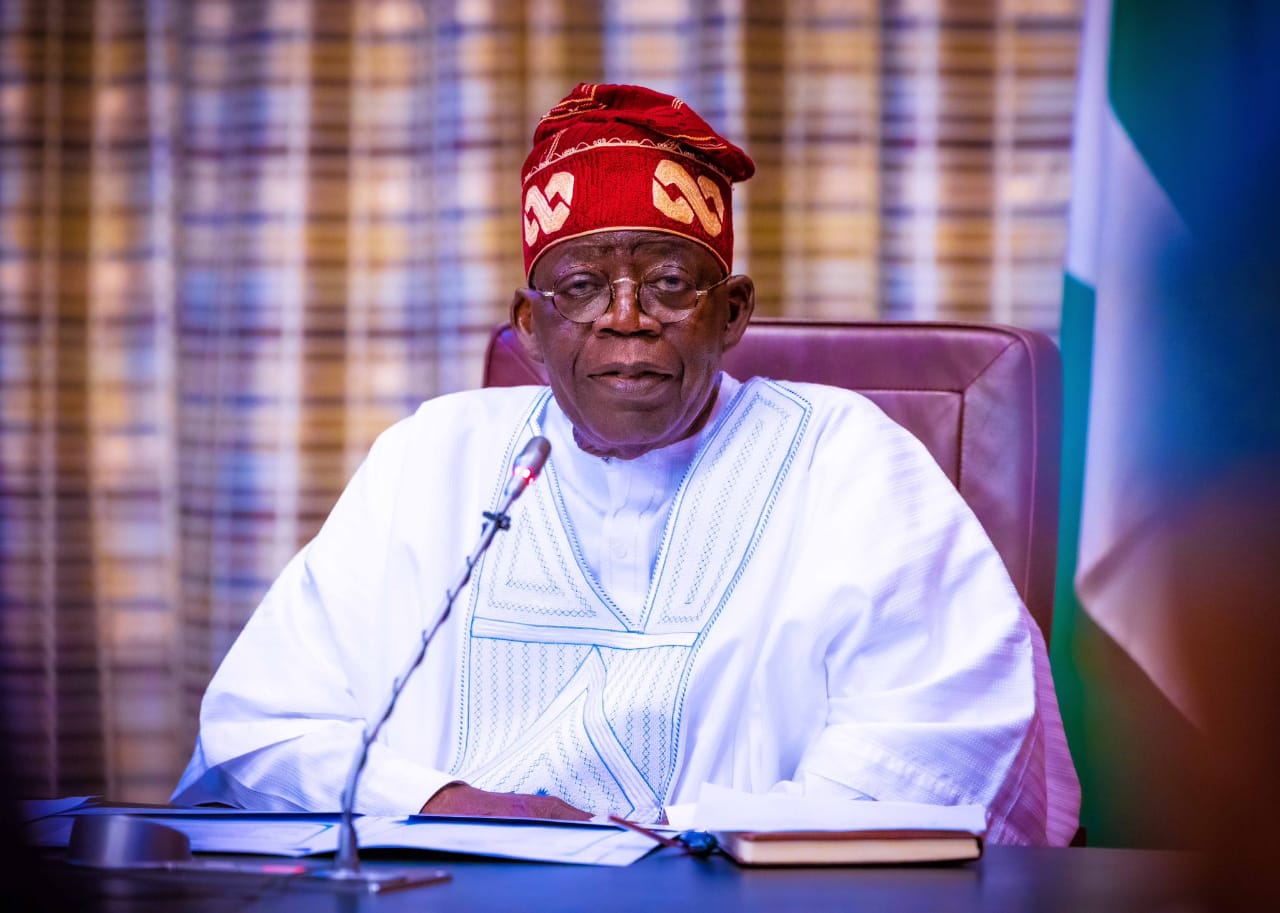
President Bola Tinubu on Thursday used Nigeria’s 66th Independence Anniversary address to declare that the country had moved beyond the difficult phase of economic reforms and entered what he described as the “age of prosperity,” while opposition figures Atiku Abubakar and Peter Obi offered sharply contrasting assessments of the nation’s condition.
In his national broadcast, Tinubu defended the economic policies implemented since he assumed office in 2023, arguing that difficult reforms were necessary to correct longstanding distortions and put the economy on a stronger footing.
He said the next phase of his administration would focus on translating economic stability into lower living costs, jobs, industrial production and broader prosperity.The President said economic growth had exceeded four per cent in 2026, while oil theft had declined, inflation had fallen from its peak, foreign reserves had been rebuilt and the foreign-exchange market had stabilised. He also pointed to more than $6 billion in non-oil export revenue recorded in 2025 as evidence of growing economic activity.
“The age of reform has done its work. Now begins the age of prosperity,” Tinubu declared, outlining plans to reduce the cost of food and transportation through increased agricultural production, mechanised farming, improved storage and transportation infrastructure.
He also promised greater investment in industry, gas-powered manufacturing, digital connectivity, skills development and access to finance, while highlighting social interventions including the National Social Register, the Nigerian Education Loan Fund and CREDICORP.
Tinubu acknowledged that millions of Nigerians were still struggling with food, school fees, healthcare and transportation costs. He argued, however, that these problems predated his administration and reflected decades of inadequate productivity, infrastructure and opportunity.
The President said his administration could not reverse in four years problems accumulated over generations but could change their direction.
Former Vice-President Atiku Abubakar, in his Independence Day response, disputed the President’s assessment and argued that economic indicators had yet to translate into improved living conditions for many households.
Atiku said Tinubu’s address was dominated by promises of what the government “will” do, despite the administration having been in office for more than three years. He pointed to the continuing pressure on food, transport and household incomes, arguing that a reduction in the rate at which prices rise does not necessarily restore purchasing power already lost.
He questioned the impact of fuel-subsidy removal on households and proposed a capped, budgeted production subsidy for petrol refined in Nigeria, including fuel produced by modular refineries. He also raised questions about government borrowing, infrastructure contracts, cash-transfer programmes and fiscal management.
Atiku’s intervention framed the central economic disagreement around a question of whether macroeconomic improvements are translating into affordable living conditions for ordinary Nigerians.
The presidential candidate of the Nigeria Democratic Congress, Peter Obi, also used the anniversary to call for what he described as a structural change in governance.
Obi cited poverty, unemployment and underemployment, insecurity, displacement, educational challenges and inadequate healthcare as evidence that Nigeria’s resources were not yet translating sufficiently into improved living standards. His reported figures on poverty and other social indicators are his own claims and should be distinguished from independently established statistics.
Drawing on a recent visit to an internally displaced persons camp in Sokoto, Obi said the conditions encountered there illustrated the human consequences of insecurity and inadequate public services.
He called for governance to become more measurable and accountable, saying public resources should be deployed principally for citizens’ welfare and productivity. He also pledged, if elected, to prioritise security, healthcare, education and economic opportunity.
The three Independence Day messages present markedly different interpretations of Nigeria’s condition at 66.
For Tinubu, the central story is one of economic correction followed by a transition to growth and prosperity. For Atiku, the key measure is what households can actually afford amid high living costs. For Obi, the focus is whether government spending and national resources are producing measurable improvements in human development, security and productivity.
The competing arguments come as the country looks toward the next general election cycle, with both Atiku and Obi positioning their proposed alternatives around affordability, accountability, security and the use of public resources.
Ultimately, the anniversary debate has shifted from whether Nigeria requires economic change to how the success of that change should be measured: through macroeconomic indicators and investment, as emphasised by the government, or through household purchasing power, employment, security and access to essential services, as stressed by its critics.
For millions of Nigerians, the answer is likely to be judged less by competing speeches than by whether the promised improvements become visible in food prices, wages, jobs, transport costs, security and household living standards.



Nigeria at 66: Leaders are Human, But Accountability is Non-negotiable
ShareBy Aderonke Ojediran As Nigeria marks its 66th Independence anniversary, the debate over leadership, public trust and accountability remains central...


Oborevwori Orders Julius Berger to Fix Washed-Out East-West Road at Agbarho
ShareFrom Francis Sadhere, Delta Delta State Governor, Rt. Hon. Sheriff Oborevwori, has directed Julius Berger Nigeria Plc to immediately commence...

Independence: Kefas Announces N2.5bn Interventions, Clemency for 24 Inmates
ShareFrom John Lamma, Jalingo Taraba State Governor, Dr. Agbu Kefas, has announced fresh interventions worth ₦2.5 billion to support vulnerable...
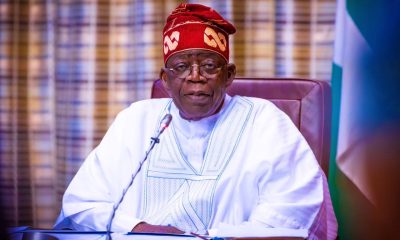

Nigeria at 66: Tinubu Sees ‘Promised Land’, Atiku, Obi Differ
ShareBy David Torough, Abuja President Bola Tinubu on Thursday used Nigeria’s 66th Independence Anniversary address to declare that the country...

NDIC Warns Nigerians against Patronising Unlicensed Banks
ShareBy Tony Obiechina, Abuja The Nigeria Deposit Insurance Corporation (NDIC) has appealed to Nigerians to keep their savings in licensed...
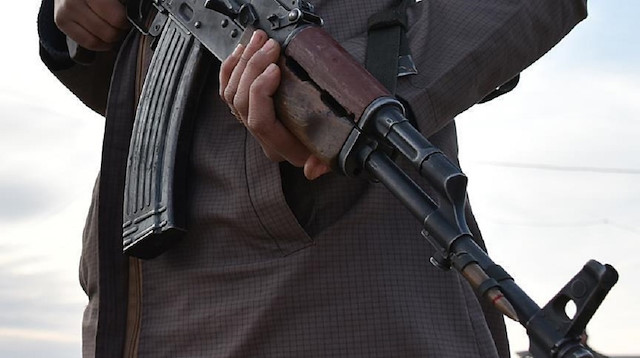
Gunmen Raid Three Houses, Kill Man, Abduct Eight in Kaduna
ShareBy David Torough, Abuja Suspected bandits have killed a resident and abducted eight people who remain in captivity during an...

From Reform to Shared Prosperity: The Real Test of Nigeria’s Economic Recovery
ShareProf Uche Uwaleke President Bola Ahmed Tinubu’s 66th Independence Anniversary address, delivered against the backdrop of persistent economic hardship and...

Insecurity: FCTA Completes Ushafa, Saburi Divisional Police Headquarters, 10 Underway
ShareBy Laide Akinboade, Abuja In order to boost security, the Federal Capital Territory Administration (FCTA) on Wednesday said it has...
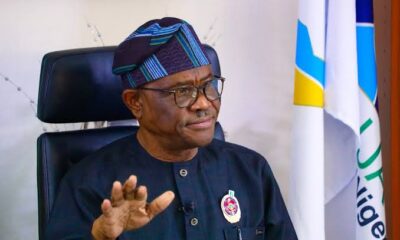

2027: I ‘ll Resign As Minister If Tinubu Loses FCT, Rivers – Wike
ShareBy Laide Akinboade, Abuja The Minister of the Federal Capital Territory (FCT), Nyesom Wike, has declared that he will step...

JAMB Extends Deadline for 2021–2025 Outstanding Admissions to Nov 30
ShareThe Joint Admissions and Matriculation Board (JAMB) has extended the deadline for candidates with outstanding admission offers from the 2021...