
NEWS
The Battle for 2027: Gov Sule’s Legacy on the Line

By Abel Zwanke, Lafia
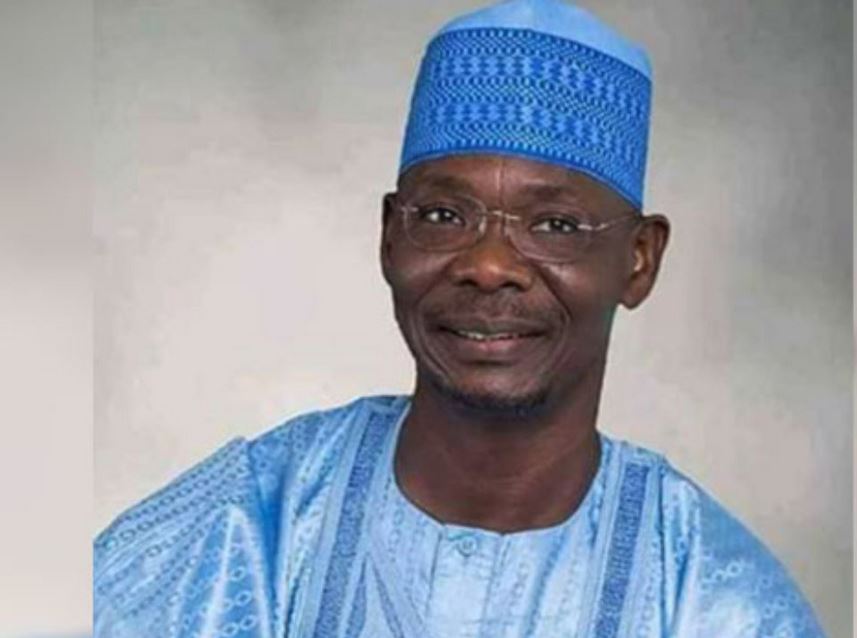
As Nasarawa State gradually approaches another defining electoral season in 2027, the political chessboard is already shifting. At the centre of the unfolding drama is Governor Abdullahi Sule, who will complete his second term in office by then and faces the critical task of ensuring a stable succession.
The question on the minds of party stakeholders, pundits, and ordinary citizens alike is simple: who should succeed him?A recent commentary in many media outlets suggested that the governor should “look inward” when considering his successor—an argument that has since generated intense discussion within Nasarawa’s political and social circles.
But what does it mean to look inward, and why does it matter for the people of Nasarawa State?For many observers, the case for an internal successor—someone already part of Governor Sule’s administration—is rooted in continuity. Nasarawa has made notable progress in the last five years, particularly in industrial development, infrastructural expansion, and education. A successor who has been part of this process would not only understand the governor’s vision but would also be in the best position to consolidate it.
Dr. Yakubu Umar, a political science lecturer at Nasarawa State University, Keffi, explained:“In a state like Nasarawa, which is still struggling with basic infrastructural and social deficits, discontinuity is costly. Governor Sule has laid down certain foundations, especially in industrialization and energy. Bringing in an outsider might lead to policy reversal. That is why an internal successor makes practical sense.”
Indeed, Sule’s administration has been praised for its emphasis on long-term economic planning, including leveraging Dangote’s investment in cement and developing the state’s solid mineral sector. Abandoning these plans midway could jeopardize their impact.
Beyond continuity, looking inward has implications for political stability within the ruling All Progressives Congress (APC). Analysts argue that picking a successor from within Sule’s political family may reduce infighting and factionalism, which often destabilize Nigerian states during transitions.
Hon. Musa Ibrahim, a grassroots APC mobilizer from Awe Local Government, put it bluntly:“If His Excellency goes outside his team, there will be rebellion within the party. People want to see loyalty rewarded. It is the surest way to unite APC before 2027.”
This is not an idle concern. Nasarawa politics has long been characterized by sharp divides between various power blocs—sometimes along ethnic, religious, or zonal lines. A candidate too far removed from the governor’s inner circle could easily fracture the party and embolden opposition forces.
Another powerful argument is that internal candidates are already familiar with the state’s challenges and opportunities. Having served in government, they understand the dynamics of local governance and are less likely to be blindsided by bureaucratic hurdles.
Mrs. Hauwa Suleiman, a civil servant in Lafia, told this reporter:“We don’t need a stranger who will come and spend two years learning how things work. Someone who has been in government under Governor Sule will know the terrain and continue quickly.”
Her view resonates with many Nasarawa residents who worry about the disruptions that often follow the election of a governor with little prior administrative exposure.
For Governor Sule himself, the stakes are personal. Political legacies in Nigeria often rise or fall on the character and performance of a successor. An internal candidate, many argue, is more likely to protect and extend the governor’s achievements.
Comrade Usman Tanze, a youth leader from Wamba, observed:“Governor Sule has done well in opening up Nasarawa for business. But if he brings someone from outside, that person might abandon these projects for new agendas. His Excellency should think of his legacy.”
Political history supports this fear. Across Nigeria, many governors have seen their legacies erased by successors who chose different paths. Sule’s allies believe that choosing from within could prevent a similar fate.
However, while the argument for looking inward is compelling, it is not without its challenges. Politics is ultimately about winning elections, and not all internal candidates possess the charisma, grassroots appeal, or political capital to secure victory.
Dr. Ismailia Ahmed, a public affairs commentator, issued a caution:“Governance experience is one thing; electability is another. If the APC fields an internal candidate who cannot connect with the electorate, the opposition will capitalize on that. Governor Sule must weigh popularity alongside competence.”
Moreover, Nasarawa’s delicate zoning arrangement adds another layer of complexity. Power rotation among the state’s three senatorial zones has become a political expectation. Any candidate perceived to upset this balance could face resistance, even within the APC.
A youth activist from Karu, Mr. Gabriel Ilya, emphasized:“Nasarawa is diverse. The governor has to consider where the next leader should come from. If he insists only on his inner circle without balancing ethnic and zonal factors, it could create resentment.
On the streets of Lafia, Keffi, Akwanga, and other towns, ordinary citizens express mixed feelings. Some are firmly in support of the idea of continuity through an internal candidate, while others argue that competence should outweigh loyalty.
In Keana, farmer Bala Agada noted:“We don’t care if the next governor is from Sule’s cabinet or not. What we want is someone who can fix our roads and support agriculture. If looking inward will give us that, fine. If not, we will vote otherwise.”
Similarly, in Nasarawa Eggon, a teacher, Mrs. Helen Amoka, stated:“Continuity is good, but competence is better. Let them give us someone who understands education. Many of our schools are still without teachers and facilities.”
These voices underscore the reality that beyond party calculations, the electorate’s priorities remain grounded in service delivery.
The debate in Nasarawa is not happening in isolation. Across Nigeria, succession politics has become a central issue for governors in their second terms. Vice President Kashim Shettima recently alluded to the importance of “legacy protection” in governance, noting that “leaders must think of who takes over after them if they truly care about the people.”
Former CBN deputy governor, Prof. Kingsley Moghalu, also weighed in during a national television interview:“Succession in Nigeria is often about patronage rather than performance. Governors should support successors who can consolidate on their policies, not just cronies. If Sule looks inward, it should be about competence, not just loyalty.”
Such national reflections give weight to the Nasarawa debate, highlighting its significance beyond the state’s borders.
As 2027 approaches, Governor Sule faces a dilemma. On one hand, looking inward promises stability, continuity, and legacy preservation. On the other, it risks narrowing the pool of candidates, potentially sidelining more electable figures or upsetting zoning balances.
The governor’s eventual choice will likely be influenced by a combination of factors: internal party negotiations, grassroots feedback, national political dynamics, and personal conviction. But one thing is clear—the decision will shape Nasarawa’s trajectory for years to come.
The call for Governor Abdullahi Sule to look inward is not just a political strategy—it is a vision for continuity, stability, and sustained development in Nasarawa State. Yet it is also fraught with risks that require careful navigation.
Ultimately, as Dr. Yakubu Umar succinctly put it:“The governor must balance loyalty with competence, zoning with electability, and continuity with innovation. Looking inward is wise, but it must be done with wisdom.”
For the people of Nasarawa, the 2027 election will not only be about who takes over from Sule, but about whether the state can sustain its current momentum and truly deliver on the promise of inclusive development.
And in that decision, Governor Sule’s legacy will either stand tall—or falter.
 | ReplyReply allForwardAdd reaction |
By Laide Akinboade, Abuja
The Christian Association of Nigeria (CAN) on Wednesday, disassociate itself from Archbishop Chivir Chianson and the group he represents, following attempts to present himself as the General Secretary of the Association and associate CAN with a purported church mobilisation in support of a political candidate ahead of the 2027 general elections.
This was contained in a statement issued by the CAN President, Archbishop Daniel Okoh in Abuja.
Okoh insisted that Archbishop Chivir Chianson is not the General Secretary of CAN and has no authority or mandate to speak or act on its behalf.
According to the CAN boss, “Furthermore, the group he represents has no official affiliation, working relationship or institutional connection with CAN.
“CAN has not authorised, endorsed or mandated the individual or his group to organise, promote or undertake any political mobilisation in its name. Any political position, endorsement or activity attributed to them must not be mistaken for the position or activities of the Association.
“As the umbrella body representing Christians across Nigeria, CAN has a responsibility to defend the interests of the Christian community and contribute to national development. It will not allow individuals or groups with no official relationship with the Association to appropriate its identity or exploit its name to advance political or personal interests”.
Okoh therefore reiterated the commitment of CAN, “The Association wishes to reaffirm its commitment to political neutrality as the country approaches the 2027 general elections. CAN will continue to engage national issues objectively and hold political leaders accountable, irrespective of party affiliation, without endorsing or mobilising support for any political party or candidate”.
He also urged the members of the public, particularly Christians, as well as media organisations, to disregard any claim of official representation of CAN by the individual or his group.
“We also call on TVC News and other media organisations to exercise due diligence in verifying the credentials and institutional affiliations of individuals presented as representatives of the Association.
“CAN will take all appropriate steps to protect its name, identity and institutional integrity against unauthorised representation and misrepresentation”.
The National Drug Law Enforcement Agency (NDLEA), arrested 1,200 suspects and seized more than 30 tonnes of illicit substances in Edo in 2025, according to its Chairman, retired Brig.-Gen. Mohamed Buba Marwa.
Marwa disclosed this on Wednesday in Benin during a visit to the palace of the Oba of Benin, Oba Ewuare II.
Marwa, who was accompanied by senior agency officials, including NDLEA commandants in Edo and Delta, sought the traditional ruler’s support in the fight against drug abuse and trafficking.
He said that more than 15 million Nigerians were abusing drugs, representing about three times the global average, with devastating consequences for young people, families and communities.
“The drug scourge has continued to devastate our youth, our families and our communities,” he fumed.
Marwa said the problem affected all communities, including the Benin Kingdom, and required a collective response involving traditional institutions, religious organisations, civil society groups, government and the media.
“But most importantly, the traditional institution, which is arguably the most respected institution in Nigeria today,” he said.
He explained that the NDLEA’s responsibilities included enforcing drug laws and providing counselling, treatment and rehabilitation for people struggling with drug dependence.
Marwa also highlighted alternative development as a new pillar of the agency’s drug control strategy aimed at encouraging cannabis farmers to cultivate legal crops such as cassava, yam and maize.
He said cannabis accounted for 75 per cent of the 16 million kilogrammes of illicit substances seized by the agency nationwide in the past six years.
According to him, the initiative seeks to help farmers abandon illicit cultivation for legitimate livelihoods, with government support for infrastructure, including roads, schools, clinics and water supply.
Marwa said the programme had commenced as a pilot project in three communities in Ondo State, with the possibility of extending it to Edo.
He added that he had presented the proposal to the Edo governor, who welcomed the initiative.
The NDLEA chairman sought the Oba’s blessing and support in encouraging communities across the kingdom to shun drug abuse and trafficking.
Responding, Oba Ewuare II commended Marwa for his efforts against drug abuse and other social problems.
The traditional ruler said he had a suggestion for improving the agency’s operations and would communicate it privately to Marwa.
“I have a suggestion I will make in writing that I will not want to say here in public to NDLEA, as my own thinking on how to improve the work of NDLEA,” he said.
The Oba also acknowledged the importance of collective efforts in addressing societal challenges and wished Marwa and his delegation well.(NAN)
By Tony Obiechina, Abuja
Jaiz bank has denied involvement of alleged N104m fraud in its Jos branch.
In a statement by its Corporate Communications Department in Abuja on Wednesday, the bank said “Jaiz Bank Plc wishes to address recent media reports alleging institutional fraud involving a disputed ₦104 million investment arrangement in Jos, Plateau State”.
According to the statement, following a comprehensive review of transactions involving a former employee and some complainants, Jaiz Bank clarifies that the disputed funds were never received, booked, or registered under any official Jaiz Bank investment product or account.
Continuing, the state that internal records show no evidence of Bank-authorized investments, but rather indicate private transactions between the complainants and the former employee.
“The transaction details provided by the complainants do not align with Jaiz Bank’s established operational, regulatory, or authorization protocols.
“As the matter is pending before the High Court of Justice of Plateau State, Jaiz Bank urges the public and media to avoid drawing premature conclusions based on unverified public narratives.
“Jaiz Bank remains fully committed to ethical, Shari’ah-compliant finance, transparency, and cooperation with regulatory and judicial authorities to ensure a fair resolution”, the statement added.




2027 Elections: CAN Disowns Man Claiming its General Secretary
ShareBy Laide Akinboade, Abuja The Christian Association of Nigeria (CAN) on Wednesday, disassociate itself from Archbishop Chivir Chianson and the...

INEC Seeks UN Partnership in Tackling Disinformation on 2027 General Elections
ShareThe Independent National Electoral Commission (INEC) has called for the partnership of the United Nations in combating disinformation in the...

2025: NDLEA Arrests 1,200, Seizes 30 Tonnes of Drugs in Edo – Marwa
ShareThe National Drug Law Enforcement Agency (NDLEA), arrested 1,200 suspects and seized more than 30 tonnes of illicit substances in...

JAIZ Bank Denies Involvement in N104m Investment Fraud in Jos Branch
ShareBy Tony Obiechina, Abuja Jaiz bank has denied involvement of alleged N104m fraud in its Jos branch. In a statement...

Trump-backed Republican Senate candidates pay the price
SharePresident Donald Trump asked voters to pretend he was on the ballot in the midterm elections and handpicked Republican candidates...


Court to Deliver Judgment in El-Rufai’s N10bn Rights Suit
ShareThe Federal High Court in Abuja has fixed Dec. 8 for judgment in a N10 billion rights suit filed by...
Women and Land: Why Nigeria’s Land Administration Cannot Afford to Leave Half the Nation Behind
ShareThe ongoing conversations on land reform in Nigeria tend to focus on speed, cost and documentation. Seemingly disregarded is the...

Caverton Revenue Rises to N20.74bn
ShareBy Tony Obiechina, Abuja Caverton Offshore Support Group Plc recorded a 1.4 per cent increase in revenue to N20.74bn for...

Tinubu Slashes External Loan Request to $7.7bn, Seeks Senate Nod
ShareBy David Torough, Abuja President Bola Tinubu has revised the Federal Government’s 2026 external borrowing proposal, seeking Senate approval to...


Senate Criminalises Hospitals’ Rejection of Emergency Patients
ShareBy David Torough, Abuja The Senate has advanced a bill seeking to criminalise the rejection or neglect of patients requiring...