
Education
University of Calabar’s Unending Controversies

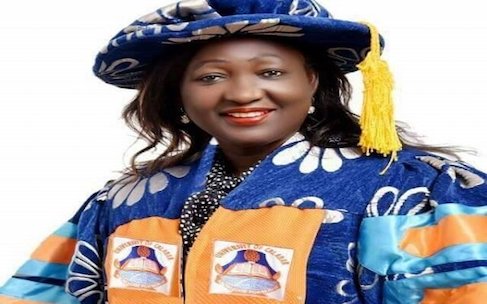
By Jerome-Mario Utomi
It is no longer news that the management of the University of Calabar has suspended the Dean of the Faculty of Law, Prof Cyril Ndifon, over allegations of sexual harassment of female students.
Ndifon’s suspension which took immediate effect followed a probe into the allegations of sexual harassment leveled against him by some female students of the faculty who were recently seen in a viral video storming the office of the school’s Vice-Chancellor, Prof Florence Obi, wielding placards with inscriptions such as, “Ndifon must go for our sanity,” “We are tired of buying law journals,” “We are tired of lecturers not attending classes,” and “Law girls are not your bonanza’.
The suspension was reportedly conveyed via a letter by the school’s Registrar, Gabriel Egbe, and partly read, “Please refer to our letter Ref UC/REG/DISC.45A dated August 14, 2023, on your alleged violation of the provisions of the extant laws and policies of the university and your response to the said letter which was dated August 16, 2023. “The vice-chancellor has gone through your written representations and is not satisfied with your explanations.
Essentially, while the suspension is appreciated, this piece on the other hand believes that Unical is not alien to scandals. Profession Ndifon’s latest sex scandal is just an addition to the institution’s gale of bad press.
Recall that the erudite Professor of Law was in 2015 suspended over the same sexual harassment allegation. Commentators are never tired of harping on the university’s lurid downside which has seemingly defied successive leaderships.
For example, reports have shown that Unical is not only reputed for poor relationships with students but equally allergic to good image when it comes to dealings with its publics, including suppliers.
Notedly, while the dust raised by the Ndifongate (part two) appears to be settling, another tar on Unical’s linen has just reared its ugly head, prompting analysts to suggest that there is something deeply troubling with the school, albeit hidden.
In this light, the reported ordeal suffered in the hands of the successive University of Calabar leadership, from 2014 till date, (9 years), by Isioma Aninyem, a Nigerian, trading under the name Michael Hull Services, an educational services company that is primarily involved in sourcing and supplying of educational materials, particularly journals, to educational institutions, readily comes to mind.
Giving details of what he termed ‘’using trickery and deception to obtain sets of academic/research journals to the tune of N1, 034,700 (One Million and Thirty-four Thousand, Seven Hundred Naira Only) from the organization in 2014’’, the management of MICHAEL HULL SERVICES in the referenced report explained that the then university librarian, Dr. (Mrs.) Ruth Simon Bassey contacted Michael Hull Services, in the aforementioned year – to provide academic/professional journals to the university library in preparation for the accreditation of the academic programs of the university by the National University Commission.
Dr. (Mrs) Bassey, according to the firm, had assured that immediate payment would be made after the delivery of the journals to the university.
She thus pleaded with him (Isioma Anyinyem) to grant the credit to the university even though this was against the practice in the firm. The organization agreed and supplied the journals to the university library.
Unfortunately however, to this day, the organization has written and appealed to the bursar, vice-chancellor, accountant and the university librarian to pay the money as promised, but the appeals never yielded any result.
‘In 2015, I demanded payment. She informed me that the invoice was being processed. In 2016, I called again that I had not been paid; she stated that the university and the former university bursar were having legal issues in court and that I would be paid after the case. She later called me to say that a new university bursar had been appointed and that I would be paid.
“But contrary to that promise, when I called the new university bursar, she stated that she was unaware of the non-settlement of that invoice. I sent the details to her but nothing was done.
“As if that was not enough woes, ‘in 2018, the university bursar sent a message to my telephone stating that the contract was awarded by the former university vice-chancellor and funded or paid for. I quickly informed Dr. (Mrs.) Simon Bassey of the new development but she immediately denied the bursar’s claim and told me she had met her on several occasions to advance my case.
“She went further to inform me that it would be false, and sent this Payment Voucher Number: Michael Hull, PV, 158 of 14th Jan, 016 # 906,865.50. This was likely to reassure me that there was no payment made to anybody. I forwarded the message to the bursar, but she refused to state who the payment was made to. I wrote to the vice-chancellor of the university, demanding and appealing to him to pay me. There was no response from him’’.
Continuing, Mr Isioma said “In 2019, the university librarian, Mrs. Nkoyo Edem called me to apologize on behalf of the university and appealed to me not to take legal action against the university, and that I should forward a copy of the original invoice of the supplied journals to her for onward processing. This I did, but unfortunately, the university has refused to pay me or even reach out to me till today.
“Not even my petition to the Independent Corrupt Practices and Other Related Offices Commission (ICPC) and The Public Complaint Commission, have been able to compel UNICAL management to positively respond to my demand. Isioma concluded”
This is the reality confronting Isioma Aninyem and his firm, Michael Hull services!
Going by the above account, it will elicit the question as to; who knows how many Nigerians have suffered similar fates in the past or still going through such plight in the hands of the University of Calabar management. How many Nigerian businessmen/women would stand the test? Who will stop the university authority from such inhuman treatment of their fellow Nigerians? What is the offense committed by Michael Hull? Who should be the judge? Must we as a nation allow UNICAL to go on with such practice to the detriment of businesses in Nigeria?
Undoubtedly, it will be convenient for some commentators to argue that this is a commercial dispute and therefore, should be settled privately without coming to the public domain. But in the opinion of this piece, there are glaring reasons why this particular issue must be investigated.
Very fundamental, the university in question is a public institution of higher learning conducted with the approval, and from the funds of the public. Therefore, when such a public institution ceases to have public support or is involved in any form of infraction that has to do with a lack of transparency or accountability, or a combination of both, it forfeits its right to exist. In the present circumstance, a university maintained on permanent public funds has been accused of being serially reputed for undermining public trust and therefore, this piece sees no reason why it should not be placed under scrutiny.
Regardless of what others may say about the amount of money in question, by all standards, N1N1,034,700One Million and Thirty-four Thousand, Seven Hundred Naira Only), is a huge amount that must not be allowed go to unaccounted for. Similarly, assuming without conceding that the money used for the supply of the journal was a loan sourced om a financial institution, the weight of accumulated interest in the past 9years would have been crushing by now.
Like an unchained torrent of water submerging the whole countryside and devastating crops, even so, will the authorities of the university continue to treat their suppliers and other stakeholders if this particular infraction and others are not investigated and those involved bare ought to book?
President Bola Ahmed Tinubu led the Federal Government and other relevant stakeholders must, therefore, look into this present issue as there exists the possibility of such ill-treatment escalating in other universities in Nigeria if the present is handled with levity.
Jerome-Mario Utomi is the Programme Coordinator (Media and Public Policy), at Social and Economic Justice Advocacy (SEJA), Lagos. He could be reached via jeromeutomi@yahoo.com/08032725374.
The Federal Government has approved N4bn for the payment of allowances to Nigerian students studying abroad under the Bilateral Education Agreement.
The approval follows outcries from the beneficiaries who had lamented that they were being pushed into forced labour and prostitution due to prolonged hardship occasioned by the nonpayment of their allowance by the Federal Government.
The Minister of Education, Tunji Alausa, disclosed that the fund, representing part of the N8bn budgeted for the programme this year, had been released as the first tranche to address outstanding payments owed to the scholars.
“The Federal Ministry of Finance has approved N4bn to pay the first tranche, and I am working with the Minister of Finance to settle the remaining N4bn. Hopefully, in the next few weeks, they will receive all their allowances for 2025 and 2026.
According to him, efforts are ongoing between both ministries to ensure that all outstanding payments are cleared, with the balance expected to be released within four weeks.
The development follows a disturbing viral video from affected students across countries, including Russia, Serbia and Venezuela, who said delays in stipends spanning over a year had left many struggling to survive, with some resorting to menial jobs while others claimed female students had been forced into prostitution.
The outcry comes barely a year after the Federal Government terminated the scholarship programme and promised to ensure that current students are funded to complete their studies.
In 2025, the minister cited inefficiency and misallocation of national resources as reasons for terminating the programme, following similar complaints from previous beneficiaries.
The programme, established through diplomatic partnerships, had enabled Nigerian students to study in countries such as China, Russia, Hungary, Morocco, Algeria, Egypt and Serbia.
He explained that the scheme had become unsustainable, noting that the government planned to spend about N9bn on just 1,200 students in 2025.
However, the minister assured that all current beneficiaries of the scheme would continue to receive full government support until they complete their studies and return to Nigeria.
Despite assurances that current beneficiaries would not be affected, several students said they had not received stipends for over two years, leaving them stranded.
In the viral video, about 16 Nigerian scholars in Russia appealed to the government for urgent intervention, describing their situation as dire.
One of the students, a fifth-year medical student in Rostov, said many had been pushed into extreme conditions to survive.
A student leader in Russia, who spoke on condition of anonymity, confirmed the development recently, lamenting that the rising cost of living and currency challenges had worsened their situation.
She added that restrictions on student work permits in some countries further limit their ability to earn income.
Another student in Venezuela described the situation as abandonment, noting that scholars from other countries receive regular support from their governments.
He said, “It is only Nigerians that are abandoned. Other countries like Mozambique, Burkina Faso, and Brazil, send delegates to check on their students and pay them, but no one comes from Nigeria.
A parent of an affected scholar, who spoke anonymously with our correspondent, said relevant government agencies had been engaged to facilitate the payment.
“The situation requires prompt attention. These children were sent abroad through a government programme. There have been delays in stipends despite repeated appeals to the Ministry of Finance, Ministry of Education and other agencies.”
The Federal Government had earlier, in January, dismissed claims that Nigerian scholarship students in Morocco were abandoned, following a viral video that showed some students facing hardship, including homelessness and lack of medical support.
The video, shared on X by activist Martins Otse, featured interviews with Nigerian students in Morocco who alleged they had gone for years without receiving financial support despite being beneficiaries of government scholarships.
Reacting, the Federal Ministry of Education, in a statement signed by its Director of Press and Public Relations, Boriowo Folasade, insisted that no student on a valid Federal Government scholarship had been neglected.
Alausa was quoted as saying that all beneficiaries enrolled under the Bilateral Education Scholarship Programme before 2024 had received payments up to the 2024 budget year in line with government obligations.
The statement noted that any delays in outstanding payments were due to fiscal constraints and were being addressed through ongoing engagements between the Ministry of Education and the Ministry of Finance.

The Federal Government has approved N4bn for the payment of allowances to Nigerian students studying abroad under the Bilateral Education Agreement.
The approval follows outcries from the beneficiaries who had lamented that they were being pushed into forced labour and prostitution due to prolonged hardship occasioned by the nonpayment of their allowance by the Federal Government.
The Minister of Education, Tunji Alausa, disclosed that the fund, representing part of the N8bn budgeted for the programme this year, had been released as the first tranche to address outstanding payments owed to the scholars.
“The Federal Ministry of Finance has approved N4bn to pay the first tranche, and I am working with the Minister of Finance to settle the remaining N4bn. Hopefully, in the next few weeks, they will receive all their allowances for 2025 and 2026.
According to him, efforts are ongoing between both ministries to ensure that all outstanding payments are cleared, with the balance expected to be released within four weeks.
The development follows a disturbing viral video from affected students across countries, including Russia, Serbia and Venezuela, who said delays in stipends spanning over a year had left many struggling to survive, with some resorting to menial jobs while others claimed female students had been forced into prostitution.
The outcry comes barely a year after the Federal Government terminated the scholarship programme and promised to ensure that current students are funded to complete their studies.
In 2025, the minister cited inefficiency and misallocation of national resources as reasons for terminating the programme, following similar complaints from previous beneficiaries.
The programme, established through diplomatic partnerships, had enabled Nigerian students to study in countries such as China, Russia, Hungary, Morocco, Algeria, Egypt and Serbia.
He explained that the scheme had become unsustainable, noting that the government planned to spend about N9bn on just 1,200 students in 2025.
However, the minister assured that all current beneficiaries of the scheme would continue to receive full government support until they complete their studies and return to Nigeria.
Despite assurances that current beneficiaries would not be affected, several students said they had not received stipends for over two years, leaving them stranded.
In the viral video, about 16 Nigerian scholars in Russia appealed to the government for urgent intervention, describing their situation as dire.
One of the students, a fifth-year medical student in Rostov, said many had been pushed into extreme conditions to survive.
A student leader in Russia, who spoke on condition of anonymity, confirmed the development recently, lamenting that the rising cost of living and currency challenges had worsened their situation.
She added that restrictions on student work permits in some countries further limit their ability to earn income.
Another student in Venezuela described the situation as abandonment, noting that scholars from other countries receive regular support from their governments.
He said, “It is only Nigerians that are abandoned. Other countries like Mozambique, Burkina Faso, and Brazil, send delegates to check on their students and pay them, but no one comes from Nigeria.
A parent of an affected scholar, who spoke anonymously with our correspondent, said relevant government agencies had been engaged to facilitate the payment.
“The situation requires prompt attention. These children were sent abroad through a government programme. There have been delays in stipends despite repeated appeals to the Ministry of Finance, Ministry of Education and other agencies.”
The Federal Government had earlier, in January, dismissed claims that Nigerian scholarship students in Morocco were abandoned, following a viral video that showed some students facing hardship, including homelessness and lack of medical support.
The video, shared on X by activist Martins Otse, featured interviews with Nigerian students in Morocco who alleged they had gone for years without receiving financial support despite being beneficiaries of government scholarships.
Reacting, the Federal Ministry of Education, in a statement signed by its Director of Press and Public Relations, Boriowo Folasade, insisted that no student on a valid Federal Government scholarship had been neglected.
Alausa was quoted as saying that all beneficiaries enrolled under the Bilateral Education Scholarship Programme before 2024 had received payments up to the 2024 budget year in line with government obligations.
The statement noted that any delays in outstanding payments were due to fiscal constraints and were being addressed through ongoing engagements between the Ministry of Education and the Ministry of Finance.

The Federal Government has approved exemption of candidates seeking admission into the National Certificate in Education (NCE) programme with a minimum of four credits from sitting for the Unified Tertiary Matriculation Examination (UTME).
The Minister of Education, Dr.
Tunji Alausa, announced the policy on Monday in Abuja, at the 2026 Policy Meeting on Admissions into Tertiary Institutions organised by the Joint Admissions and Matriculation Board (JAMB).The event also featured the 6th Edition of the National Tertiary Admissions Performance-Merit (NATAP-M) awards.
Alausa said the decision followed consultations with stakeholders aimed at expanding access to teacher education and strengthening enrollment in Colleges of Education (CoE) nationwide.
He explained that eligible candidates would, however, be required to register with JAMB for proper screening, verification and issuance of admission letters through the Central Admissions Processing System (CAPS).
According to him, the exemption is part of deliberate reforms to harness the admission capacity of colleges of education, particularly within local communities.
“Accordingly, candidates seeking admission into the NCE programme, who possess a minimum of four credit passes, will no longer be required to sit for the UTME.
“However, it is imperative to emphasise that such candidates shall mandatorily register with JAMB, and their credentials shall be duly screened, verified, and certified for the issuance of admission letters thr“In recognition of this reality, the Federal Ministry of Education, in consultation with relevant stakeholders, has taken a deliberate policy position.
ough CAPS, in accordance with extant regulations.”
The minister added that the exemption would also apply to candidates seeking admission into National Diploma programmes in non-technology agricultural and agriculture-related courses.
He said the measure was designed to ease pressure associated with UTME, while encouraging participation in critical sectors essential to national development.
He reiterated that admissions conducted outside CAPS remained illegal and would not be recognised by the government.
He also warned that institutions violating established admission procedures risked sanctions, including suspension of operating licences where applicable.
Alausa reaffirmed the government’s position on 16 years as the minimum admission age into tertiary institutions, noting that the decision aimed at maintaining inclusivity and academic readiness.
He noted that the federal government was implementing wide-ranging reforms in the education sector focused on access, quality, governance and accountability.
He commended JAMB for deploying technology-driven solutions that enhanced fairness and credibility in the admissions process.
He added that efforts were ongoing to deepen inclusion for Persons living With Disabilities through application fee waivers and targeted support initiatives.
“This initiative is not only humane but also a powerful affirmation of our national commitment to equity and equal opportunity.
“The increasing participation of candidates with disabilities in our examinations and admissions processes is clear evidence that when barriers are removed, potential is unleashed,” Alausa said.
The minister further disclosed that the government was advancing digital transformation in education through expanded computer-based testing and integration of artificial intelligence and emerging technologies into curricula.
He said the federal government had equally achieved progress in stabilising the university system, following successful renegotiation of agreements aimed at ensuring uninterrupted academic calendars.
Alausa reaffirmed the government’s commitment to combating examination malpractice through strengthened verification systems and enhanced collaboration among relevant agencies.
He urged stakeholders to uphold integrity and fairness in admissions decisions, noting that outcomes of the policy meeting would affect millions of Nigerian youths seeking tertiary education opportunities.




Eid-el-Kabir: CAN tasked Nigerian leaders to focus on restoring public confidence
ShareBy Laide Akinboade Abuja The Christian Association of Nigeria (CAN) on Wednesday, tasked Nigerians leaders to put aside indifference, blame-shifting...

Hon. Bawa Felicitates Muslim Ummah on Eid-El-Kabir Celebration
ShareBy Tambaya Julius, Abuja The Senior Special Assistant (SSA) on the Greater Karu Development Control Agency (KAPDA) to Governor Engr....

Eid-el-Kabir: Let’s Embrace Peace – Fintiri
ShareAdamawa State Governor, Rt. Hon. Ahmadu Umaru Fintiri, CON, has called on the people of Adamawa to rededicate themselves to...


Africa Gets 14 Olympic Slots in Boxing
ShareAfrica has been allocated only 14 direct qualification spots for the boxing event at the 2028 Los Angeles Olympics, a reduction from the 18...


US Launches New Strikes on Iran, Targets Missile Sites, Boats
ShareThe US said it launched new strikes on southern Iran on Monday, targeting Iranian missile sites and boats attempting to place mines. The strikes were in “self-defence” and designed “to protect our troops from threats posed...
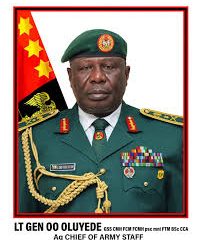

Army, TETFund Deepen Ties on Local Defence Technology
ShareThe Nigerian Army says it will deepen strategic collaboration with the Tertiary Education Trust Fund (TETFund) to boost local production of military hardware. The Chief of Army Staff...

Borno Shuts School, Relocates Students after Abduction of 42 Children
ShareFrom Muhammad Muhammad Al-amin, Maiduguri The Borno State Government has temporarily closed Government Day Secondary School, Mussa, in Askira/Uba Local Government Area after suspected insurgents abducted 42 children from...

NAICOM Licenses First Insurtech Firm under New Reforms
ShareBy Tony Obiechina, Abuja The National Insurance Commission (NAICOM) has formally granted an operational licence to CBI Partnering Insurtech Ltd,...


Eid-el-Kabir: Hope Lies Ahead Hard Times, says Tinubu
ShareBy David Torough, Abuja President Bola Tinubu yesterday declared that the sacrifices Nigerians have endured under his administration’s economic reforms...
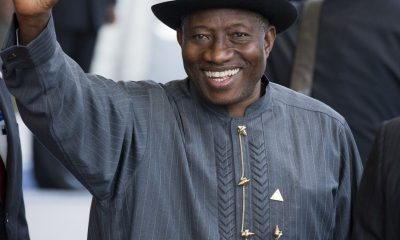

Court Clears Jonathan for 2027, Reaffirms INEC Election Powers
ShareBy David Torough, Abuja Two landmark judgments delivered by the Federal High Court in Abuja on Tuesday have reshaped the...