
NEWS
Where is Abdulrasheed Bawa?

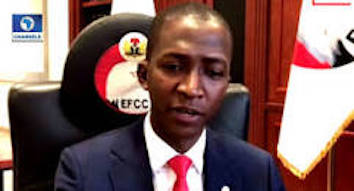
By Olusegun Adeniyi
Last Sunday, “Premium Times” reported that President Bola Tinubu had decided to appoint Olanipekun Olukoyede as the substantive chairperson of the Economic and Financial Crimes Commission (EFCC). A legal practitioner, Olukoyede served as secretary of the commission for two years before he was suspended along with Ibrahim Magu (then acting chair) and a few other officials in 2020.
The concern raised by the online newspaper about the choice of Olukayode is anchored on Section 2(3) of the EFCC Act, 2005 which stipulates that the commission chairman “must be a serving or retired member of any government security or law enforcement agency not below the rank of Assistant Commissioner of Police or equivalent; possess not less than 15 years’ experience.
” According to the report, Olukoyede, “who has primarily played administrative roles in EFCC for less than a decade, cannot be said to have attained 15 years of cognate experience, especially when he has never worked in the mainstream law enforcement operations of the commission or any related agency.”Beyond the issue of qualification raised by ‘Premium Times’, I have two additional concerns about the appointment. One, at a time the Independent Corrupt Practices Commission (ICPC) is chaired by Professor Bolaji Owasanoye, appointing another Yoruba man to head EFCC would be the height of recklessness.
In case the president is not aware (a Villa disease, especially under his predecessor), most Yoruba people I know are becoming increasingly embarrassed by a number of his appointments. I have received many of those WhatsApp messages that list critical offices in the economic/financial sector and the ethnic affiliation of appointees. There is already a whispering campaign in Abuja of a budding ‘Republic of Oduduwa’, based on these appointments. I hope someone will bring the issue to the attention of the president.
Interestingly, barely three weeks after the current administration’s inauguration, on 20th June to be specific, I wrote ‘Tinubu and the Buhari Error’ where I warned the president not to play ‘Amunibuni’ with a rehash of similar counsel his predecessor failed to heed. “Of the several columns I wrote on the lack of sensitivity in critical appointments by President Muhammadu Buhari, one stands out. I used a Yoruba word, ‘Amunibuni’, to situate my intervention,” I recalled in the piece with excerpts from the March 2021 column: “That making strategic concessions is beyond Buhari administration is an embarrassment, even for many northerners. That is because they are also aware that the appointments being cornered by a tiny clique is not to promote any ‘Northern agenda’ (whatever that may mean) but rather in pursuit of the personal interest by those who nominate these individuals. This explains why they go for their in-laws, kinsmen, friends, and the like. Yet nepotism in critical appointments engenders collective insults in the manner of ‘Abunibuni’”.
I went ahead to do a disquisition on what the Yoruba term means and the message it embeds within the context of Nigeria’s political arrangement before I concluded with an admonition for Tinubu three months ago: “Even when he did nothing to improve the material condition of the average Fulani man, the damage President Buhari did to people of that ethnic stock in eight years was enormous. And as a Yoruba man, I wouldn’t want President Tinubu to do that to me. I am aware that there are thousands of appointments still to make and most of these things ultimately even out. But signalling is also important, especially by a new administration. That is why presidential handlers need to be circumspect lest they attract insults to Yoruba people who have always advocated for a peaceful and secure Nigeria that works for all citizens and where there is equity and justice in the distribution of opportunities…In making critical appointments, I hope the president will be mindful of the ‘Amunibuni’ syndrome. His appointments must be inclusive and reflect all our diversities. I shall be watching!”
Whatever may be his qualifications, it should be obvious that in a diverse society like ours, to appoint Olukayode as Chairman of EFCC will make no sense under prevailing circumstances. I hope whoever may be behind the idea will perish the thought. The second point I want to make concerns the whereabouts of the suspended EFCC Chairman, Abdulrasheed Bawa. In a terse statement on 14th June this year, Nigerians were told that Bawa’s suspension was so he could answer to “weighty allegations of abuse of office levelled against him,” with his office temporarily occupied by the commission’s director of operations “pending the conclusion of the investigation.” From that time till now, Bawa has neither been taken to court nor charged with any offense. He was simply locked up by the Directorate of State Security (DSS).
Arresting and keeping people in incarceration indefinitely is the hallmark of military dictatorship. It is a throwback to the era of the late General Sani Abacha when every opponent was deemed a ‘prisoner of war’ and dealt with accordingly. But we are now in a democracy and the only bulwark against tyranny is to apply the law and follow due process in a bid to safeguard the rights of citizens. The presidential system of government we practice in Nigeria is anchored on that sacred principle. Given Tinubu’s pro-democracy credentials under the military, he is the last person one would expect to trample on the liberties of others. There can be no justification for what is happening to Bawa, whatever may be his alleged crime.
Even more dangerous for the health of our democracy is the insinuation in the ‘Premium Times’ report that Bawa may soon ‘resign’ to pave way for the appointment of Olukayode. We should all be worried by these curious under-the-table resignations that mirror Mafia operations. It started with the Central Bank of Nigeria (CBN). Godwin Emefiele was last seen inside the courtroom holding a big bible, but Nigerians have since accepted the tale that he ‘resigned’ with his office already taken over by another person. The four deputy governors who served with Emefiele at the apex bank also similarly ‘resigned’ and have been replaced. In a true democracy, such an opaque way of handling serious state matters is unacceptable. Unfortunately, we have a National Assembly whose members are not alive to their responsibility.
While nobody is shedding tears for Emefiele, who can be described as the architect of his own downfall, the Bawa case is slightly different. It is not lost on the international community that the helmsman of an institution created to tackle graft in Nigeria is himself caught in allegations of unwholesome practices. That only compounds our image problem as a country. But if after almost four months of incarceration no charge has been brought against him, it can only mean that Bawa’s ordeal is more political than criminal. That is a gross abuse of power. The federal government must therefore conclude its investigation regarding the “weighty allegations” against Bawa without further delay. Bawa must also be availed of his rights under the law. And for President Tinubu and his handlers, I hope they understand the implication of their instinctive recourse to authoritarian impulses to even scores with those who may have rubbed them the wrong way while pursuing ‘Project Emilokan’: It can only imperil our fragile democracy. They must also understand that power is transient.
The Tinubu Divide
Two weeks ago, a respected former Minister from the North (and an ally of former Vice President Atiku Abubakar) forwarded to me a WhatsApp message. In the message taken from an X (formerly known as Twitter) post, the writer imputed that the promised strike by the Labour unions was a deal with Tinubu to ensure that Atiku would be unable to register the papers from Chicago State University (still being expected at the time) at the Supreme Court. Shortly before I received the message, I had seen a statement by the Minister of Information and National Orientation, Mohammed Idris, which suggested that Labour had agreed with the federal government to suspend the strike. Since this is someone to whom I am close, I thought I should correct the misconception in the shared post. So, I replied to him: “I don’t think the strike will continue. I am reading something that they (FG and Labour) may have reached a deal.” His terse response came almost immediately: “Are you also dem dem?” with an Emoji which depicts suspicion. Put in street language, I was being accused of having collected my share of ‘CORN-palliatives’.
As disappointed as I was by his message, I refused to take offense, knowing it goes with the season. I knew before the 2023 general election that the outcome would be divisive given the near-fanatical support enjoyed by three leading candidates. But I never expected the level of toxicity and hatemongering being witnessed on Nigerian social media landscape. In Nigeria today, it is difficult to sustain any meaningful conversation with political crusaders without being accused of impropriety, especially if you refuse to validate their prejudice. What I find even more strange is that young people are making enemies of one another because of support for either Atiku or Tinubu—two (former) friends who have done several things together over decades and whose children could still have their meeting points for mega deals. This of course is an issue for another day.
Interestingly, while some of us run away from social media because we have neither the temperament nor the dexterity to handle those who wish to conscript us into their wars, former Director General, Bureau of Public Service Reform (BPSR), Dr Joe Abah appears to be an expert in navigating that terrain. Amid reports of men being assaulted in Abuja for ‘stealing’ the manhood of other men after a mere handshake, there has been animated discussions on X with Abah a protagonist. “If you say that someone made your preeq disappear, at least show people the blank slate before you ask them to start beating the person na,” he wrote in one of his interventions as others add their perspectives on this latest Nigerian contribution to the world of ‘science and technology’. In another post, Abah volunteered to be used as an experiment by those with the expertise of making ‘the thing’ to vanish. “I don born finish. I no too need am again like that,” he posted.
However, the whole conversation did not go down well with a young man who considered it his business to prescribe what others must discuss on social media. “Ezemmuo, we’re in the mood (sic) of a very national issue involving our president’s CSU certificate. What’s your position as a senior lawyer Sir?” Without skipping a bit, Abah responded: “The most important national issue is people allegedly losing their preeqs. As a senior lawyer, I say show us the blank slate before you start beating the person. If it didn’t actually disappear and is just unresponsive, we call a Figure-Eight witness to cross-examine you.”
I will not be surprised if the young man read the reply, shook his head, and probably muttered, ‘Chai, Ezemmuo too don chop agbado’! May God deliver our country from the toxicity of this season!
You can follow me on my Twitter handle, @Olusegunverdict and on www.olusegunadeniyi.com
By Fransiscus Nanga Roka
The flourishing market in overseas cosmetic surgery offers you a dream — the promise of a new face, a new body, an extra holiday and at half the cost. What it too often delivers is much more sinister — death, disfigurement, and a tripwire/ obstacle course of the law to wear survivors down before any court ever hears their pain.
This is not just a matter of medicine. This is a cross-border accountability scandal.What is happening? Now instead of having liposuction, rhinoplasty, Brazilian buttlift and breast surgery in the comfort of a private room in an upscale L.
A. hospital, more patients are considering going overseas for less than the price of their traveling from say 5k plus flight. The bait here is the cheaper price. The hidden cost here is that your protection collapses once things are not going right! It works like this: if a patient dies, develops sepsis, experiences nerve damage, embolism, anesthesia gone terribly wrong or irreversible deformity—then the sales and marketing go away and it is put all on the person who has been injured.Who is responsible? Not only the surgeon. This liability must extend all the way up and down the profit chain, encompassing clinics, hospital operators, medical tourism brokers, influencers, advertising platforms and any spokesperson or intermediary selling safety they cannot validate. The failure to be in the moment The reason is that actors are too heavily monetizing desire and outsourcing risk. Such is the case with clinics who lure foreign patients in with glossy brochures and quick online consultations, then when the body on the operating table turns out to be butchered should not be allowed to hide behind borders.
Where does justice fail? In the space between countries. Patients go home injured, but courts at home routinely throw out claims under forum non conveniens and say: sue where it happened. Which sounds nice in theory and nasty in practice. Here the patient encounters alien laws, an alien tongue, and the range of overseas experts high-priced, privacy provisions very weak while drawing blood defending themselves as masters of delay. And even if a victim prevails at home, enforcing their judgment against the assets of a foreign clinic can be all but unfeasible.
What is the when of these harms being constructed? Long before the first incision. Negligence often starts at the hurried pre-operative evaluation: omitting parts of screening, cursory mental-health assessments, suboptimal risk disclosure and providing timelines for recovery that are dictated by airline flight schedules rather than by medical reality. Patients are discharged too early after surgery, or travel back home before safe follow-up and monitoring in the post-operative period has been achieved. Aesthetic tourism is frequently organized around speed, not care.
Why does this keep happening? Because the economics of the business model incentivizes volume, price competition and image management, above patient safety. Informed consent is often one signature, not a process. Accreditation can be inconsistent. Sterilization and staffing standards vary. Certain facilities are working below the global standard but continue luring foreigners with organized and relatively aggressive social media advertising practices. Global markets; provincial accountability.
Instead of regarding cross-border cosmetic harm as an unfortunate by-product of medical travel, governments and regulators should regard it as a predictable, enforceable policy failure The response cannot be sentimental. The third kind has to be structural, legal and immediate.
By-pass the symbolic nature of litigation and negotiate cross-border malpractice treaties (one) among states. Such agreements must ensure cross jurisdictional evidence-sharing, adequate service of process and real judgment enforcement mechanisms between jurisdictions. Absent that, every suit turns into a frustrating geography lesson: the harm occurs abroad, the evidence is spread far and wide, and away goes the defendant — safe behind borders.
In turn, foreigners patients should be protected through compulsory malpractice insurance. If a clinic exists to treat foreign patients, it must have insurance that specifically covers the complications after returning. That will prevent the insurer from just dumping his ass once he steps on a plane home. If surgery causes infection, disability or death in weeks after, the burden of cost should not be pushed onto bereaved families and already overstretched public health systems.
Third, they should make joint liability apply along the complete referral chain. Brokers, hospitals, platforms and marketing agents that push bad providers should not be able to say “Hey we didn’t know” after the damage is done. They should be legally accountable if they profit from peddling patients into dangerous hands. The model itself is one that privatizes profit and socializes the pain. That is indefensible.
Fourth, they should harmonize minimum informed-consent rules with a global standard. Consent should encompass a genuine recovery window, specific advisories about related travel hazards and explicit disclosure of probable complications, not small-print below fluff. An informed consent is a rushed signature, it is paper in the name of protection.
Fifth, we need an international registry system. Patients should have access to the veracity of clinic accreditation, whether the physician is licensed and serious adverse-event reporting that no public-relations team can scrub. Safe care depends on traceability. A system fails if the record of a doctor is opaque for you.
Make medical records transparent Many of the records, such as anesthesia logs and drug sourcing, operative notes, post-op instructions must be needless cross-border audits or reviewed in a court of law. Hidden records protect negligence. Open records expose it.
International arbitration should only be available if it actually protects the patient. And it must not become a private shield for defendants to evade public scrutiny.
Of course, this is not against medical travel. And that is about stopping the lucrative fiction that cheap surgery can be marketed without rigorous accountability.
Cosmetic surgery overseas is frequently sold as an exercise in consumer choice. But freedom without rights that can be enforced is no freedom. It is exposure. Without regulation from states, cheap beauty will, in short, remain one of the most profitable factions of organized irresponsibility on the world stage.
Fransiscus Nanga Roka, Faculty of Law University 17 August 1945 Surabaya and Managing Partner Law Firm Victorious Indonesia.
By Dan Amasingha, Minna
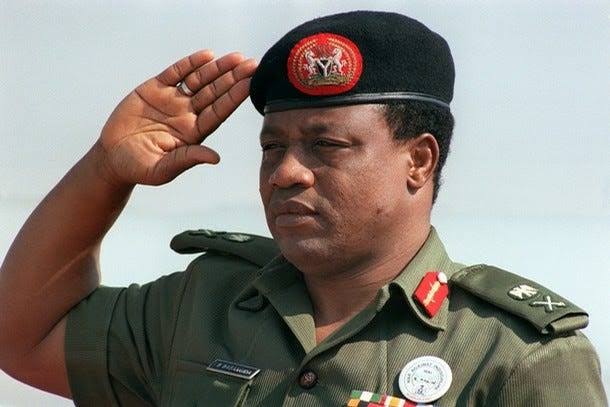
The Nigeria Union of Journalists (NUJ), Niger State Council, has congratulated former Military President, General Ibrahim Badamasi Babangida (rtd.), on his 85th birthday, describing him as an elder statesman whose policies and initiatives continue to shape Nigeria’s political, economic and socio-economic development.
In a congratulatory message signed by the Council Secretary, Comrade Usman Chiji, the NUJ thanked God for preserving the life of the former leader to witness the milestone, saying his 85th birthday provides an opportunity to reflect on his contributions to the nation.
The Council commended Babangida for policies, institutions and infrastructure initiatives introduced during his administration which, it said, continue to have direct impact on the lives of Nigerians.
It specifically cited the creation of additional states and local government areas, as well as the establishment of institutions including the Federal Road Safety Corps (FRSC), National Agricultural Land Development Authority (NALDA) and the Directorate of Food, Roads and Rural Infrastructure (DFRRI).
The NUJ also recalled the deregulation of the electronic media and the economic and financial reforms undertaken under Babangida, which it said created an environment for the emergence of private commercial banks and other enterprises aimed at strengthening the Nigerian economy.
According to the Council, many of the policies and initiatives introduced during the Babangida administration have remained significant milestones in the country’s political and socio-economic development, with successive governments reviewing, remodelling or modifying some of them.
The NUJ described Babangida as an elder statesman, military strategist and former Nigerian leader whose policies and programmes have outlived his administration.
The Council further acknowledged his contributions to regional and international peace, particularly Nigeria’s role in the establishment of the Economic Community of West African States Monitoring Group (ECOMOG), peacekeeping operations in troubled countries and efforts to strengthen Nigeria’s bilateral relations with other nations.
The journalists’ body prayed to God to grant the former military leader continued good health, wisdom and strength, as well as many more years of fulfilment and service to Nigeria.
Academic Staff Union of Universities (ASUU) has authorised 20 federal and state universities across Nigeria to commence varying degrees of industrial action.
The decision was reached during a critical National Executive Council (NEC) meeting held in Abuja between August 8 and 9, 2026.
ASUU National President, Prof.
Christopher Piwuna, disclosed this at the weekend, expressing the union’s deep frustration over the “haphazard implementation” of the landmark December 2025 FGN-ASUU Agreement.The union warned that a full-scale resurgence of campus unrest is now inevitable.
Regarding the 20 approved universities facing looming strikes, the NEC resolved to grant permission for industrial action once individual institutions successfully satisfy internal union requirements.
The affected institutions include: Adekunle Ajasin University, Akungba (AAUA); Nasarawa State University, Keffi (NSUK); Ibrahim Badamasi Babangida University, Lapai (IBBUL); University of Medical Sciences, Ondo (UNIMEDO); Gombe State University (GSU), Gombe; Plateau State University (PLASU), Bokkos; Emmanuel Alayande University of Education (EAUED), Oyo; Ambrose Alli University, Ekpoma (AAUE); Olusegun Agagu University of Science and Technology (OAUSTECH), Okitipupa; Abia State University (ABSU), Uturu; University of Education and Entrepreneurship (UEE), Akamkpa; Kaduna State University (KASU), Kaduna.
Others are Aliko Dangote University of Science and Technology (ADUSTECH), Wudil; Northwest University, Kano (NWUK); Enugu State University of Science and Technology (ESUT), Enugu; Imo State University (IMSU), Owerri; Niger Delta University (NDU), Wilberforce Island; University of Africa, Toru-Orua (UAT); Bayelsa Medical University (BMU), Yenagoa; and Taraba State University (TSU), Jalingo.
ASUU also disclosed that the implementation status of universities within the Lagos Zone is currently under review, with separate declarations expected in due course.
Speaking on the core grievances driving the crisis, ASUU noted that while Vice-Chancellors at the federal level face severe challenges due to underfunded monthly salary bills, the situation at the state level is considerably worse.
According to the union, only about 10% or fewer of state governors have openly endorsed the new salary package established in December 2025.
The rest were accused of “playing the ostrich” and passing financial burdens onto Governing Councils that lack the funding to back them.
The union also explicitly blamed officials within the Federal Ministry of Finance and the Office of the Accountant-General of the Federation. These bodies are accused of deliberately stalling promotion arrears, dragging their feet on monthly salary releases, and illegally withholding the remittance of academics’ deductions to their respective Pension Fund Administrations (PFAs).
Furthermore, ASUU raised concerns over the unpaid, withheld three-and-a-half months’ salaries dating back to the 2022 nationwide strike. While ASUU initially praised President Bola Tinubu for releasing four months of those salaries, the refusal to remit the balance has left a “strong bitter taste.”
The union also condemned the prolonged delays in paying the 25/35% wage award and outstanding promotion arrears to its members.
Meanwhile, ASUU issued a stern warning regarding the recent harassment of its branch leaders and members by Vice-Chancellors at ESUT, IMSU, and ABSU.
The NEC declared that it will strictly refuse to call off any industrial action in these specific institutions until all forms of victimization stop completely.
Beyond the immediate academic crisis, the NEC reviewed the worsening socio-political and economic landscape of Nigeria.
The union strongly condemned the ongoing atmosphere of pre-election violence, political killings, and economic instability as the country approaches upcoming election cycles, noting that these existential threats directly undermine the living and working conditions of everyday Nigerians and university lecturers alike.
Despite praising the mediation efforts of Senator Lanre Tejuoso, the Chairman of the Implementation Monitoring Committee (IMC), ASUU maintains that it will stop at nothing to enforce the full scope of the agreement.
The union has announced that it will convene an emergency NEC meeting in the next few weeks to appraise the situation. If the government fails to act swiftly to clear outstanding financial entitlements and halt the harassment of lecturers, a wider, coordinated national academic shutdown may follow.


Cheap Surgery, Costly Injustice
ShareBy Fransiscus Nanga Roka The flourishing market in overseas cosmetic surgery offers you a dream — the promise of a...

NUJ Felicitates Babangida at 85
ShareBy Dan Amasingha, Minna The Nigeria Union of Journalists (NUJ), Niger State Council, has congratulated former Military President, General Ibrahim...


Why I Married My Husband In Our Living Room – Ronaldo’s Wife
ShareGeorgina Rodríguez has disclosed that she chose their everyday family space to get married to Cristiano Ronaldo so that their...
ASUU Approves Strike in 20 Varsities over Breached 2025 Agreement
ShareAcademic Staff Union of Universities (ASUU) has authorised 20 federal and state universities across Nigeria to commence varying degrees of...

Nigeria’s Inflation Rate Drops to 15.43 Per Cent in July – NBA
ShareBy Tony Obiechina, Abuja Nigeria’s headline inflation rate fell to 15.43 per cent in July 2026, down from 15.91 per...

Igbinedion Varsity, EduTech Global Partner On Digital Education, Access
ShareBy Julius Tambaya, Abuja Igbinedion University, Okada, one of Nigeria’s leading private universities, has entered into a strategic partnership with...
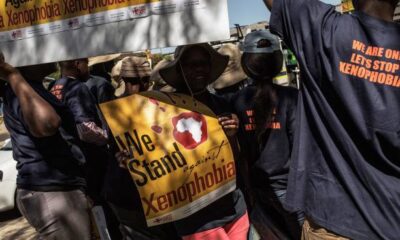

Xenophobia: FG Evacuates 83 More Nigerians from South Africa
ShareBy David Torough, Abuja The Federal Government has announced the arrival of another batch of 83 Nigerians evacuated from South...


Kaduna Varsity Lecturers’ Exodus Worsens as ASUU Issues Strike Ultimatum
ShareFrom Agbo Emmanuel, Kaduna More than 200 lecturers, including professors and other experienced academic staff, have left Kaduna State University...

NES 32 to Drive National Dialogue on Jobs, Productivity, Shared Prosperity
ShareBy Ayanyinka Ayanlowo Nigerian Economic Summit to Chart the Next Phase of Nigeria’s Economic TransformationThe Nigerian Economic Summit Group (NESG)...


Komaiya Wife Celebrates 29 Years of Marriage, Calls Husband ‘Divine Covering’
ShareBy David Torough, Abuja Pastor Mrs Esther Komaiya has poured out heartfelt tributes to her husband, Pastor Korede Komaiya, as...