
Uncategorized
World Bank Invests $5bn in Africa Drylands Farming


By Mathew Dadiya, Abuja
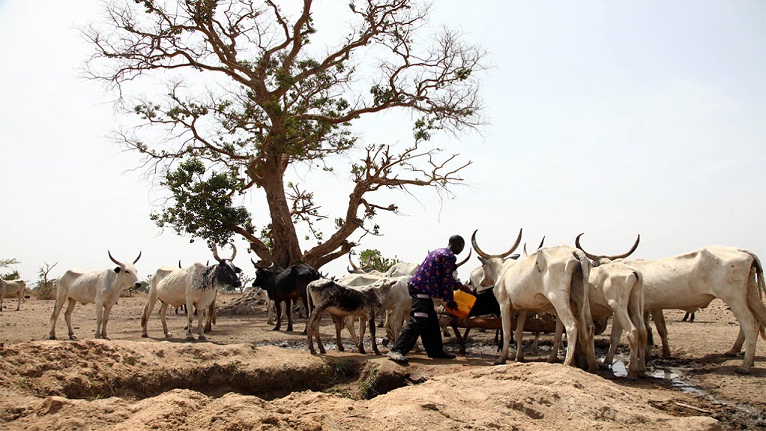
The World Bank yesterday said it plans to invest over $5 billion over the next five years to help restore degraded landscapes, improve agriculture productivity, and promote livelihoods across 11 African countries on a swathe of land stretching from Senegal to Djibouti.
World Bank Group President David Malpass announced the investment at the One Planet Summit, a high-level meeting co-hosted with France and the United Nations that is focused on addressing climate change and biodiversity loss.
“This investment, which comes at a crucial time, will help improve livelihoods as countries recover from COVID-19 while also dealing with the impact of both biodiversity loss and climate change on their people and economies,” said Malpass.
The more than $5 billion in financing will support agriculture, biodiversity, community development, food security, landscape restoration, job creation, resilient infrastructure, rural mobility, and access to renewable energy across 11 countries of the Sahel, Lake Chad and Horn of Africa. Many of these efforts are in line with the Great Green Wall initiative. This builds on World Bank landscape investments in these countries over the past eight years that reached more than 19 million people and placed 1.6 million hectares under sustainable land management.
“Restoring natural ecosystems in the drylands of Africa benefits both people and the planet,” said Moussa Faki Mahamat, Chairperson of the African Union Commission.
Working with many partners, PROGREEN, a World Bank global fund dedicated to boosting countries’ efforts to address landscape degradation, will also invest $14.5 million in five Sahelian countries – Burkina Faso, Chad, Niger, Mali, Mauritania.
The World Bank Group is the biggest multilateral funder of climate investments in developing countries. In December 2020, the World Bank Group announced an ambitious new target for 35% of its financing to have climate co-benefits, on average, over the next five years.







The UK unemployment rate in the three months to October has increased to 5.1%, according to official figures.
That marked a rise from 5% for the three months to September.
The number of people in the UK who are unemployed is now at its highest level since January 2021, just below the peak rate seen during the Covid-19 pandemic.
The Office for National Statistics (ONS) said the data reflected a “Subdued labour market”.
Average wage growth was 4.6%, excluding bonuses, between August and October 2025, but headed in different directions depending on whether you were employed by a company or the state.
Earnings growth in private companies slowed from 4.
2% to 3.9% but accelerated for the public sector employees from 6.6% to 7.6%, compared with the prior three-month period.Wage growth, excluding bonuses, still remains higher than the rate of price increases in the economy.
Estimates for employees on company payrolls dropped by 149,000, or 0.5%, in October compared with the previous year.
Liz McKeown, the ONS director of economic statistics, said the figures indicate “a weakening labour market”.
“The number of employees on payroll has fallen again, reflecting subdued hiring activity.
McKeown also said young people were particularly affected by the fall in payroll numbers and the rise in unemployment.
The number of unemployed 18-24 year olds increased by 85,000 in the three months to October 2025, the largest rise since November 2022.
The government has said it will launch an investigation into youth unemployment and inactivity.
Meerah Nakaayi is 22 and from London. She did a two-year apprenticeship in policy and then worked in the sector for two years, but has been out of work since June.
“The last six months have been incredibly frustrating and demotivating” Meerah said.
“My last interview feedback stated how they had 290 applications for a policy analyst role for a niche policy area. I think that just shows how competitive it really is out there.”
James Reed, the chief executive of Reed Recruitment said all the main measures of the labour market were “going in the wrong direction”.
“I’m wondering whether they’ve hit the bottom or not,” he said.
Reed told the BBC’s Today programme the increase to the minimum wage announced in the Budget was “very welcome for people who have jobs” but “the economics of hiring at entry level is becoming less and less appealing to employers”.
The government has pledged to scrap the two-tier minimum wage and create a new rate for all adults.
But many businesses have said this will make them less inclined to hire young workers with little or no experience.
Yael Selfin, chief economist at KPMG UK, said: “The prospects for a rebound in hiring activity for younger workers remain weak.
The falling rate of private-sector wage growth reflects “a marked slowdown in hiring activity amongst businesses,” she said.
Selfin also said that the overall picture bolstered the case for the Bank of England to cut its base interest rate on ThursdaResponding to the ONS figures, Secretary of State for Work and Pensions Pat McFadden said the data “underline the scale of the challenge we’ve inherited”.
“That is why we are investing £1.5bn to deliver 50,000 apprenticeships and 350,000 new workplace opportunities for young people – giving them real experience and a foot in the door.
Helen Whately, shadow work and pensions secretary, accused the government of implementing “growth-killing policies” that would lead to job losses in the run up to Christmas.
“Fourteen months in a row of higher unemployment means thousands of families will be struggling through the holiday season and without a steady income heading into the New Year.”

The Enugu Electricity Distribution Company (EEDC) has attributed the recent decline in power supply across the South-East to low electricity frequency.
The Group Head, Corporate Communications, EEDC, Mr Emeka Ezeh, said in a statement on Tuesday in Enugu that the development was caused by gas constraints affecting the Generation Companies (GenCos).
“The development has necessitated the load shedding of available energy by the Transmission Company of Nigeria (TCN).
“As a result, energy allocation to EEDC and daily service levels for customers served by its subsidiary companies – MainPower, TransPower, FirstPower, NewEra, and EastLand – have been impacted.
“Efforts are being made by key stakeholders in the electricity supply industry to address the challenge and restore normal power distribution,” he said.
Ezeh apologised for the inconvenience caused to customers, adding, “We appreciate the patience and understanding of electricity consumers across the South-East.”

Liverpool hero Didi Hamann believes Florian Wirtz made the wrong decision joining the Reds this summer.
Wirtz, a £100m summer signing from Bayer Leverkusen, has struggled to adapt to the Premier League and is yet to register a single goal after 16 games in the competition.
Speaking with Sky Deutschland, Hamann stated that the Germany international would have adapted easily to the Bundesliga if he had joined Bayern Munich instead of Liverpool this summer.
“Christmas is approaching and he still hasn’t scored a goal or decided a match. Football is played differently in the Premier League, and he’s had little to no impact there so far.
“Liverpool signed a player for €140 million hoping he could turn around a struggling team with one or two plays.
He still hasn’t done that, and why would he now in January?“When I watch him play, I sometimes get the feeling that he himself no longer believes in his potential. Wirtz made the wrong choice in the summer when he was faced with the choice between Liverpool and Bayern Munich.”

Thousands of Drivers Wrongly Fined for Speeding Since 2021
ShareThousands of drivers could have speeding fines cancelled after a fault saw some cameras falsely triggered on English A roads...

UK Unemployment Rate Rises to 5.1 Per cent
ShareThe UK unemployment rate in the three months to October has increased to 5.1%, according to official figures. That marked...


French Court Sentences Ex-DR Congo Rebel, Politician to 30 Years in Jail
ShareA French court has sentenced a former rebel leader and politician from the Democratic Republic of Congo to 30 years...

EEDC Explains Recent Decline in Power Supply across South-East
ShareThe Enugu Electricity Distribution Company (EEDC) has attributed the recent decline in power supply across the South-East to low electricity...
DMO Takes Sensitisation on Borrowing Guidelines to Northern States
ShareThe Debt Management Office (DMO) said that its World Bank-assisted workshop on borrowing guidelines was designed to intimate subnational entities...


Oborevwori Signs N1.729trn 2026 Budget, Three Other Bills into Law
ShareFrom Francis Sadhere, Delta Delta State Governor, Sheriff Oborevwori on Tuesday signed the 2026 Appropriation Bill of N1.729 trillion, tagged...

NCDMB Oil, Gas Parks Near Completion, Set for 2026 Inauguration
ShareThe Nigerian Content Development and Monitoring Board said its Nigerian Oil and Gas Parks Scheme, established to boost local manufacturing...

Nigeria Tops W’Africa’s Crude Refining as Other Countries Stages Competition
ShareNigeria is expanding its crude refining footprint in the face of apparent asset acquisition and development by other countries in...


AFCON 2025: Super Eagles Camp Swells to 22 Ahead Egypt Friendly
ShareThe Super Eagles camp in Cairo has grown to 22 players with the arrival of Blackburn Rovers defender Ryan Alebiosu,...


Hamann: Wirtz Made Wrong Choice Joining Liverpool
ShareLiverpool hero Didi Hamann believes Florian Wirtz made the wrong decision joining the Reds this summer. Wirtz, a £100m summer...