
BUSINESS
Afreximbank to Support Nigeria’s Digital Switch-over Project

By Joseph Amah, Abuja
The African Export-Import Bank (Afreximbank) says it will put up a financial mechanism to ensure the completion of Nigeria’s Digital Switch Over (DSO) project before the end of the year.
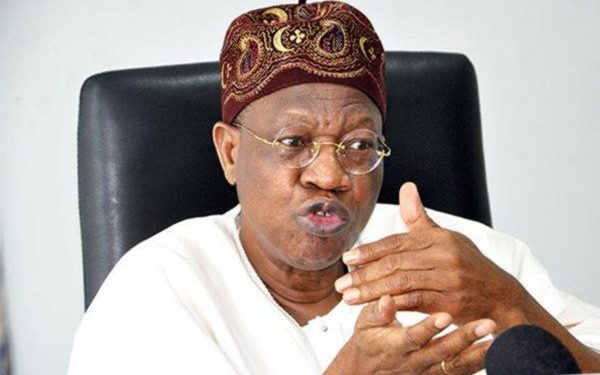
Nigerian news agency (NAN) reports that Afreximbank president, Benedict Oramah, disclosed this in Cairo, Egypt, when Lai Mohammed, Minister of Information and Culture, led a team of DSO stakeholders on bilateral discussions on the project.
In April 2021, the National Broadcasting Commission (NBC) launched free set-top boxes as part of the digital switchover (DSO) in Lagos. The initiative was to enable millions of Nigerians who cannot afford the subscriptions of Pay-TV platforms to enjoy digital television with good content from 60 channels.
Oramah said Afreximbank was impressed by the presentation and will make Nigeria a model for other African countries for DSO project financing.
“The move toward digital television is global, and it was impressive to see the seriousness with which the minister has been pursuing this,” he said.
“I have had several meetings with him in France, Nigeria, and he has come here with a very powerful delegation involving all the stakeholders.
“What we are looking out to do is to work with all the stakeholders, particularly the private sector, to put a financing mechanism in place to ensure that Nigeria saves more than $400 million of subsidy that would have been applied.
“When we are able to do this before the end of the year, the Nigerian government will benefit because we are going to free the spectrum that will be now sold for about two billion dollars to telecommunication companies.
“We assure you that we will put in place the financial structure that will work because we know that if we do it well in Nigeria, other African countries pursuing the same goal will take a cue from there.”
Oramah added that supporting the DSO project would create a platform that would accelerate the growth of Nigeria’s creative industry.
On his part, Mohammed noted that the creative industry is key in the diversification of Nigeria’s economy because, after agriculture, it employs a larger number of people, mostly women and the young population.
IHe said the project would also bridge the digital divide by establishing more equitable access, connecting the unconnected at the underserved and remote communities.
The minister recalled that at the beginning of the programme, the model adopted by the government, which was subsidy driven was not sustainable.
“When the programme started, government subsidised the STB, which was bought from the manufacturers for $30 per box and sold to consumers at $10 per box,” he said.
“Government was also paying the signal distributors and the middleware providers, but the subsidy regime can no longer be sustained.
“Right now, the government is not going to give any financial support again to the project, and that is why we have reengineered and rejigged the programme in a manner that it will be commercially viable.
“Government will only give support to the project in the areas of regulations, advocacy and formulation of policies.
“For instance, we have already amended the Broadcasting Code to protect local manufacturers, advertisers, and channel owners.”
Chairman of STB Manufacturers in Nigeria, Godfrey Ohuabunwa,who presented the credit requirement to the Afreximbank, said they would require a total of $165 million.
According to him, $125 million is expected to fund an initial five million STB from the total of 20 million boxes needed in five years.
He said the signal distributors would require $30 million as well as $10 million for marketing and promotion.

The International Monetary Fund (IMF) has projected that global economic growth will slow to 3.0 per cent in 2026 before recovering to 3.4 per cent in 2027.
The IMF made the projection in its July World Economic Outlook (WEO) Update, released on Wednesday and titled “Global Economy in Crosscurrents of War and Technology.
”According to the report, the global outlook remains uneven, with the ongoing war in the Middle East weighing heavily on energy-importing and vulnerable economies.
It, however, said that Artificial Intelligence (AI)-driven demand was lifting countries integrated into the global technology value chain.
“The impact varies widely based on countries’ exposure to the war and position in the technology value chain.
“Energy exporters outside the conflict zone benefit from favourable terms of trade, whereas economies plugged into the technology-led upturn experience stronger activity even if they are energy importers.”
It said that economic activities would weaken in energy-importing countries with limited participation in the technology value chain, a group that includes many low-income economies.
The IMF also projected global headline inflation to increase from an estimated 4.1 per cent in 2025 to 4.7 per cent in 2026 before declining to 3.9 per cent in 2027.
According to the fund, the projections, which were revised slightly upward from the April outlook, suggest that the disinflation trend observed since early 2024 has stalled.
“For Sub-Saharan Africa, growth is expected to remain stable at 4.3 per cent in 2026 before rising to 4.5 per cent in 2027.
“However, the regional outlook masks significant differences across countries due to varying policy space, reform implementation and exposure to external shocks,” it said.
The report said that oil-importing, non-resource-intensive economies would be more adversely affected by higher energy and food prices.
It said that some larger economies would continue to benefit from earlier stabilisation and reform efforts despite remaining largely outside the AI-driven technology upswing and facing reduced official development assistance.
For Nigeria, the IMF projected economic growth of 4.1 per cent in 2026, and rising to 4.3 per cent in 2027.
“Nigeria is supported by improved macroeconomic stability and favourable terms-of-trade effects, though higher prices for essentials are expected to further aggravate poverty and food insecurity,” it said.
The report said among advanced economies, growth was projected at 1.7 per cent in 2026 and 1.8 per cent in 2027.
For emerging markets and developing economies, it projected growth to slow to 3.8 per cent in 2026 before recovering to 4.5 per cent in 2027.
The IMF projected growth in the Middle East and Central Asia to decline sharply to 0.7 per cent in 2026 before rebounding to 6.5 per cent in 2027.
It projected that growth in Latin America and the Caribbean would remain stable at 2.4 per cent in 2026 before rising modestly to 2.7 per cent in 2027.
It said that growth in emerging and developing Europe would remain restrained at about 2.0 per cent.
According to the IMF, risks to the global outlook are more balanced than in April but remain tilted to the downside.
It warned that renewed conflict in the Middle East could prolong commodity price volatility, further disrupt supply chains, raise prices and tighten global financial conditions.
The report also identified trade fragmentation, possible corrections in technology-driven market expectations and eroded policy buffers as additional downside risks.
On the upside, the IMF said faster-than-expected normalisation in energy markets, stronger technology investment, renewed international cooperation to reduce trade barriers and structural reforms could improve medium-term growth prospects.
It urged policymakers to maintain price stability, supported by clear communication, central bank independence and strong financial supervision.
It also recommended rebuilding fiscal buffers while limiting fiscal support to temporary and targeted measures that preserve market price signals.
By David Torough, Abuja
The Nigerian National Petroleum Company Limited (NNPC) said it saved $3.4bn through contract restructuring and optimisation over the past year, while increasing its contribution to government revenue to N19.
5tn and boosting crude oil and gas production.Group Chief Executive Officer, Bayo Ojulari, disclosed the figures on Tuesday while presenting the company’s one-year performance scorecard at the opening of the 25th NOG Energy Week in Abuja.
According to Ojulari, the contract optimisation programme reduced operating costs by $3.
4bn without disrupting operations, strengthening commercial efficiency and improving the competitiveness of Nigeria’s oil and gas industry.The scorecard showed that crude oil production rose by six per cent year-on-year to 569.7 million barrels, while gas production increased by 8.1 per cent to 2,576 billion standard cubic feet. NNPC’s contribution to government revenue also climbed by 21.8 per cent to N19.5tn.
Ojulari said Nigeria’s crude oil production has reached about 1.71 million barrels per day, the highest level in five years, while NNPC Exploration and Production Limited achieved a record output of 365,000 barrels per day.
He said the company aims to increase crude oil production to two million barrels per day by 2027 and three million barrels per day by 2030. Gas production is projected to rise from 7.62 billion cubic feet per day this year to 10 billion cubic feet per day in 2027 and 12 billion cubic feet per day by 2030.
The NNPC boss also reported significant improvements in export infrastructure, noting that crude export terminals recorded an average 98 per cent recovery factor between April 2025 and May 2026. He added that major evacuation pipelines, including the Trans Niger, Trans Escravos, Trans Ramos, Trans Forcados and Oando-Brass lines, are operating at 100 per cent availability.
Ojulari further disclosed that NNPC maintained 100 per cent compliance with its Joint Venture cash-call obligations throughout 2025 and into June 2026, although some partners remained in default, increasing the company’s funding responsibilities.
On the commercial front, he said NNPC signed gas sale and purchase agreements covering 1.29 billion standard cubic feet per day for long-term LNG feed gas and 750 million standard cubic feet per day for domestic industrial gas supply to DFL FZE and Dangote Refinery. The agreements are expected to attract more than $20bn in investments, with seven additional transactions under negotiation.
He also highlighted governance reforms, including the resumption of monthly remittances to the Federation Account in July 2025, the restoration of monthly business performance reporting and the company’s first earnings call in November 2025.
Ojulari urged governments, investors, regulators and operators across Africa to strengthen collaboration, arguing that strategic partnerships would be critical to unlocking the continent’s energy potential and attracting greater investment.
From Attah Ede, Makurdi
Benue State Government through the Benue Investment and Property Company Limited (BIPC) has worked out modalities to commence immediate revival of the long-abandoned Taraku Mills Limited, with plans to begin rehabilitation work on the facility next week.
The facility located at Gwer East Local Government Area of the State which has remained functional since 2009, is expected to create over 2,000 direct jobs and strengthen agricultural value chains across the state if revived.
Managing Director of the Benue Investment and Property Company (BIPC), Dr.
Raymond Asemakaha, announced this during an inspection visit to the facility.Dr. Asemakaha maintained that the company is valued at over $50 million (about N70 billion) and was designed to process maize, animal feed and soybean products.
He described it as a strategic asset capable of driving industrialisation and economic growth in Benue State, stating that the government was committed to restoring the factory to full operation, as eviving existing assets is more cost-effective than constructing new facilities.
According to Asemakaha, “despite years of inactivity, most of the equipment remains intact and in near-new condition due to the vigilance of the host community and security personnel who protected the facility from vandalism.”
He explained that an ongoing asset audit would determine the exact condition of the plant and the level of investment required for operations to resume saying “former technical personnel with institutional knowledge of the facility will conduct assessments and dry-run tests.”
Asemakaha said the government had learnt lessons from previous attempts to lease public assets to operators without the capacity to manage them effectively, stressing that “the revitalisation of Taraku Mills would create markets for farmers and stimulate economic activities in transportation and other sectors.”
He projected that the facility would directly employ at least 2,000 youths while generating thousands of indirect jobs.
The GMD announced the immediate payment of five months’ outstanding allowances owed to security personnel at the plant.
He commended the host community for safeguarding the facility over the years, noting that despite the prolonged shutdown, no cables or major components had been vandalized.
Dr. Asemakaha further emphasized that the revitalization of the mill would create a ready market for agricultural produce and improve the livelihoods of farmers across the state through value addition and industrial processing.
A pioneer engineer at the factory, James Ikuve, said Taraku Mills was established as an integrated agro-processing company with maize and feed milling, as well as oil processing divisions.
Ikuve said the maize processing plant has an installed capacity of 120,000 tonnes annually, while the feed mill can produce 172,300 tonnes of animal feed yearly. He added that the soybean processing units can handle hundreds of tonnes daily, with the refinery capable of processing 100 tonnes per day.
According to Ikuve, the factory previously operated at about 75 percent of its installed capacity, with its last production run carried out in 2013 under Growrich Resort Limited.
Chairman of Gwer East Local Government Area, Timothy Adi, Civil Protection Guard Commander Joseph Sough and Assistant Director at the Ministry of Industry, Trade and Investment, Emmanuel Atsia, commended Governor Hyacinth Alia for the initiative, expressing optimism that the revival of the facility would create jobs, support soybean farmers and restore economic benefits to the community




Dangote Cement Commissions Multi-million Naira Hospital in Kogi
ShareBy David Torough, Abuja Nigeria’s healthcare sector received a major boost on Friday as Dangote Cement Plc commissioned a multimillion...


Police Arrest Four Suspects over Alleged Armed Robbery, Cultism in Delta
ShareThe Police in Delta has arrested four suspects over alleged armed robbery and cultism in separate operations across the state....

DHQ Engages Military Veterans, Reaffirms Commitment to Welfare, Pension Reforms
ShareBy David Torough, Abuja The Defence Headquarters (DHQ) has held a one-day strategic retreat with the leadership of various military...


2027: We’ll Ensure Benue Returns to its Past Glory – Akume
ShareBy David Torough, Abuja As the 2027 general elections draw nearer, the Secretary to the Government of the Federation (SGF),...

Nigerian Army at 163: Legacy of Sacrifice, Service and Transformation
ShareBy Sumaila Ogbaje When officers, soldiers and defence stakeholders gathered in Port Harcourt for the Nigerian Army Day Celebration (NADCEL)...


The Battle before the 2027 Ballots
ShareBy Dakuku Peterside By the time Nigerians file into polling units in 2027, the most consequential battle for the nation’s...


The Rising Rate of Corruption in Nigeria
ShareBy Monday Priscillia Ogheneyole Corruption remains one of the greatest challenges facing Nigeria today. Despite numerous efforts by governments, anti-corruption...


#NBADecides2026: What Future for an Independent Bar?
ShareBy Chidi Anselm Odinkalu Three score and three years ago, a defining dispute erupted in the old Western Region of...

FG Reviews Economic Reforms, Unveils Advisory Committee
Share By Tony Obiechina, Abuja The Federal Government on Tuesday inaugurated a Ministerial Advisory Committee to provide independent, evidence-based reviews...


Suspected Herders Invade Benue Community Again, kill Youth Leader, Injure Scores
ShareBy Attah Ede, Makurdi Fresh violence erupted in Otukpo Local Government Area of Benue State yesterday as gunmen suspected to...