
NEWS
Anambra Election: Buhari Talks Tough as IPOB Issues Fresh Threats

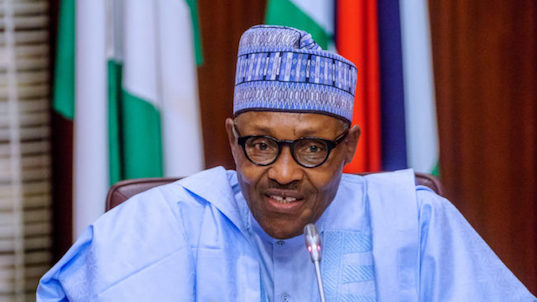
In a surprisingly crowded week, President Muhammadu Buhari vows to sustain the nation’s democratic order and do the needful in terms of ensuring that governorship election holds in Anambra on Nov. 6.
The Indigenous People of Biafra (IPOB) had threatened to lockdown the entire Southeast for six days if its leader, Nnamdi Kanu, is not released unconditionally before Nov.
4.However, the Federal and Anambra state governments had since dismissed the threat, assuring that nothing would stop the conduct of the election on Nov. 6.
President Buhari made the federal government’s position known when he presided over meeting of the National Security Council at the State House, Abuja, on Oct.
21.The National Security Adviser to the President, retired Maj.-Gen. Babagana Mongonu, who addressed State House correspondents at the end of the meeting, also announced the killing of Malam Bako, the successor of Abu Musab Al-Barnawi, the leader of the Islamic State of West African Province (ISWAP).
Chief of Defence Staff (CDS), Gen. Lucky Irabor had on Oct. 14 confirmed the death of Abu Musab.
Irabor said: “I can authoritatively confirm to you that Abu Musab is dead. He is dead and remains dead.’’
However, Mongonu disclosed that Abu Musab’s successor, Malam Bako was also neutralized along with a prominent member of the ISWAP.
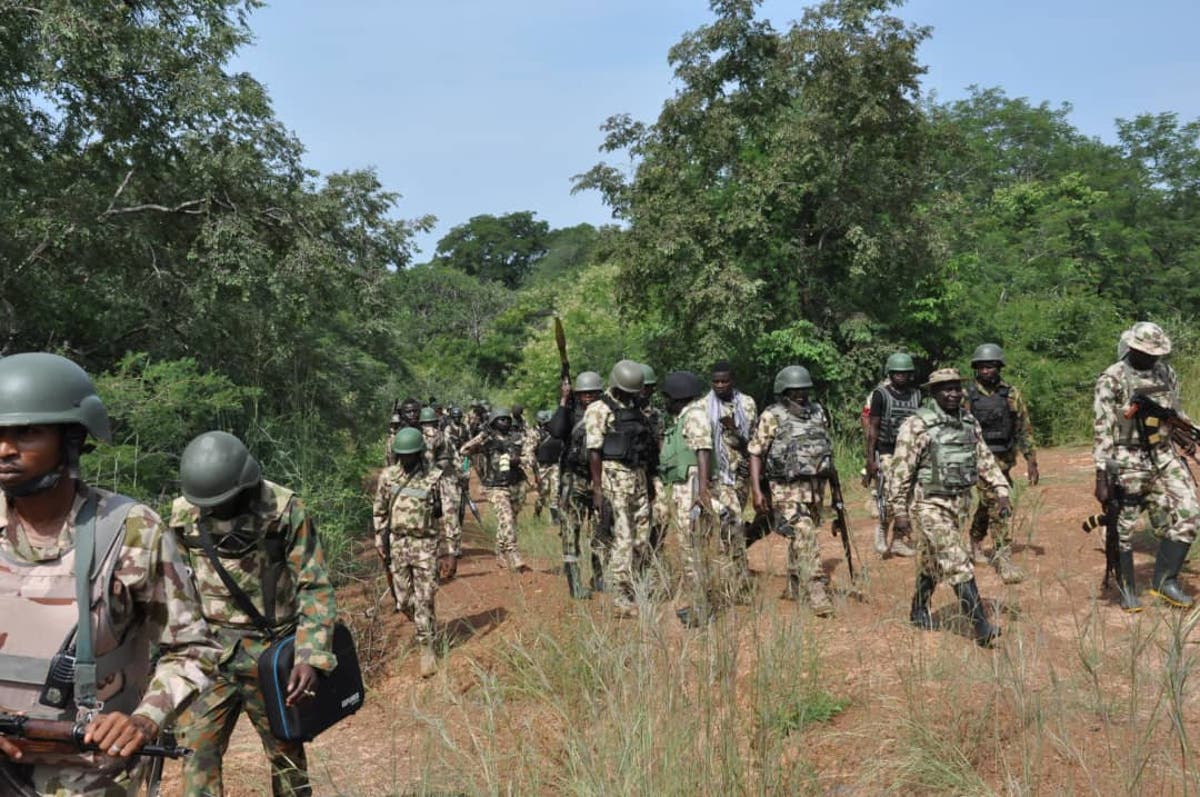
He said: “The fact again is that the armed forces, the land forces have done an excellent job because in the span of one month we have been able to take out the leadership of the Islamic State of West African Province (ISWAP) – that is Abu Musab Al-barnawi.
“Two days ago, the man who succeeded him, one Malam Bako, one of the prominent leaders of the Shura Council of the Islamic State of West African Province, was also taken out.
“They are also contending with leadership crisis. You know these things are also accompanied with inherent issues of trust, conflicts, mutual suspicion and other things.
“So, the operations being conducted by the armed forces in the Northern parts of the country put a lot of pressure on the Islamic State of West African Province, Boko Haram and also the tangential group known as Islamic State in the Greatest Sahara.’’
On the forthcoming Nov. 6 Anambra governorship election, the NSA said the President enjoined the security agencies to stamp their feet of authority and ensure the success of the election.
Monguno said the president was reacting to the heightened security challenges in Anambra, orchestrated by the proscribed IPOB.
“The President has directed that under no circumstances will anything be allowed to stop the elections from taking place successfully. The people have a right to vote and select their leader.
“No group or individual will be allowed to stimulate anarchy and chaos, leading to murderous activities.
“The President has made it very clear that the Armed Forces and all law enforcement agencies must make sure that the elections take place even if it means overwhelming the entire environment with the presence of security personnel”, he said.
Buhari had earlier, on Oct. 20, hosted Turkish President Recep Tayyip Erdogan, who was on a 2-day official visit to Nigeria.
The Turkish leader, who expressed satisfaction with the level of bilateral relations between Turkey and Nigeria under the leadership of President Buhari, revealed that Turkey trade volume would be expanded by five billion dollars, immediately, to further boost socio-economic ties between the two countries.
Erdogan, who spoke through an interpreter, expressed the hope that the relations between the two nations would be further developed on the basis of a win-win situation and in the basis of mutual respect.
The Turkish leader also expressed the readiness of his country to partner with Nigeria in tackling its security challenges.
Buhari had on Oct. 19, sent a stern warning to bandits, saying that “the clock of your ultimate destruction is ticking as you will no longer have a place to hide.”
In a statement in Abuja on Monday, Malam Garba Shehu, the President’s spokesman, said Buhari was reacting to the killing of over 30 people in Goronyo in Sokoto State on Sunday by bandits.
According to the president, the days of the bandits are indeed numbered because the military capabilities of armed forces are being boosted by the acquisition and deployment of advanced equipment.
“The bandits are living in fool’s paradise of invincibility, but reality will soon dawn on them harder than ever before.
”The bandits are currently under desperate pressures because of the intense and sustained air and ground operations against them in their hideouts by our security forces.
“The cowardly attacks on innocent people by the bandits show a rear-guard action of criminals under pressure.
”But they will have no place to hide and our gallant security forces will not relent in the current offensive to defeat these callous enemies of humanity,” the president emphasized.
Former Head of State, retired Gen. Yakubu Gowon, had also on Oct. 19 called President Buhari to wish him and other Muslim faithful a happy Eid-el-Maulud celebration.
The celebration is to mark the birthday of the Holy Prophet Muhammad.
Also on Oct. 19, the Nigerian leader offered his deepest condolences to President Joe Biden, the government and people of the United States, on the passing of the former Secretary of State, Gen. Colin Powell.
President Buhari believed that as the first African American Chairman of the Joint Chiefs of Staff, the highest military position in the U.S. Department of Defence as well as the first African American Secretary of State, Powell was a great statesman and a global icon in every sense of it.
He observed that the deceased was also a great advocate of the eradication of Polio and in addressing the deadly spread of HIV/AIDS pandemic in Africa.
However, on Oct. 19, Vice-President Yemi Osinbajo attended an event to mark six years of the Future Assured programme, an initiative of the Aisha Buhari Foundation.
He noted that intervention programmes of the Buhari administration since 2015 to date are designed and implemented in order to improve the health, education and socio-economic conditions of the Nigerian people, especially women, children and youths.
He said: “The very future of Nigeria and our communities depend on how well we address the many concerns of women and children in our communities, especially the focal areas of health, education and economic empowerment.”
Later same day, the vice-president also spoke at the public presentation of Sen. Ken Nnamani’s book, Standing Strong.
Osinbajo had earlier on Oct. 18 received at the Presidential Villa, Abuja, a US government delegation led by the White House Deputy National Security Advisor, Mr Jonathan Finer.
The vice-president, who spoke on climate change at the occasion, said: ”The Biden administration is fully back on board the Climate Change global agenda, in a commendable restoration of the US government’s support for the Paris Agreement
“We are happy that the US is fully on board with climate change and back to the table on this issue. I think one has to commend the drive that this US administration has put behind climate change.”
Osinbajo was also in Lagos on Friday where he inaugurated the Duchess International Hospital, a new facility under the Reddington Hospitals group.
According to the Vice President, the opening of the new hospital is a cause for celebration because it shows that “we have all it takes to become the place of choice for even medical tourists”.
The event paraded a collection of world class medical experts and prominent Nigerians, including two State Governors: Babajide Sanwo-Olu of Lagos and Dapo Abiodun of Ogun.
The Central Bank Governor, Godwin Emefiele, the Managing Directors of the Bank of Industry – Olukayode Pitan and Access Bank – Herbert Wigwe, were also at the event.
Chinese President Xi Jinping, on Oct. 22, wrote President Buhari, saying his country would use the occasion of the 50th anniversary of the establishment of diplomatic relations with Nigeria to promote strategic partnership to new heights.
According to the Chinese leader, Nigeria is an important strategic partner of China in Africa, adding that China-Nigeria cooperation has been the pacesetter of China-Africa cooperation.
President Buhari concluded the week under review with a meeting with some leaders and stakeholders from Ogoni land where he urged them to sensitize people on value of protecting national assets like pipelines and other oil installations.
He noted that wilful damage usually creates more havoc on their environment and hamper development in the area.
He said that the Federal Government was committed to the cleaning up of Ogoni Land so that, indigenes could regain their lives, return to farms and reactivate economic activities.
“You will need to educate the people of Ogoni Land and the region more that when pipelines are broken, the damage is more to the immediate environment and the people.
“The majority farmers and fishermen struggle because the fishes now move to the deep sea,’’ he said. (NAN)






By David Torough, Abuja
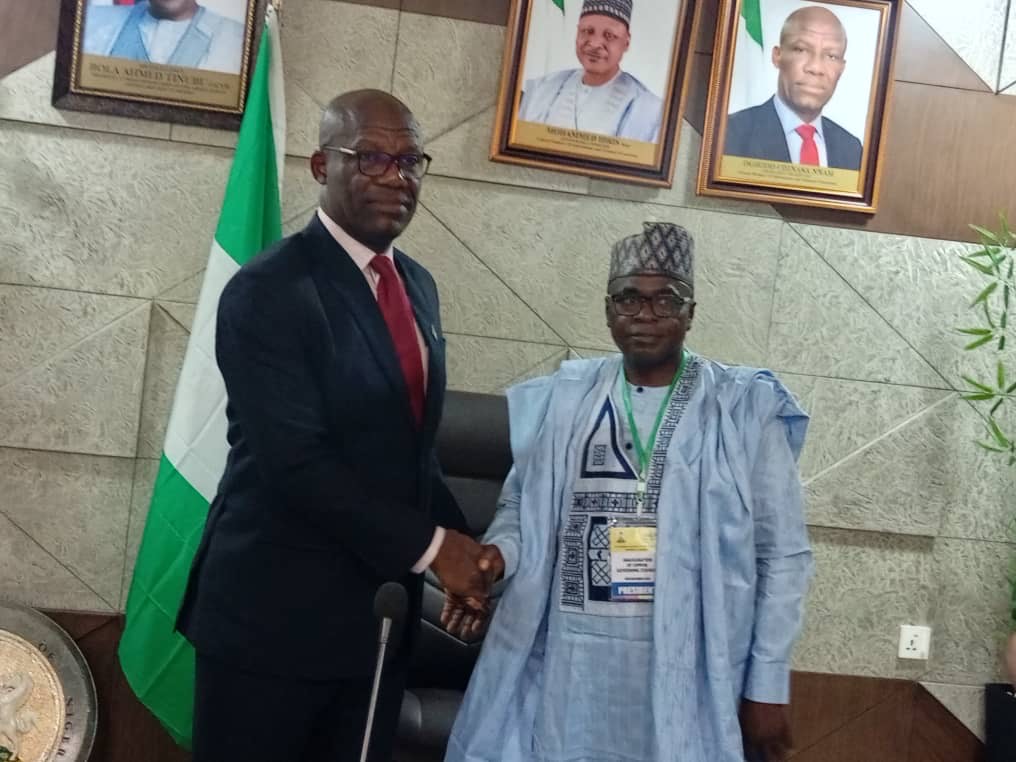
Clement Koko has been inaugurated as the President and Chairman-in-Council of the Chartered Institute of Professional Printers of Nigeria (CIPPON), pledging to reposition the institute as a world-class professional body and drive reforms aimed at strengthening Nigeria’s printing and allied industries.
At the inauguration ceremony of the CIPPON Governing Council, Clement expressed gratitude to the Minister of Information and National Orientation for approving the inauguration after a prolonged legal tussle, describing the move as a demonstration of respect for the judiciary and a boost to the institute’s stability.
He also acknowledged the contributions of past leaders of the institute, particularly the immediate past president, Dr.
Niyi Adesoye, whom he praised for his resilience and steadfast leadership during challenging periods in the institute’s history.Koko said his administration would build on existing foundations while charting a new course for professionalism, innovation and unity within the institute. He outlined key priorities, including advocacy for the creation of the Office of the Printer General of the Federation and similar offices in the 36 states and the Federal Capital Territory, or alternatively a Printers Commission, to provide proper oversight and recognition for the printing industry.
The new CIPPON president also announced plans to push for the inclusion of printing as a recognised creative industry, stressing that printing plays a critical role in economic development and deserves greater government attention. He further disclosed that the institute would work with universities and regulatory agencies to introduce Printing Technology or Printing Management as degree programmes in Nigerian universities to address skills gaps and enhance competitiveness.
As part of efforts to chart a sustainable path for the sector, Koko said CIPPON would convene a national summit within the first quarter of his tenure, bringing together stakeholders, industry players and regulators to discuss the future of the printing industry in Nigeria.
Calling for unity, Clement urged members to put an end to internal litigations, noting that the institute’s enabling law provides for dispute resolution through internal tribunals before recourse to the courts. He appealed to aggrieved members to embrace dialogue, emphasizing that collective unity was essential to moving the institute forward after years of setbacks.
Among other initiatives, he announced plans to expand professional training programmes nationwide, institute annual printing industry awards, publish a comprehensive industry report on challenges and opportunities, and deepen engagement with government and other stakeholders. He also unveiled an annual Alhaji Aderemi Mohammed Lawal Memorial Lecture on continuous printing education to honour the founding president of CIPPON.
The ceremony concluded with a minute of silence in memory of the late founding president, after which Clement formally requested the Honourable Minister to declare him duly inaugurated as President of the Chartered Institute of Professional Printers of Nigeria.

Thousands of drivers could have speeding fines cancelled after a fault saw some cameras falsely triggered on English A roads and motorways.
National Highways said it had found 2,650 wrongful speed camera activations since 2021 due to a delay between cameras and variable speed signs.
Affected drivers will be contacted by police and be reimbursed for any fines while points will be removed from their licences where needed.
Not all camera activations are enforced, so not all of the wrongful activations will have resulted in fines.
National Highways apologised for the error and chief executive Nick Harris said a fix for the issue has been identified.
“Safety is our number one priority.
All drivers should continue observing the posted speed limits as normal. Anyone who has been impacted will be contacted by the relevant police force,” he said.National Highways, which runs England’s motorways, blamed an “anomaly” in how variable speed cameras were interacting with signs on some A roads and motorways.
It meant a delay of around 10 seconds between cameras and relevant variable speed signs, meaning some drivers were incorrectly identified as speeding after the limit had changed.
The body said the 2,650 incidents since 2021 represent fewer than two each day, compared with more than 6 million activations of speed cameras on the affected roads over the same period.
It said the anomaly has impacted 10% of England’s motorways and major A roads.
The fault affects all of the variable speed cameras on smart motorways, and two on the A14 which links the north and the West Midlands to East Anglia.
It is working with police to check activations and promised nobody will now be wrongly prosecuted.
Meanwhile, police forces have stopped issuing fines from variable cameras until they have confidence in their accuracy.
A Department for Transport spokesperson said: “We apologise to anyone who has been affected. Safety was never compromised, and we are working with policing to ensure nobody is incorrectly prosecuted in future.
“Enforcement is still in place, and the public can remain confident that only motorists who break the rules will be penalised.”

A French court has sentenced a former rebel leader and politician from the Democratic Republic of Congo to 30 years in jail after finding him guilty of complicity in crimes against humanity more than two decades ago.
Roger Lumbala headed a rebel movement backed by neighbouring Uganda accused of committing atrocities during a period known as the Second Congo War.
The judge said the 67-year-old was found guilty of ordering or aiding and abetting torture and inhumane crimes, summary executions, rape constituting torture, sexual slavery, forced labour and theft.
Lumbala, who was living in France when he was arrested nearly five years ago, has refused to accept the legitimacy of the court in Paris.
He did not attend the trial, which began last month, though he was in the dock to hear the verdict on Monday.
Lumbala also served as a minister in DR Congo’s transitional government from 2003 to 2005 and later as a member of parliament.
Several years later the Congolese government issued an arrest warrant for him over his alleged support for the M23, a rebel group currently active in the eastern DR Congo, prompting him to flee to France.
The Second Congo War, which raged from 1998-2003, involved nine countries, numerous rebel groups and led to the estimated deaths of between two and five million people.
At the time Lumbala led the Rally of Congolese Democrats and Nationalists (RCD-N), which allegedly carried out atrocities during a campaign between 2002 and 2003 called “Erase the Slate”.
The operation targeted members of the Nande and Bambuti ethnic groups in the north-eastern provinces of Ituri and North Kivu who were accused of supporting a rival militia.
A UN team that investigated in its aftermath said it was characterised by “premeditated operations using looting, rape and summary execution as tools of warfare”.
Lumbala’s case was prosecuted under the principle of “universal jurisdiction”, which allows French courts to seek justice related to crimes against humanity committed abroad.
Five non-governmental organisations, including Trial International and the Clooney Foundation for Justice, pooled their expertise to participate in the trial, helping support survivors to testify and requesting expert analyses.
Trial International, a Geneva-based justice campaign group, said 65 survivors, witnesses and experts testified before the court about the Erase the Slate operation.
After the verdict, it issued a statement from two of the survivors – David Karamay Kasereka and Pisco Sirikivuya Paluku.
“We were scared but came all the way here because the truth matters. For years, no one heard us,” they said
“We would have preferred to face Roger Lumbala, to look him in the eyes. But this verdict marks a first step toward reclaiming pieces of ourselves that were taken from us.”
During the trial Mr Kasereka, 41, described how his father and neighbours were tortured and killed by Lumbala’s men.
Paluku, who is a now 50-year-old nurse, told of how the rebels robbed and injured him, killed his uncle and raped his friend’s wife.
“We hope that this will serve as a lesson to those who continue to bring grief to the people of Congo, and particularly to Ituri,” he told the Reuters news agency.
Lumbala’s legal team, which has 10 days to file an appeal, called the sentence excessive. Prosecutors had sought a life sentence.
Eastern DR Congo, which is rich in minerals, has been wracked by conflict for more than 30 years, since the 1994 Rwandan genocide. Several peace deals going back to the 1990s have collapsed.
Over the years a number of other militia leaders, including Thomas Lubanga, Germain Katanga and Bosco Ntaganda, have been put on trial and convicted by the International Criminal Court (ICC) for abuses committed in the east of DR Congo.
Human rights groups welcomed Monday’s verdict as a milestone for further accountability in the long-running conflict there.
“This verdict is historic. For the first time, a national court has dared to confront the atrocities of the Second Congo War and show that justice can break through even after decades of impunity,” Trial International’s Daniele Perissi said in a statement.
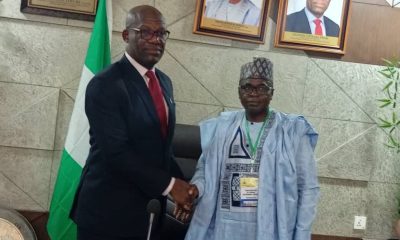

Clement Koko Assumes Office as CIPPON President
ShareBy David Torough, Abuja Clement Koko has been inaugurated as the President and Chairman-in-Council of the Chartered Institute of Professional...
Thousands of Drivers Wrongly Fined for Speeding Since 2021
ShareThousands of drivers could have speeding fines cancelled after a fault saw some cameras falsely triggered on English A roads...

UK Unemployment Rate Rises to 5.1 Per cent
ShareThe UK unemployment rate in the three months to October has increased to 5.1%, according to official figures. That marked...

French Court Sentences Ex-DR Congo Rebel, Politician to 30 Years in Jail
ShareA French court has sentenced a former rebel leader and politician from the Democratic Republic of Congo to 30 years...


EEDC Explains Recent Decline in Power Supply across South-East
ShareThe Enugu Electricity Distribution Company (EEDC) has attributed the recent decline in power supply across the South-East to low electricity...
DMO Takes Sensitisation on Borrowing Guidelines to Northern States
ShareThe Debt Management Office (DMO) said that its World Bank-assisted workshop on borrowing guidelines was designed to intimate subnational entities...


Oborevwori Signs N1.729trn 2026 Budget, Three Other Bills into Law
ShareFrom Francis Sadhere, Delta Delta State Governor, Sheriff Oborevwori on Tuesday signed the 2026 Appropriation Bill of N1.729 trillion, tagged...

NCDMB Oil, Gas Parks Near Completion, Set for 2026 Inauguration
ShareThe Nigerian Content Development and Monitoring Board said its Nigerian Oil and Gas Parks Scheme, established to boost local manufacturing...
Nigeria Tops W’Africa’s Crude Refining as Other Countries Stage Competition
ShareNigeria is expanding its crude refining footprint in the face of apparent asset acquisition and development by other countries in...


AFCON 2025: Super Eagles Camp Swells to 22 Ahead Egypt Friendly
ShareThe Super Eagles camp in Cairo has grown to 22 players with the arrival of Blackburn Rovers defender Ryan Alebiosu,...