
DEFENCE
COVID-19: Court Again Adjourns Suit Challenging NIN Registration Until Feb.22

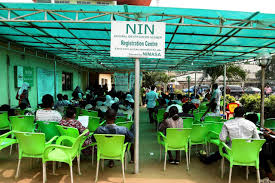
A Federal High Court Lagos on Monday, adjourned until Feb.22, a suit challenging the linkage of the National Identification Number (NIN) with Mobile lines amid COVID- 19.
The suit which was earlier fixed for hearing on Monday, could not proceed as the court did not sit.
It will be recalled that a rights activist Mr Malcolm Omirhobo had sued the National Identity Management Commission (NIMC) alongside others over the instruction on citizens to link their NIN within a stipulated time frame.
Joined as defendants in the suit are the Attorney General of the Federation, Minister of Communications and Digital Economy; Nigeria Communications Commission (NCC); the DG NIMC, and the National Information Technology Development Agency (NITDA).
Other defendants are: MTN Nigeria Communications Plc; GLOBACOM Ltd; Airtel Networks Ltd (Airtel Nigeria) and the Emerging Markets Telecommunication Services Ltd, EMTS 9 Mobile.
The applicant who is suing for himself and on behalf of the Nigerian public, had brought his suit under the provisions of the fundamental rights enforcement rules enshrined in the 1999 constitution.
At the last adjourned date on Feb. 1, the plaintiff had told the court that in the midst of the prevailing Covid 19 pandemic it was too risky to proceed with the process, adding that further steps should be stopped, pending determination of the suit.
Justice Mohammed Liman had onsequently, ordered that all parties to the suit be served with the court processes while he fixed Feb. 15, to hear both the motion for interlocutory injunction as well as the substantive suit.
Meanwhile on Monday, a new date Feb. 22, is now fixed for the suit as the court did not sit.
The plaintiff wants the court to declare that Nigerians are entitled to the fundamental right to life, dignity of human person, right to private and family life, freedom of expression, freedom of peaceful assembly and association and the right to moveable property.
The lawyer is asking the court to declare that the respondents’ coercion of the applicant and Nigerians without themselves first complying with the COVID-19 guidelines is a violation of the fundamental right to life of Nigerians .
According to him, the threat by the respondents to disconnect the telephone lines of Nigerians, who fail to link their NIN to their SIM cards within a timeline is a violation of the fundamental right to life of the applicant and Nigerians.
He argued that the directive led millions of Nigerians besieging the various NIMC offices nationwide in breach of COVID-19 protocols, while trying to comply with the said directives and in the process exposed themselves to the likelihood of contracting Corona virus.
Omirhobo, therefore, prayed the court to declare such decisions illegal, unlawful and unconstitutional.
.”
He said that the directive to make the presentation of NIN a condition-precedent for the retrieval of lost and/or damaged telephone lines is a violation of the fundamental right of Nigerians and therefore illegal, unlawful and unconstitutional.
He asked the court to make an order for the enforcement of the fundamental right to life, dignity of human person, right to private and family life, freedom of expression, freedom of peaceful assembly and association and the right to moveable property of Nigerians
He is also praying the court to compel the respondents to resume the sale of new SIM cards, replace lost or damaged sim cards to Nigerians as well as issue a public apology to the applicant and the public. (NAN)






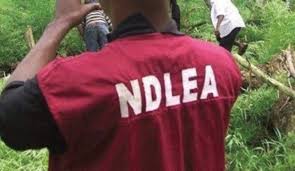
The National Drug Law Enforcement Agency (NDLEA) has recovered over 2.3 tonnes of assorted illicit drugs in raids and interdiction operations across Ondo, Edo, Delta, Kaduna, Plateau, Bayelsa, and Kano respectively.
The Director, Media and Advocacy, NDLEA, Femi Babafemi said this in a statement on Sunday in Abuja.
Giving a breakdown, Babafemi said that two separate arrests at Ughelli and Asaba, Delta State yielded a haul of ampoules of pentazocine injection, codeine syrup, tramadol, diazepam, flunitrazepam (hypnox) and MDMA (Molly).
He said that several of them were concealed in music speakers, while two suspects were arrested.
Also, in Kano, a raid at Sabon Gari led to the arrest of a 20-year-old suspect with a staggering 785,000 capsules of Pregabalin weighing 669.425kg.
Similarly, Babafemi said that a stop-and-search operation along the Zaria–Kano–Hadejia road netted 1,700 tablets of diazepam concealed inside loaves of bread seized from another suspect.
He added that a 51-year-old man was also nabbed at Katako market, Jos, with 157,100 capsules of tramadol.
He also added that the agency also sustained pressure on illicit cannabis cultivation with the destruction of 4,832.56 kilograms of skunk on cannabis farms.
The NDLEA spokesman said that the farms which were at Usen Forest, Igwe-Oke Forest and Ogboha Forest, in Ovia South West, Owan East and Owan West LGA, Edo state had a suspect arrested on Friday.
In another development, NDLEA operatives in Ondo, acting on credible intelligence on Wednesday, raided a residence along Oke-Iya, Ijoka Road, Akure.
Babafemi said that they recovered 186kg of skunk concealed in the boot of a Toyota Avalon car marked ABJ 917 FV, from a 58-year-old suspect who was planning to move the consignment to Jos for onward distribution.
Additionally, in Kaduna, a female suspect was arrested at Gonin Gora with 369.6kg of cannabis, while in Bayelsa, four suspects including a 70-year-old woman were arrested at Ovom, Yenagoa, with 110 bags of cannabis weighing 876kg.
Babafemi quoted the NDLEA chairman, retired Brig. Gen. Buba Marwa, commending the officers and men of Ondo, Edo, Delta, Kaduna, Plateau, Bayelsa, and Kano Commands for the various successful operations.
Marwa enjoined them and their colleagues across the country to continue with the ongoing balanced approach to the drug control efforts of the agency.
He charged them to continue to shut every pipeline being used by drug cartels, whether at the airports, seaports, land borders, or in the hinterland where cannabis was cultivated.(NAN)

The Anambra Police Command said it has rescued three kidnap victims and arrested 57 suspects in connection with kidnapping, armed robbery, cult-related violence, murder and other offences in the state.
The Commissioner of Police (CP) in the state, Nnanna Ama, disclosed this during the weekend, during an operational visit to the command Headquarters in Awka, by the Assistant Inspector-General (AIG) zone 13, Ukpo, Miller Dantawye.
“The command has rescued three kidnapped victims and arrested 57 suspects in connection with kidnapping, armed robbery, cult-related violence, murder and other serious offences,” he said.
Ama, who presented the command’s scorecard over the past one month during the visit, also said that 18 assorted firearms and 43 rounds of ammunition were recovered.
He said within the period under review that the command destroyed a criminal camp which significantly disrupted criminal operations within the state.
The CP attributed the results to coordinated intelligence gathering, targeted tactical operations, strategic deployment and sustained pressure on identified criminal networks.
He said that the feat was achieved by the command’s tactical units, Area Commands and divisional formations, working with other security agencies and relevant stakeholders.
The CP promised that the command would not relent in its offensive against criminal elements across the state.
He noted that operational priorities would continue to centre on intelligence development, precision deployment, aggressive patrols, rapid response, disruption of criminal hideouts and sustained pressure on identified criminal networks.
Ama directed operational commanders and personnel to remain proactive, maintain heightened vigilance and continuously adapt deployment strategies in response to emerging crime patterns and intelligence.
He also reaffirmed the command’s determination to deny criminals freedom of action and to ensure that the state remained hostile to kidnapping, armed robbery, cult violence and other forms of organised crime.
Responding, Dantawye commended the command and described the operational results as encouraging.
He urged officers and men of the command to build on the gains through discipline, professionalism, courage, effective supervision and strict adherence to the rule of law.
The AIG placed particular emphasis on intelligence gathering and utilisation, directing personnel to deepen intelligence networks, strengthen community engagement and translate actionable information into timely operational interventions.
He further charged commanders to intensify operations against kidnapping, armed robbery, cultism, drug-related offences and other violent crimes and to conduct every operation professionally, and lawfully with respect for human rights.
Dantawye also emphasised the importance of public confidence, urging personnel to maintain respectful and responsive engagement with members of the public.
He noted that credible intelligence and community cooperation remained critical force mobilisers in modern policing.(NAN)

By David Torough, Abuja
The Nigerian Army has denied reports that a group of Islamic scholars were abducted at the residence of former Zamfara State governor and Senator Abdul’aziz Abubakar Yari in Talata Mafara Local Government Area of the state.
The Army, through the Headquarters 8 Division/Sector 2 Joint Task Force North West, Operation FANSAN YAMMA, described the reports circulating on various media platforms as misleading and false.
In a statement issued on Sunday, September 13, 2026, the Acting Deputy Director, Army Public Relations, 8 Division, Nigerian Army/Sector 2 Operation FANSAN YAMMA, Lieutenant Colonel Olaniyi Osoba, said no cleric was abducted at Senator Yari’s residence.
According to the statement, intelligence reports indicated that some persons were abducted while travelling from the Sububu forest axis in Bakura Local Government Area towards Talata Mafara.
The Army said troops, working closely with other security agencies and local intelligence networks, had intensified efforts to rescue the victims.
It urged members of the public to disregard what it described as sensationalised narratives and unverified information that could create unnecessary panic or compromise ongoing tactical operations.
The military also called on residents to remain calm and vigilant while providing security agencies with timely and actionable intelligence to support efforts to secure the safe release of the abducted persons.




Beyond Peter Obi’s Benue Woes: Why Nigeria Must Defend Everyone’s Rights
ShareBy Ebuka Ukoh There are moments when a country must speak with one voice… not because its citizens agree on...


When Managers of Social Clubs Continue to Run Our Economy
ShareBy Uddin Ifeanyi The spectacle of a senior adviser on economics to the Tinubu government dissing the numbers on the...


LASCOPA Warns against Rusty Grinding Machines over Contamination Risks
ShareThe Lagos State Consumer Protection Agency (LASCOPA) has warned operators of pepper and grinding machines against using rusty or poorly...

ICPC, NFIU Open Stocktake on Financial Intelligence, Asset Recovery
ShareThe Independent Corrupt Practices Commission (ICPC) and Nigerian Financial Intelligence Unit (NFIU) on Monday in Abuja commenced a three-day stocktake...


Dangote Refinery IPO Frenzy Overloads Two Investment Sites
ShareBy Tony Obiechina, Abuja The much-anticipated public offering of Dangote Petroleum Refinery and Petrochemicals FZE sparked a rush among retail...


2027 Polls: Parties Demand Credible Vote, Vow to Protect Mandates
ShareBy David Torough, Abuja As preparations intensify for the 2027 general elections, political parties are stepping up demands for greater...


Tinubu Unveils 20-Year North Central Economic, Infrastructural Growth Plan
ShareBy David Torough, Abuja President Bola Tinubu has directed the timely release of funds due to Regional Development Commissions across...


Sasakawa Africa Establishes Agro-Enterprise Centre, Empowers Over 8900 Smallholder Farmers In Benue
ShareFrom Attah Ede Makurdi The Sasakawa Africa Association Nigeria (SAA Nigeria), with funding support from The Nippon Foundation (TNF), has...


Hope Rekindled as Ankwa Amo Inspects Modern Market, Promises Govt Attention
ShareBy Julius Tambaya, Abuja Hope of renewed government intervention has risen among traders at Modern Market, Makurdi, following an inspection...


North Central Devt Commission ‘ll Drive Regional Transformation, Restructuring – Golu
ShareBy David Torough, Abuja Former member of the House of Representatives from Plateau State, Hon. Timothy Golu, has described the...