
NEWS
EFCC Recovers N1.23trn, Secures 10,872 Convictions in 34 Months

By David Torough, Abuja
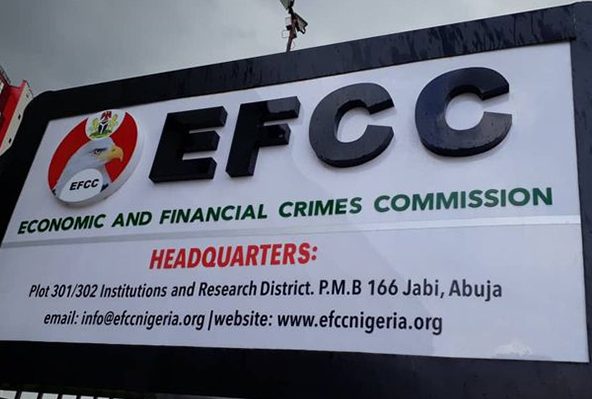
The Economic and Financial Crimes Commission (EFCC) recovered more than ₦1.23 trillion in cash and assets and secured 10,872 convictions between October 2023 and July 2026, its Chairman, Ola Olukoyede, has disclosed.
Olukoyede, who made the disclosure yesterday in Abuja at a media interactive session marking his three-year stewardship of the commission, said the figures reflected a period of sustained enforcement, prosecution, asset recovery, institutional reform and stronger collaboration with local and international partners.
According to him, the commission received 49,673 petitions, investigated 39,615 cases, filed 14,476 cases in court and secured 10,872 convictions during the period, representing a 75.
1 per cent conviction-to-filing ratio.He said the commission recovered ₦1.233 trillion, $684.48 million, £373,905.78 and €9.34 million, in addition to recoveries in other currencies, between October 1, 2023 and June 30, 2026.
Of the naira recoveries, Olukoyede said approximately ₦397.26 billion represented direct recoveries for the Federal Government, while ₦836.34 billion was recovered on behalf of ministries, departments and agencies, state revenue services, companies, individuals and foreign victims.
He said ₦661.32 billion and $492.37 million had subsequently been released to beneficiaries, including ₦325.35 billion paid directly to individuals and corporate bodies and ₦335.97 billion released to government agencies, revenue services and other beneficiaries.
The EFCC boss said the commission had also secured the forfeiture of 10,053 tangible assets, comprising 8,198 electronic items, 1,177 real estate properties, 370 automobiles and 102 tonnes of solid minerals. Proceeds from disposed assets, he added, amounted to about ₦12.07 billion.
Beyond enforcement, Olukoyede said the commission was increasingly focused on preventing financial crimes before stolen funds could be dissipated.
He disclosed that the newly established Fraud Risk Assessment and Control Department (FRAC) was monitoring suspicious transactions and enabling the commission to move within 72 hours to freeze funds suspected to be illicit.
According to him, the shift has become necessary as criminals increasingly move stolen public funds into cryptocurrency wallets within hours, making traditional asset recovery more difficult.
He said the EFCC now had the capacity to trace registered virtual-asset wallets, while a national confiscation wallet had been established, with presidential approval, to hold seized cryptocurrencies.
The chairman also disclosed that the commission was using civil asset forfeiture provisions to recover suspected proceeds of crime without waiting for lengthy criminal trials, arguing that the approach could prevent assets from being dissipated while cases remained in court.
Olukoyede said the EFCC had established a dedicated Process and Proceeds Management directorate to oversee forfeited assets and had begun disposing of depreciating assets, with proceeds kept in escrow pending final court decisions.
The commission’s reform agenda, however, has also extended to its own personnel.
Olukoyede revealed that more than 40 EFCC staff had been dismissed over corruption and financial malpractice during his tenure, while about five others are currently facing prosecution.
He said the commission’s former Internal Affairs Department had been renamed the Department of Ethics and Integrity, alongside the introduction of a gift policy requiring personnel to declare gifts above specified values and account for their sources of income and standard of living.
“You can’t be fighting corruption when your hands are soiled with corrupt practices,” the chairman said, stressing that EFCC officials must be held to the same standards of accountability imposed on members of the public.
On the broader crime situation, Olukoyede said the commission recorded 46,288 offences across nine major crime typologies between 2024 and 2026, with advance-fee fraud and cybercrime accounting for nearly two-thirds.
He said recorded offences increased by 24.1 per cent between 2024 and 2025, with notable rises in procurement fraud, bank fraud, cybercrime and economic-governance offences.
The EFCC also recorded 920 specialised cases involving money laundering, unlicensed Bureau de Change operations, illegal mining, virtual assets and terrorist financing, securing 212 convictions.
Olukoyede said the commission’s enforcement efforts contributed to Nigeria’s removal from the Financial Action Task Force (FATF) Grey List in October 2025, while 234 BDC cases resulting in 73 convictions supported foreign-exchange reforms.
He cited the convictions of former Minister of Power, Saleh Mamman; former Managing Director of Nexim Bank, Robert Orya; and former Accountant-General of the Federation, Chukwunyere Nwabuoku, as evidence that the anti-graft campaign was being pursued regardless of status.
“No office or title places anyone beyond the reach of the law,” he said.
The chairman also highlighted institutional reforms, including the creation of new directorates in Ekiti, Anambra and Katsina, the digitalisation of about 60 per cent of EFCC processes, and investments in the EFCC Academy and EFCC Radio.
He said proceeds of crime were increasingly being channelled towards social and economic development, citing the allocation of ₦50 billion each to NELFUND and the Nigerian Consumer Credit Corporation from EFCC recoveries in 2024 and again in 2026.
He also disclosed that recovered property formerly known as NOK University had been converted into the Federal University of Applied Sciences, Kachia, Kaduna State, where 1,909 students matriculated in December 2025.
Olukoyede maintained that law enforcement alone could not win the war against financial crime, stressing the need for policy and institutional reforms that would close loopholes and prevent public resources from being stolen in the first place.
He called on the media and civil society organisations to strengthen their watchdog roles and pledged to deepen prevention, accelerate restitution and intensify the fight against corruption while upholding due process.
By David Torough, Abuja
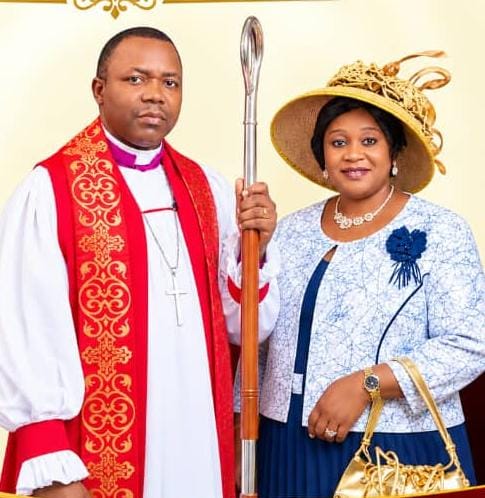
The Anglican Bishop of Makurdi Diocese, Rt. Rev. Dr. Godwin Tersoo Yakela, has called on Christians to rededicate themselves to the work of God and ensure that the teachings of Jesus Christ are reflected in their daily lives.
Bishop Yakela made the call in a message during his enthronement service as the third Bishop of the Anglican Diocese of Makurdi.
The newly enthroned Bishop expressed gratitude to God for his elevation, noting that “a man can receive nothing except it comes from God.” He pledged to dedicate himself to the service of God and work for the growth of the body of Christ.
Bishop Yakela said his administration would prioritise the welfare of clergy and church workers, assuring that he would lead the diocese with the fear of God.
While appreciating his predecessor, Bishop Emeritus Rt. Rev. Dr. Nathan Inyom, for his guidance and commitment to the growth and development of the Anglican Diocese of Makurdi, Bishop Yakela called on the laity to support the work of God and contribute generously to the development of the Church.
He expressed confidence that, with the support and cooperation of members of the Church, the Anglican Diocese of Makurdi would witness tremendous development under his leadership.
Speaking at the event, Bishop Emeritus Rt. Rev. Dr. Nathan Inyom described Bishop Yakela as a hardworking and focused man of God. He prayed for God’s blessings, wisdom and guidance upon the new Bishop, his family and ministry.
Also speaking, the Anglican Bishop of Lafia Diocese, Rt. Rev. Robinson Adeyi, who served as the supervisory Bishop of the Diocese before Bishop Yakela’s enthronement, said he was able to clear outstanding salary arrears owed clergy and church workers during his tenure.
Bishop Adeyi also highlighted the massive renovation of the Cathedral Church of All Saints, Wadata, Makurdi, which he said had given the cathedral a significant facelift.
He expressed confidence in Bishop Yakela’s ability to advance the work of the diocese and appealed to clergy, church workers and members of the laity to cooperate with the new Bishop to ensure a successful administration.
Bishop Adeyi further urged Bishop Yakela to redouble his efforts and build on the achievements recorded by the diocese under previous leadership.
The Chief Judge of Benue State, Hon. Justice Maurice Ikpambese, represented by Hon. Justice Mary Abounu, alongside her husband, the immediate past Deputy Governor of Benue State, Engr. Benson Abounu, described Bishop Yakela as a humble, God-fearing man of impeccable character.
They pledged their willingness to support the new Bishop whenever he called upon them.
The President of the Customary Court of Appeal, Benue State, represented by Justice Cecilia Bakare, as well as representatives of the Christian Association of Nigeria (CAN), Benue State, also congratulated Bishop Yakela on his enthronement and prayed for wisdom, divine guidance and long life for him and his family.
A major highlight of the event was a reception organised in honour of the new Bishop, featuring the cutting of the enthronement cake, as well as food and drinks for guests and members of the Church.
Goodwill messages and gifts were presented by the diocesan archdeaconries, churches, Anglican schools, friends and well-wishers.
The climax of the celebration was the presentation of a newly purchased vehicle to Bishop Yakela by the diocese.
The Bishop of Lafia Diocese, Rt. Rev. Robinson Adeyi, offered prayers dedicating the vehicle to God’s care and guidance.
The event also featured dance and musical presentations by various churches.
Born in 1980, Rt. Rev. Dr. Godwin Tersoo Yakela was ordained a priest in 2002 and taught at the Anglican Theological College, Wusasa, Zaria, for seven years.
He was later redeployed to the Anglican Diocese of Makurdi in 2009, where he served the diocese in various capacities.
In 2017, Bishop Yakela was appointed Chaplain of the High Court of Justice, a position he held alongside other responsibilities, including Chairman of the Body of Clergy of the Anglican Diocese of Makurdi, until his election as Bishop of the Anglican Diocese of Makurdi.
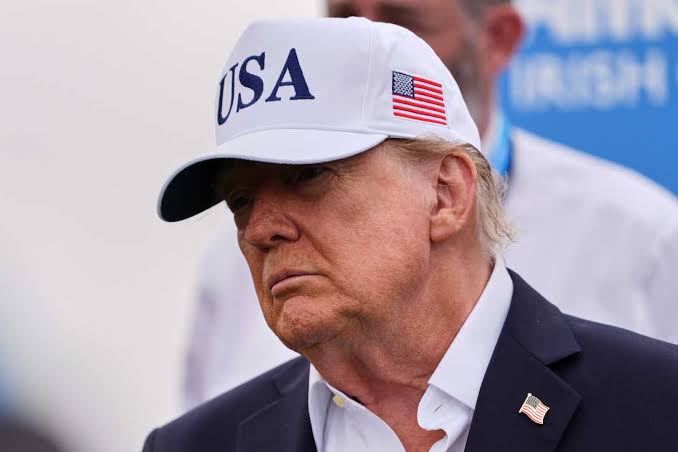
President Donald Trump has infused his ongoing feud with the White House press with a new level of acrimony.
Journalists from three major media outlets – CNN, Politico and MS Now – were denied access and had their press credentials confiscated on Saturday morning as they attempted to enter the White House grounds for work.
As media watchdog organisations and the White House Correspondents Association cry foul, Trump appears set to press ahead with a sweeping effort to punish these outlets.
In his Truth Social post announcing his decision on Friday, he said he was “banning” the organisations because “of their constant ‘reporting’ of fake news”.
In remarks later that day, he complained that “something is wrong with a country that can allow people to write purposely negative stories”.“If they want to write them, that’s fine,” he continued. “I don’t have to let them into the people’s house”, he said, referring to the White House.
The president’s frustration at the media, however, came after a week of setbacks in which major institutions handed him a series of losses across his agenda.
First, the Supreme Court blocked his plan to restrict mail-in voting ahead of the midterms. This prompted Trump to lash out at the court’s justices including those he had appointed. “These are not the people I interviewed to serve on the United States Supreme Court,” he said.
The Federal Reserve, the US central bank, then raised interest rates after Trump had spent months arguing they should be cut. This was followed by a judge ordering his administration to give 30 days’ notice before making any changes to the Kennedy Center arts venue in Washington DC after the president warned it could be “ripped down”.
These headlines, combined with approval ratings that recently sunk to record lows for his second term, suggest Trump is facing challenging political headwinds.
His latest attack on the press, however, raises clear legal questions.
The First Amendment to the US Constitution forbids Congress from “abridging” the freedom of the press. It is language that courts have long interpreted as preventing the government from discriminating against the media based on the content of their coverage.
All three targeted news outlets have promised to file lawsuits challenging Trump’s decision.
Although the breadth of this move is unprecedented, it is far from the first time the Trump administration has attempted to limit or deny access to the White House to members of mainstream media outlets.
In his first term, the administration revoked CNN correspondent Jim Acosta’s press credentials, setting off a legal battle that was ultimately resolved in the journalist’s favour. It also temporarily suspended the pass of a reporter who had a heated argument with White House adviser Sebastian Gorka – a move that also was subsequently blocked by the courts.
Last year, the White House banned reporters for the Associated Press from participating in the president’s press pool – which allows media outlets access to smaller in-town and travelling presidential appearances – because the newswire service would not follow Trump’s move to rename the Gulf of Mexico as the Gulf of America.
That dispute also led to a protracted – and yet to be fully resolved – legal battle, prompting the White House to change press pool rules to drop the guaranteed spot for all wire services.
The White House bans, however, represent a dramatic escalation.
The restrictions include access to the entirety of the White House grounds, not just the press pool. And they target entire news organisations, not just a single disfavoured correspondent.
While Trump has been clear about the motives behind his decision, he has shed little light on why he has acted now. He has regularly criticised his press coverage since he first entered national politics more than a decade ago, but he said on Friday there was no specific incident that prompted his announcement.
At the moment, however, the president is embattled.
Even beyond the week of clear setbacks, he is in the midst of an unpopular and difficult-to-resolve war of choice in Iran, which has led to a surge in energy and other consumer prices, deflating his standing with the American public.
Polls also suggest his party faces an uphill battle to retain control of the House of Representatives and perhaps the Senate in November’s crucial midterm congressional elections.
His attempts to improve the public’s mood by touting his accomplishments in campaign events and at his Republican Party’s convention earlier this month in Texas have, at least so far, proven ineffective.
There may be more behind Trump’s decision to lash out at the media this weekend. But it could also simply be an indication of presidential frustration in the face of events and circumstances, some of his own making, that are turning against him.
By David Torough, Abuja
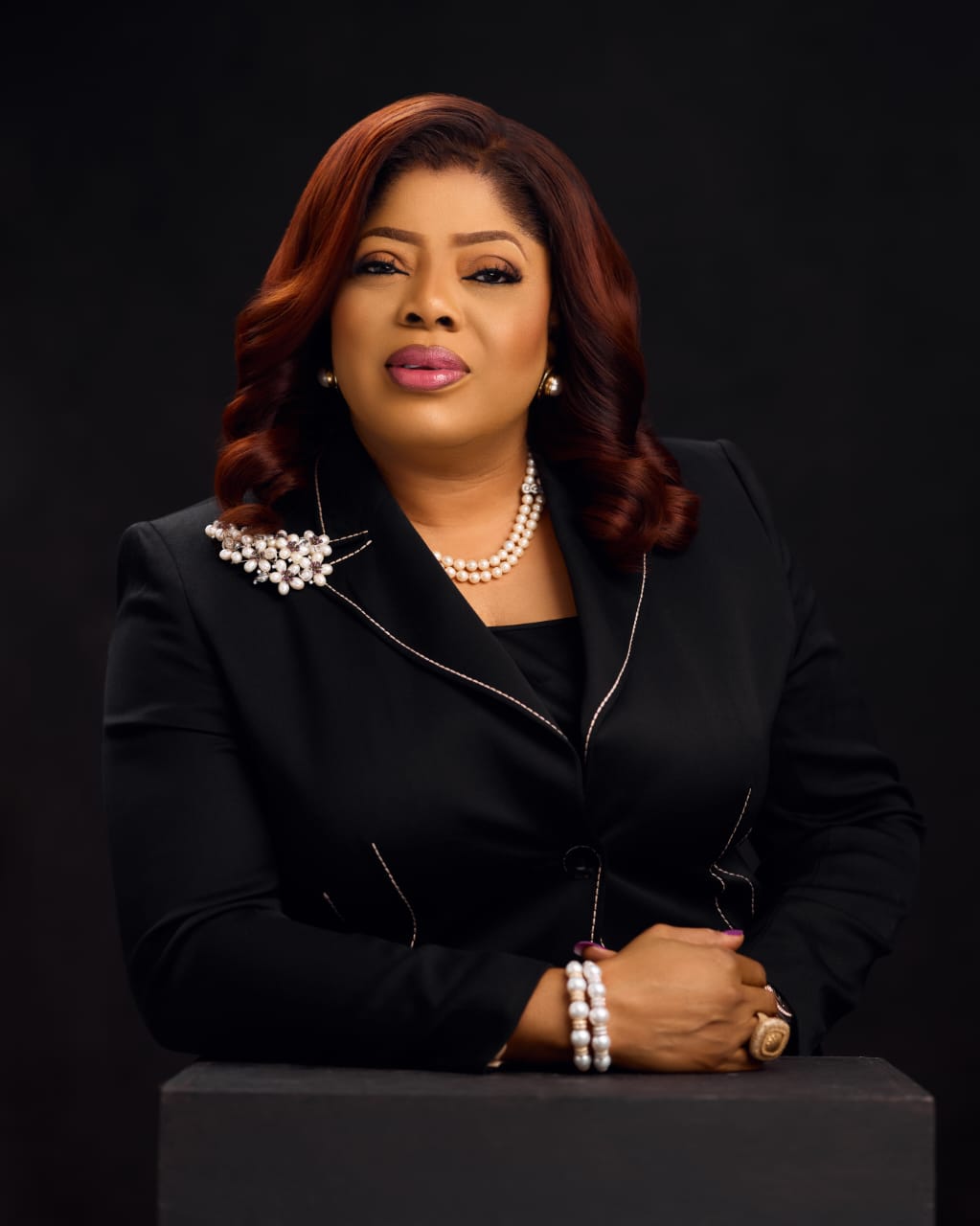
Fidelity Bank Plc has reaffirmed its commitment to strengthening its partnership with DAILY ASSET Newspaper following a visit by a delegation from the bank to the newspaper’s corporate office in Abuja.
The delegation, which arrived from Lagos, was led by the Head of Media and Internal Communication, Fidelity Bank Plc, Adebowale Banzi.
The visit was aimed at appreciating DAILY ASSET for its support over the years, while exploring ways to further deepen collaboration and strengthen the relationship between the financial institution and the newspaper.
The Editor, David Torough, who received the delegation on behalf of the management of DAILY ASSET, expressed the newspaper’s appreciation for the visit and reaffirmed its commitment to maintaining a strong professional relationship with the bank.
Torough assured Fidelity Bank of the newspaper’s continued support through accurate, objective and responsible journalism, noting that DAILY ASSET would continue to provide a credible platform for showcasing the bank’s activities, initiatives and contributions to Nigeria’s economic development.
He said the newspaper remained committed to reporting issues in a balanced and professional manner while highlighting developments and initiatives capable of contributing to national growth.
The meeting provided an opportunity for both organisations to exchange ideas on areas of mutual interest and explore avenues for further collaboration.


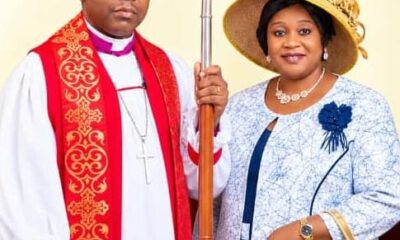

Bishop Yakela Calls for Renewed Commitment to God at Makurdi Enthronement
ShareBy David Torough, Abuja The Anglican Bishop of Makurdi Diocese, Rt. Rev. Dr. Godwin Tersoo Yakela, has called on Christians...


Finance Ministry, CBN Sign MoU to Strengthen Fiscal, Monetary Policy Coordination
ShareBy Tony Obiechina, Abuja The Federal Ministry of Finance and the Central Bank of Nigeria (CBN) have formalised a new...


Fuel Hike: FCT Motorists, Commuters Groan as Fares Rise Again
ShareMany motorists, commuters and road transport workers in the Federal Capital Territory (FCT) have expressed concern as petrol prices rise...

SharePost Recapitulation: NAICOM Holds First Quarterly Staff Meeting By Tony Obiechina, Abuja The Commissioner for Insurance, Olusegun Ayo Omosehin, at...
Livestock Ministry Trains 200 Sheep, Goat Farmers in Kano
ShareBy Raphael Atuu, Abuja The Federal Ministry of Livestock Development has trained 200 sheep and goat farmers in Kano State...
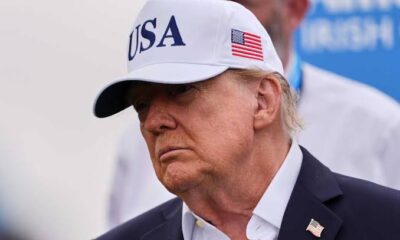

Trump Escalates Media Fight after Week of Setbacks
SharePresident Donald Trump has infused his ongoing feud with the White House press with a new level of acrimony. Journalists...
Nigeria; a Gen Z Will Soon Be President
ShareBy Prince Charles Dickson Two of my dogs fought with a bitterness I had never seen. The older one carried...
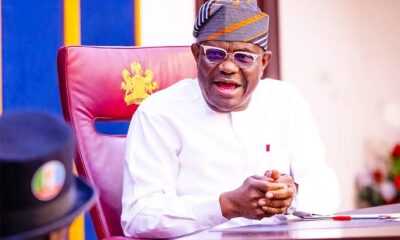

Wike, Performance and the Politics of Cross-Party Influence
ShareBy Raphael Atuu, Abuja Since assuming office as Minister of the Federal Capital Territory in August 2023, former Rivers State...
Niger 37 Tragedy: NSCDC Boss Must Go
ShareThe death of 37 detainees in the Nigeria Security and Civil Defence Corps (NSCDC) detention facility in Minna, Niger State,...
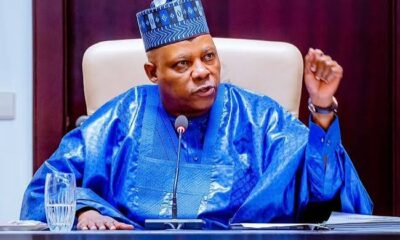

Shettima to Declare Editors’ Conference Open in Enugu Thursday
ShareVice President Kashim Shettima will on Thursday, September 24, 2026, declare open the 22nd All Nigeria Editors Conference (ANEC) of...