
Economy
IMF: Nigeria Economy ‘Gradually’ Recovering, Worries Over Unemployment, Inflation

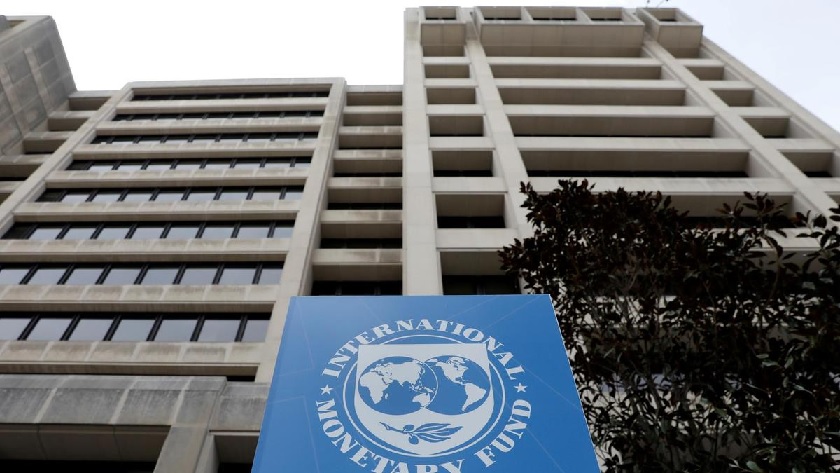
An International Monetary Fund (IMF) team on Thursday said that Nigeria’s economy was “gradually” recovering from the negative effects of the COVID-19 pandemic.
IMF disclosed this in its End-of-Mission statement from its headquarters in Washington, DC, on preliminary findings following virtual meetings by its staff teams with the Nigerian authorities from June 1 to 8.
The IMF team, led by Ms. Jesmin Rahman, discussed recent economic, financial developments and outlook and noted that “real Gross Domestic Product (GDP) was recovering but unemployment and inflation remained elevated”.
It added among other things that recent exchange rate measures were encouraging and further reforms were needed to achieve a fully unified and market-clearing exchange rate.
The findings also said the resurfacing of fuel subsidies was concerning, particularly in the context of low revenue mobilisation.
“The Nigerian economy has started to gradually recover from the negative effects of the COVID-19 global pandemic.
“Following sharp output contractions in the second and third quarters, GDP growth turned positive in fourth quarter 2020 and growth reached 0.5 per cent (year-over-year) in first quarter 2021, supported by agriculture and services sectors.
“Nevertheless, the employment level continues to fall dramatically and, together with other socio-economic indicators, is far below pre-pandemic levels.
“Inflation slightly decelerated in May but remained elevated at 17.9 per cent, owing to high food price inflation.
“With the recovery in oil prices and remittance flows, the strong pressures on the balance of payments have somewhat abated, although imports are rebounding faster than exports and foreign investor appetite remains subdued resulting in continued foreign exchange shortage.”
The report said that the incipient recovery in economic activity was projected to take root and broaden among sectors, with GDP growth expected to reach 2.5 per cent in 2021.
It added that inflation was expected to remain elevated in 2021, but likely to decelerate in the second half of the year to reach about 15.5 per cent, following the removal of border controls and the elimination of base effects from elevated food price levels.
“Tax revenue collections are gradually recovering but, with fuel subsidies resurfacing, additional spending for COVID-19 vaccines, and to address security challenges, the fiscal deficit of the Consolidated Government is expected to remain elevated at 5.5 per cent of GDP.
“Downside risks to the near-term arise from further deterioration of security conditions, and the still uncertain course of the pandemic both globally and in Nigeria,” it said.
The IMF team commended the Nigerian authorities’ measures to contain the transmission of COVID-19 in the country.
It also commended the on-going vaccination programme under the COVAX initiative, and expressed strong support to the Nigerian authorities’ efforts to acquire additional doses from countries with surplus stocks.
The IMF team, however, expressed its concern with the resurgence of fuel subsidies.
It reiterated the importance of introducing market-based fuel pricing mechanism and the need to deploy well-targeted social support to cushion any impact on the poor.
It recommended stepping up efforts to strengthen tax administration to mobilise additional revenues and help address priority spending pressures.
“The mission urged the authorities to keep reliance on the Central Bank of Nigeria (CBN) overdrafts for deficit financing within legal limits.
”The mission also advised the government to continue to make efforts to strengthen budget planning and public finance management practices to allow for flexible financing from domestic markets and better integration of cash and debt management,” it stated.
It said that the recent removal of the official exchange rate from the CBN website and measures to enhance transparency in the setting of the Nigerian Autonomous Foreign exchange rate (NAFEX) were encouraging.
The mission recommended maintaining the momentum toward fully unifying all exchange rate windows and establishing a market-clearing exchange rate.
On monetary policy, to strengthen the monetary targeting regime, the mission recommended integrating the interbank and debt markets and using central bank or government bills of short maturity as the main liquidity management tool, instead of the cash reserve requirements.
“The banking sector remains liquid and well-capitalized while non-performing loans (NPLs) are contained.
“The extension of the moratorium on principal payments of qualifying credit facilities on a case-by-case basis through March 2022 should be limited to viable debtors with strong pre-crisis fundamentals.
“CBN stress tests purport that the banking system would remain adequately capitalised except in case of a severe deterioration of credit quality.
“Nevertheless, it remains to be seen what share of forborne loans may turn non-performing as the impact of the pandemic abates.”
It, however, cautioned that since NPLs often rise at the later part of economic crisis, CBN’s strong oversight remained critical to safeguarding financial sector stability.
The IMF mission thanked the Nigerian authorities and other counterparts for what it termed “the open and thoughtful discussions and excellent cooperation”. (NAN)






The Nigerian Export Promotion Council (NEPC) says exporters in Imo generated a total of 1,244,095 dollars as proceeds from export trade in 2025.
The Imo Coordinator of the council, Mr Anthony Ajuruchi, disclosed this during a follow-up engagement with cocoa farmers in the state on Thursday in Owerri.
50 cocoa farmers and exporters in Imo received 30 cocoa seedlings each in 2025 as part of interventions to boost production for export.
Ajuruchi said the amount was derived from proceeds of both formal and informal export transactions carried out by the farmers within the 2025 fiscal year.
He commended the Executive Director of NEPC, Mrs Nonye Ayeni, and the management team for their support and commitment to the growth of the export market in Imo and across the country.
According to him, the council recorded notable achievements in 2025, including the organisation of capacity-building programmes on non-oil export, product packaging and labelling.
“In addition to our interventions for cashew farmers, we conducted trainings on product development and adaptation, export contracts, market penetration, product certification and export documentation procedures.
“We also trained about 600 exporters and small and medium-scale enterprises,” he said.
Ajuruchi said the engagement with the cocoa farmers was aimed at obtaining feedback and brainstorming on strategies to increase production and export volume in 2026.
One of the beneficiaries, Mrs Sophia Orji, said the cocoa seedlings she received were doing well and had started fruiting after 17 months.
Another farmer, Mrs Mary Okeke, said her cocoa plants were thriving and appealed to NEPC to extend similar support to farmers during the rainy season.
Also speaking, Mr Canice Nze, Director of Produce in the Imo Ministry of Trade, Commerce and Investment, urged the farmers to register with the ministry to enable them benefit from cooperative structures and access possible government grants. (NAN)
By David Torough, Abuja
In line with the consumer-focused objectives of the Nigerian Communications Commission (NCC) and the Central Bank of Nigeria (CBN), the two regulators have drawn up a framework to address consumer complaints arising from unsuccessful airtime and data transactions during network downtimes, system glitches, or human input errors.
The framework is the outcome of several months of engagements involving the NCC, the CBN, Mobile Network Operators (MNOs), Value Added Service (VAS) providers, Deposit Money Banks (DMBs), and other relevant stakeholders.
According to the NCC, these engagements were prompted by a rising incidence of failed airtime and data purchases, where subscribers were debited without receiving value and experienced delays in resolution.
“The Framework represents a unified position by both the telecommunications and financial sectors on addressing such complaints. It identifies and tackles the root causes of failed airtime and data transactions, including instances where bank accounts are debited without successful delivery of services. It also prescribes an enforceable Service Level Agreement (SLA) for MNOs and DMBs, clearly outlining the roles and responsibilities of each stakeholder in the transaction and resolution process,” a statement by Head of Public Affairs of NCC, Nnen Ukoha said.
Under the new framework, where a purchaser is debited but fails to receive value for airtime or data—whether the failure occurs at the bank level or with an NCC licensee—the purchaser is entitled to a refund within 30 seconds, except in circumstances where the transaction remains pending, of which the refund can take up to 24 hours.
The framework further mandates operators to notify consumers via SMS of the success or failure of every transaction. It also addresses erroneous recharges to ported lines, incorrect airtime or data purchases, and instances where transactions are made to the wrong phone number.
Director of Consumer Affairs at the NCC, Mrs. Freda Bruce-Bennett in a comment on the development said the framework also establishes a Central Monitoring Dashboard to be jointly hosted by the NCC and the CBN. According to her, the dashboard will enable both regulators to monitor failures, the responsible party, refunds, and track SLA breaches in real time.
“Failed top-ups rank among the top three consumer complaints, and in line with our commitment to addressing these priority issues, we were determined to resolve it within the shortest possible time,” she said.
“We are grateful to all stakeholders—particularly the Central Bank of Nigeria and its leadership—for their tireless commitment to resolving this issue and arriving at this framework, and for ensuring that consumers of telecommunications services receive full value for their purchases.
“So far, pending the approval of management of both regulators on the framework, MNOs and banks have collectively made refunds of over N10 billion to customers for failed transactions” she explained .
Mrs. Bruce-Bennett further noted that implementation of the framework is expected to commence on March 1, 2026, once the two regulators have made final approvals, and technical integration by all MNOs, VAS providers and DMBs is concluded.

By Tony Obiechina, Abuja
The Budget Office of the Federation has reaffirmed the integrity of Nigeria’s newly enacted Tax Reform Acts, cautioning against what it described as governance by speculation and unverified claims following allegations of post-passage alterations.
In a statement on Wednesday, the Budget Office said it had taken note of concerns raised by the Minority Caucus of the House of Representatives, stressing that the sanctity of the law is central to constitutional democracy and not a mere procedural formality.
According to the Office, any suggestion that a law could be altered after debate, passage, authentication, and presidential assent without due process would strike at the core of the Republic and undermine citizens’ right to be governed by transparent and stable laws.
However, it warned that democratic integrity is also endangered by the careless amplification of unverified claims. “A nation cannot be governed by insinuation or sustained on circulating documents of uncertain origin,” the statement noted, adding that public confidence, once shaken by speculation, is often difficult to restore.
The Budget Office emphasized that both government and citizens share a common interest in truth, clarity, and due process, noting that public finance depends heavily on trust in the legality and clarity of fiscal laws. It welcomed the decision of the National Assembly to investigate the allegations, describing institutional inquiry, not conjecture as the appropriate response to claims of illegality.
On public access to the law, the Office agreed that Nigerians and the business community are entitled to clear and authoritative texts of all laws they are required to obey. It clarified, however, that the authenticity of legislation is determined by certified legislative records and official publication processes, not by informal or viral reproductions.
The statement also underscored the importance of separation of powers, warning that claims suggesting Nigeria is being governed by “fake laws,” if not backed by established facts, risk eroding confidence in democratic institutions.
At the same time, it stressed that legislative scrutiny should not be dismissed by the executive, noting that oversight is a constitutional duty, not an act of hostility.
From a fiscal perspective, the Budget Office said legal certainty is essential for revenue projections, macroeconomic stability, budget credibility, and investor confidence. While it is not the custodian of legislative records, it maintained that uncertainty around operative tax provisions directly affects economic planning.
To restore confidence, the Office proposed a set of measures, including the publication of verified reference texts in a single public repository, orderly access to Certified True Copies for stakeholders, clear public explanations where discrepancies are alleged, and strict alignment of all implementing regulations with authenticated legal texts.
Addressing calls for suspension of the tax reforms, the Budget Office cautioned against allowing prudence to slide into paralysis. It argued that properly implemented tax reform is necessary to reduce dependence on borrowing and inflationary financing, while easing indirect burdens on vulnerable citizens.
“Where clarification is required, it must be provided; where correction is required, it must be effected; where investigation is required, it must proceed,” the statement said, adding that governance and reform should not be stalled by unresolved conjecture.
The Office concluded by describing taxation as a democratic covenant that binds citizens and the state, insisting that compliance depends on transparency and trust. It called on political actors to protect institutions as much as positions, urging citizens and businesses to rely on verified sources and resist the spread of unauthenticated information.
The statement was signed by Tanimu Yakubu, Director-General of the Budget Office of the Federation, who reaffirmed the agency’s commitment to fiscal transparency, institutional integrity, and reforms that advance national prosperity while safeguarding citizens’ rights.




Nasarawa Governor’s Aide Empowers 250 Women in Karu
ShareBy Tambaya Julius, Abuja Two hundred and fifty (250) women from Panda/Kare Electoral Ward in Karu Local Government Area, Nasarawa...


Benue CAN Deputy Chair Makes Case for Less Privileged, Vulnerable in Society
ShareBy Attah Ede, Makurdi The Deputy Chairman Christian Association of Nigeria CAN Benue State Chapter, Rev. Jonathan Terwase Ugbede has...


FG Saves N61.58bn Through Early Fertiliser Procurement, Secures Supply for 2026 Farming Season
ShareBy Raphael Atuu ,Abuja The Federal Government has saved approximately ₦61.58 billion (US$43.99 million) and secured fertiliser supplies for the...


Democracy Day: Renewed Hope Agenda Laying Foundation for Sustainable Growth, Says Nasarawa SSG
ShareFrom Abel Zwanke, Lafia. The Secretary to the Government of Nasarawa State and Renewed Hope Ambassador, Shuaibu Magaji Labaran, has...


One out of every four children in Benue suffering nutritional deficiencies- UNICEF
ShareFrom Attah Ede, Makurdi The United Nations Children’s Fund (UNICEF), has revealed that one out of every four Benue State...
Niger Debunks School Attack Rumours
ShareThe Niger Government has reassured parents, guardians, students, and the general public that schools across the state remain safe and conducive for teaching and learning. This was contained in a statement signed by...


Pope Leo Visits Canary Islands, Highlights Perilous Journeys of Migrants
ShareBakary Jaiju was 19 when he climbed into a wooden boat in the Gambia and set out for Europe. He...
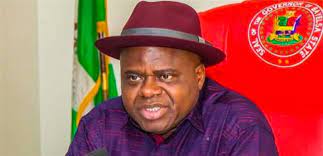

Diri Signs PWDs, BMUTH Bills into Law
ShareFrom Mike Tayese, Yenagoa Bayelsa State Governor, Senator Douye Diri, has signed the Persons with Disabilities (PWDs) and the Bayelsa Medical...


Democracy Day: FG Declares Friday Public Holiday
ShareThe Federal Government has declared Friday, public holiday to commemorate Nigeria’s 27 years of unbroken democratic rule. This was contained in a statement on Thursday in Abuja, by...
NUJ Osun Condemns Arrest of Secretary, Demands Public Apology from Police
ShareFrom Ayinde Akintade, Osogbo The Osun State Council of the Nigeria Union of Journalists (NUJ) has condemned the arrest and detention of its Secretary, Olalekan Akindoju, by...