
POLITICS
Nigerian Presidency 2023: Where are the lgbo Candidates?


By Magnus Onyibe
Ex-Vice President Atiku Abubakar who had faced- off with the incumbent president Mohammadu Buhari in the 2019 presidential contest with significant impact, is on top of the pecking order. This has been confirmed by Oyo state governor and secretary of the PDP convention committee, Seyi Makinde who revealed the identity of the other presidential candidates during a recent Channels television interview.
“…PDP has eminently qualified personalities that can lead this country successfully. Some have indicated interest, like former Vice-President Atiku Abubakar, like Governor (Aminu) Tambuwal, like Governor Bala Mohammed.
”Curiously, former Senate President, and ex Kwara state governor, Bukola Saraki who was a serious contender for the presidency in 1999 was not mentioned. Just as no Igbo man/woman whose region is supposed to present the next president in 2023 is featured in governor Makinde’s list of PDP presidential candidates that would slug it out in presidential primaries.
With respect to the ruling party, All Progressives Party (APC), the man with the appellation, National Leader, also known as both the Jagaban of Borgu and Asiwaju of Lagos, Bola Ahmed Tinubu who served as governor of Lagos 1999-2007 is clearly the leader of the pack.
So it is almost like an entitlement for the man also nicknamed the Lion of Bourdilon to become the president of Nigeria in 2023. That is simply because he played a pivotal role in the emergence of President Buhari as president in 2015 via his ability to swing the very critical south-west or Yoruba votes in favor of the then-presidential candidate, Buhari. Since it is the nature of politicians to give and later demand a return on lOUs, it appears to me that it is now payback time between Buhari and Tinubu. To actualize the presumed presidential ambition of Tinubu, South West Agenda for Asiwaju (SWAGA), a well-oiled campaign organization that has been founded by Tinubu’s ardent supporters has been making waves.
The criticality of Tinubu’s role in making Buhari president is accentuated by the fact it happened after Buhari’s three previous failed attempts (in 2003, 2007, and 2011) to win the presidency.
As someone contended elsewhere, it would not be far-fetched for observers of Nigerian political developments to come to the conclusion that Tinubu has been waiting for seven years to gain a foothold in the presidency of Nigeria. That is after the Action Congress of Nigeria (ACN) that Tinubu leads, struck the deal with then-candidate Buhari’s, Congress for Progressive Change (CPC) between 2013/14 to harness Yoruba votes for Buhari’s victory in 2015.
Considering that the Asiwaju, had to give up his initial ambition to serve as Vice Presidential candidate to Buhari in 2015, due to the fact that the concept of a Muslim president and Vice President is a sort of anathema in Nigeria, his burning ambition to succeed Buhari as president must have remained aglow.
But how the burning desire can be converted into reality is a lump currently lodged in the throats of both the Asiwaju who is yet to verbalize his apparently lifelong quest, and his political godson, Yemi Osinbajo, that is being coy about his interest in the plump job of being president of the republic.
Be that as it may, a presidential campaign organization, ostensibly without Osinbajo’s public endorsement known as ‘Osinbajo Support Movement’ (OSM) has created a website as far back as May to chronicle the achievements of the Vice-President and public garner support for him. Without being told, the emergence of OSM is in pursuit of the cause of elevating the current Vice President to the next level-the presidency.
By and large, it can be stated without equivocation that the presidency of Nigeria in 2023 from the ruling party prism appears to be beaconing on the current Vice President, who is a prodigy of the Jagaban, Bola Tinubu.
Keeping in mind that it was Tinubu that conceded the role of Vice President to Osinbajo by virtue of the fact that he was his trusted ally, would he be willing to concede the presidency to him this time?
Osinbajo, who is a high-ranking Pentecostal pastor of the Redeemed Christian Church of God and an astute legal scholar has been on the saddle as Vice President since 2015 and Tinubu his erstwhile boss has been on the sideline.
If the feelers in the political space are anything to go by, Osinbajo is not resisting the allure of change of nomenclature from Vice President to President-a natural progression that very few mortals can resist. But would his mentor, and if you like, an earthly master concede the presidency to him? That is the elephant in the room.
Now, our country, Nigeria is anchored, metaphorically, on a tripod formed by Hausa/Fulani, Yoruba, and Igbo nationalities, with each representing one of the three legs on which Nigeria stands.
The jostle for the presidency by the Yoruba and Hausa/Fulani nationalities gleaned from mainstream and online media sources has been catalogued in the preceding paragraphs.
But shockingly, alarmingly, and embarrassingly absent in the milieu are activities or information about the potential presidential or even vice-presidential candidates of Igbo origin from the ruling or main opposition parties jostling for the presidency in 2023.
So, where are the Igbo candidates?
Yes, Kingsley Moghalu, ex Central Bank of Nigeria (CBN) deputy governor, and presidential candidate of one of the small political parties in 2019 may be angling for the presidency again in 2023. But, for the obvious reasons of lack of nationwide political structures, and inability to raise the humongous financial resources which by some estimates can be as high as one hundred billion naira required to execute a presidential campaign, Moghalu has zero chance. The underlying reason for that assertion is that he is not vying for the presidency on the platform of the ruling APC or main opposition, PDP whose affluent members-governors, legislators, and ministers could have provided the financial resources and political structures once a candidate is adopted by the party. Basically if becoming the president of Nigeria in 2023 is in Moghalu’s gaze, it would have done his political career greater good, if he had joined the ruling or main opposition parties.
The other Igbo politicians of notable national status weighty enough to contemplate contesting for the presidency of Nigeria are Orji Uzo Kalu, ex Abia state governor, currently a senator; Ken Nnamani and Anyim Pius Anyim, both of whom are former senate Presidents at different times. To further give him more heft, Pius Anyim also served as Secretary to the government of the Federation under Goodluck Jonathan’s presidency.
But the aforementioned Igbo politicians who were on track to entrench themselves politically at the national level, have recently been literarily ‘damaged’ and have thus become political liabilities via their indictments by the EFCC for financial malfeasance. That is the case with Orji Kalu who was jailed under curious circumstances for corruption. But he escaped a long jail term by the whiskers when he was soon after discharged and acquitted. Pius Anyim has also been recently grilled by the anti-corruption agency, EFCC for alleged involvement of a company where he has a beneficial interest in an aviation ministry contract.
Regarding, Ken Nnamani, he has been in the cold politically for nearly fifteen years since he was compelled by his political leader (Chimaroke Nnamani, then governor of his state, currently a senator) from seeking re-election to the senate after he played a prominent role in scuttling president Obasanjo’s presumed third term agenda in 2007. That much was revealed in Nnamani’s recently published memoir.
Another Igbo personality that l had also beamed the light on is Peter Obi, who is the 2019 vice presidential candidate of the PDP and former governor of Anambra state. He too is currently under the yoke of the recently leaked Pandora papers (a catalog of illicit financial flows into a tax haven in Monaco) which has put him under the scrutiny of Nigerian anti-fraud agencies which are getting under his skin in a bid to ferret out information to determine if the former state governor breached the code of conduct rules in public service by not disclosing some of his wealth tucked away in secret foreign jurisdictions.
In my interactions with multiple members of the Igbo ethnic stock, l get the sense that they desire, as desperately as can be imagined, to be the tribe calling the shots in the presidency from2023.
This was affirmed by the president-general of Ohaneze Indigbo, the region sociocultural organization, George
Obiozor had passionately made a case for the Igbo presidency of Nigeria after president Buhari exits the Aso Rock villa in 2023. Here is how he put it: “We support the Igbo president with open arms. It is the most important thing that will happen to Igbos. Finally, it is our turn. And we are going to work it so hard,” Obiozor further made the following emphasis:
“We will talk to other parts of Nigeria to give us a chance. Because it is right, reasonable, deserving, and timely. It is wonderful to consider it done by this time. Igbo presidency is our agenda.”
Although, there has been a deluge of rhetorical statements that can be likened to the roars of lions from Igbos at home and in the diaspora about 2023 being a watershed year for a member of their ethnic group to be the president of Nigeria on the premise of the fact that both the Yoruba and Hausa/Fulani nations have had their turns in the presidential power rotation arrangement introduced since 1999: in terms of the physical mobilization of Igbo voters and the actual preparation of Igbo candidates, there has not been any significant evidence to match the vigor displayed in the media. Rather the hoopla in the mainstream and social media without commensurate practical action on the ground makes the Igbo appear like whimpering kittens as far as the struggle for the presidency of Nigeria in 2023 is concerned.
The clearly un-Igbo tame and timid attitude has been in part attributed to the resistance being put up by the proscribed Indigenous People of Biafra (IPOB), separatist movement via their seat-at-home order in Igbo land; and their disruption of political activities in the South-East through other civil disobedience actions which are having crippling effects on the socio-economic and political activities in the region.
The political inactivity in Igbo land with respect to the presidency of Nigeria in 2023 is quite the opposite of the preparatory activities towards the forthcoming November 6, governorship election in which both president Buhari and INEC chairman, Mahmood Yakubu have vowed must hold on schedule, despite the IPOB threat.
Given the scenario above, and if the Igbos are really not politicking for the presidency like their Yoruba and Hausa/Fulani counterparts, (which is evident by the reality on the ground) the prospect of an Igbo presidency in 2023 that may already be in peril, can be given a shot-in-the-arm through a strategic partnership that would provide political structures and financial muscle.
From Ayinde Akintade, Osogbo
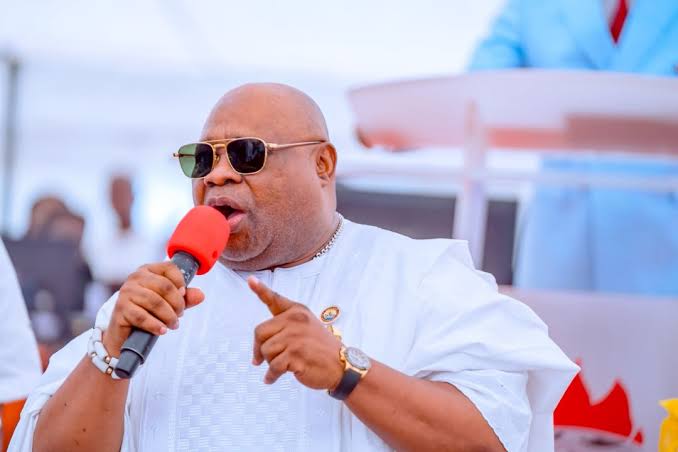
The Governor of Osun State, Senator Ademola Adeleke, yesterday charged newly inaugurated members of the Osun Central Senatorial District Accord Campaign Committee for Aare Ganiyu Olaoluwa Asejere to deploy their experience and political networks for effective grassroots mobilization, wider public engagement, and strong support for Aare Asejere.
Governor Adeleke gave this charge while speaking at the official Inauguration of the Osun Central Senatorial District Accord Campaign Committee for Aare Ganiyu Olaoluwa Asejere, at Adebimpe event hall, adjacent Osogbo City Stadium, along Ikirun Road,Osogbo.
The Governor who was represented by his deputy, Prince Kola Adewusi said, the campaign council committees should intensify grassroots mobilization from now till Election Day.
Governor Adeleke admonished entire people of Osun Central Senatorial district to see themselves as one and remain under the umbrella of the Accord while they should continue to demonstrate their unalloyed love and support for Aare Asejere for him to emerge as the next Senator for the area in January 2027.
“I am appealing to you all my dear people to extend the same love you gave me in the just concluded Governorship election in Osun State to Alhaji Asejere in the forthcoming election as he must be in the Red Chamber by January 2027 by the power of the Almighty God” Governor Adeleke stressed.=
Yeye Dupe Adeleke Sanni, the Speaker of the Osun State House of Assembly, Rt. Hon. Adewale Egbedun and a current Commissioner in Osun, Hon Bunmi Jenyo, while inaugurating the committee, charged them to be up and doing and work towards the victory of Aare Asejere in the coming election.
“The committee should make sure our Accord candidate for Osun Central Senatorial district wins the Senatorial election to the Senate as Aare Asejere’s Senatorial ambition is a round peg in a round hole towards the development and betterment of the people”.
The Chairman of the Campaign Committee and Secretary to the Osun State Government, Alhaji Teslim Igbalaye as well as the Director-General of the Asejere Campaign Committee and the incumbent Commissioner for Information and Public Enlightenment Oluomo Kolapo Alimi, while speaking congratulated Aare Asejere in advance saying, nothing will stop his emergence as Senator representing Osun Central Senatorial district in the coming election by God’s Grace and people’s support.
Also the Osun Accord Chairman, Pastor Victor Akande enjoyed the newly inaugurated committee for the emergence of Aare Asejere to see the assignment as a task which they should not take with levity.
“Our man, Aare Asejere has been tested, he has never been found wanting, he’s a man of his word and he is a complete grassroots politician who loves to develop people, let us join hands together and support his ambition”, Pastor Akande said.
Responding, Aare Asejere who was highly elated for seeing large numbers of people from far and near promised not to let the people of Osun Central Senatorial district down, adding that he will ensure he involves the whole people in his performance while his representation will be meaningful.
Aare Asejere once again called on the people of Osun Central to vote him in as the Senator representing the district assured that he will not fail them.
He appreciated Governor Ademola Adeleke in absentia, his deputy, the SSG, Bobagunwa Igbalaiye, Oluomo Alimi, Yeye Dupe-Sanni, the Speaker of the State Assembly, Hon Egbedun, Hon Abesin, Hon
Funso Ishola, party leaders, members of the Accord, community leaders, Iyaloja-General and her team, Oluomo Rasaki, Hon Adigun Olaide, among others.
By Ubong Ukpong, Abuja
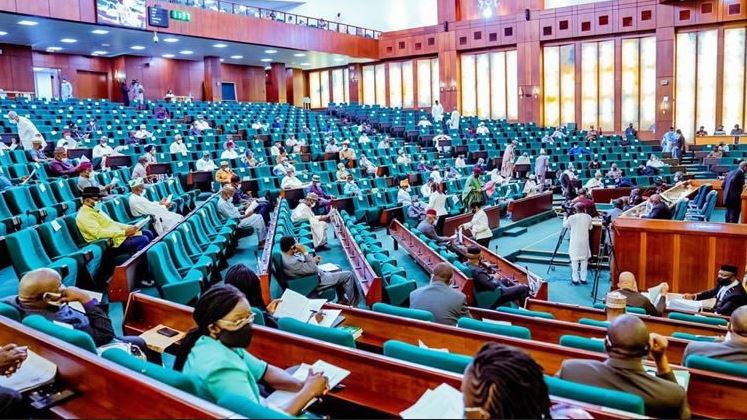
The House of Representatives on Thursday unanimously called for urgent and coordinated actions to protect Nigerian girls from child marriage and other harmful practices.
The call followed a motion of urgent national importance moved by the member representing Kosofe Federal Constituency, Lagos State, Rep.
Kafilat Ogbara, in commemoration of the International Day of the Girl Child, marked every October 11th.Ogbara, while moving the motion, decried the prevalence of child marriage and other harmful practices against the girl child.
She called on government at all levels to strengthen national programmes aimed at preventing child marriage and protecting girls at risk.
The Speaker, Rep. Abbas Tajudeen, in adopting the motion, also urged governments at all levels to ensure that every girl child has access to education, and quality healthcare.
The theme for the 2026 commemoration siught to reaffirm commitment to ending child marriage and upholding the fundamental rights of every girl child.

The Independent National Electoral Commission (INEC) has restated its commitment to an inclusive electoral process.
The Resident Electoral Commissioner (REC) in Oyo State, Prof. Adeniran Tella, stated this on Wednesday in Ibadan at a training programme for Persons with Disabilities (PWDs) ahead of the 2027 general election.
Tella noted that persons with one form of disability or another constitute an important segment of the society.
He said such individuals are citizens with equal rights, responsibilities, aspirations and contributions to make towards the development of the country.
He said: “The commission recognises that electoral inclusion goes beyond permitting PWDs to register and vote.
“It also involves ensuring that they have access to reliable electoral information, understand electoral procedures, can access polling units and are able to participate in other aspects of the electoral process.”
Tella said the commission would provide relevant assistive devices such as magnifying glasses, Braille guides and posters for voters with hearing impairments at polling units to give Persons with Disabilities a more pleasant voting experience on election days.
He added that INEC guidelines and regulations provide that priority should be accorded to PWDs at polling units without them having to wait in long queues during voting.
He further said that eligible PWDs would be engaged and trained as ad-hoc staff during the elections.
The REC explained that the objective of the commission was to ensure that eligible PWDs in the state were not discouraged, excluded or prevented by avoidable barriers from exercising their franchise during the elections.
He further asserted that “democracy is stronger when every eligible citizen has a fair opportunity to participate in shaping its future.”
He urged PWDs across the state to cooperate with the commission to remove avoidable barriers, promote electoral awareness and encourage peaceful participation.
The state Chairman of the Joint National Association of Persons with Disabilities (JONAPWD), Oluwaranti Abiodun, commended INEC for giving special consideration to PWDs ahead of the forthcoming general election.
Abiodun urged the electoral body to give priority to the plights of Persons with Disabilities when planning its activities towards the conduct of the elections.
He demanded that more consideration should be given to eligible PWDs who are interested in working as ad-hoc staff.
He also called on members of the association to support INEC and be ready to perform their civic responsibilities during the 2027 elections. (NAN)


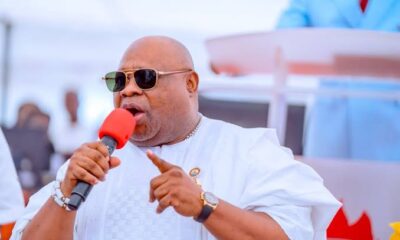

2027: Adeleke Inaugurates Aare Asejere’s Campaign Council
ShareFrom Ayinde Akintade, Osogbo The Governor of Osun State, Senator Ademola Adeleke, yesterday charged newly inaugurated members of the Osun...

INEC Seeks Stakeholders’ Collaboration for Credible, Peaceful Elections
ShareThe Independent National Electoral Commission (INEC) has reaffirmed its commitment to strengthen collaboration with the National Orientation Agency (NOA), security...
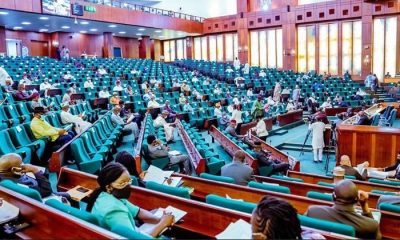

Reps Reject Child Marriage, Demand Protection of Girl Child
ShareBy Ubong Ukpong, Abuja The House of Representatives on Thursday unanimously called for urgent and coordinated actions to protect Nigerian...

Court Awards N125, 000 Cost against Odumodublvck
ShareAn Abuja High Court on Wednesday awarded N125, 000 against a rapper, Tochukwu Ojogwu, popularly known as “Odumodublvck”, for asking...


Hunger Changed My Mind, Timini Egbuson on Embracing YouTube movies
ShareNollywood actor Timini Egbuson has reflected on his changing perception of YouTube movies, joking that he might have struggled financially...

Peller Announces Livestream with Peter Obi
SharePopular Nigerian TikTok streamer, Hamzat Adelaja, popularly known as Peller, has announced an upcoming livestream with the presidential candidate of...

Nigeria’s inflation drops from 15.39 Per Cent to 14.63 Per Cent in September
ShareBy Tony Obiechina, Abuja The National Bureau of Statistics (NBS) on Thursday disclosed that Nigeria’s inflation has eased from 15.39...


Senate Oders Investigation into Corps Member’s Death in Enugu
ShareBy Tambaya Julius, AbujaThe Senate has ordered an investigation into the death of a National Youth Service Corps (NYSC) member,...

Tinubu Seeks Sweeping Reforms in Drug Laws, Presents Three Bills
Share By Tambaya Julius, Abuja President Bola Tinubu has sent three executive bills to the House of Representatives, seeking to reform...

2027: Group Rejects Alleged Rainbow Coalition Plot in Benue, Warns Wike, Akume Of Any Attempt To Thwart Alia’s Reelection.
ShareFrom Attah Ede, Makurdi The Benue Alliance for Good Governance and Accountability (BAGA), has raised concerns over an alleged political...