
Agriculture
Organisation Advocates solar – Powered Cold Hubs Against Post – Harvest Losses

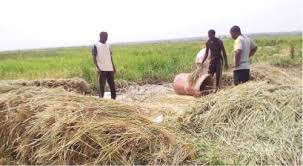
Mr Francis Jeremiah, Cold-Hub’s Technical Operations Officer (Northern region), has advocated the installation of solar – powered cold hubs to prevent post- harvest loss in the country’s agriculture sector.
Jeremiah who said this on Friday in Abuja said that Nigerian farmers suffered huge losses due to poor storage facilities.
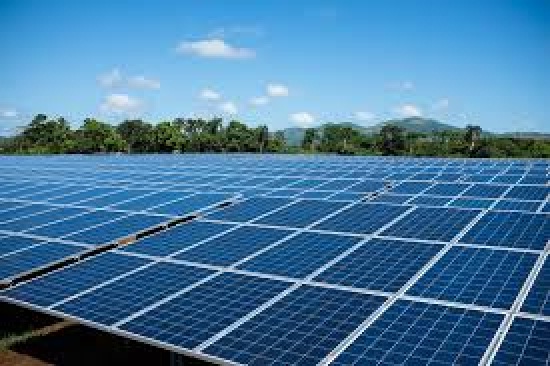
Emphasising the need for improved power supply to storage facilities, he said the organisation saved 42,024 tons of food items from spoiling in 2020 using renewable energy from solar powered cold hubs.
Jeremiah said the initiative was borne out of the need to save food from spoiling and reducing stress that farmers went through with preserving unsold perishable items such as vegetables.
“This has so far increased farmers’ and vegetable sellers’ income to 50 per cent averagely and 95 per cent of food items were prevented from spoilage in 2020.
“Cold hubs have successfully prevented 1,040,688 kg of carbon dioxide emissions, limiting global warming and we are still doing this yearly.
“People have been approaching us with the idea of wanting to store meat , fish and onions, we have a facility for that, but we need sponsors.
“Cold hubs have covered about 36 states and have 19 regions in the North already. In the FCT, we have one in Deidei area and another in Orange Market.
“When food is harvested, the farmers have nowhere to store so they are only looking to sell off quickly making little or no gain at all.
“With this new technology, farmers are meant to pay an estimated amount of N50.00 (Fifty Naira only) per crate, and perishable items can be stored for 90 days,” he said.
Jeremiah applauded the partnership with the Ministry of Agriculture which he said had assisted the organization.
He appealed to the government to assist with provision of land for the organisation to establish as many hubs as possible.
Jeremiah said that if more hands would be on deck, the issues of food spoilage in the country would be a thing of the past. (NAN)






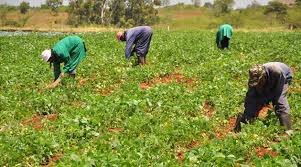
The Tomatoes Growers and Processors Association of Nigeria (TOPAN) has predicted a steady increase in the price of the produce between May and June 2026.
The Kaduna State Chairman TOPAN, Rabiu Zuntu, disclosed this in an interview recently in Lagos.
Zuntu noted that although there is no particular time for tomatoes planting season up north, seasonal weather variations can affect the production of the produce.
“Although we can plant tomatoes all-year-round, we cannot assure quality harvest all-year-round.
“Some farmers are harvesting now, while others are transplanting, and others are harvesting.
“Tomatoes are still available for sale but the price of the produce is gradually on the increase.
“Come May/June, the prices of tomatoes will be very expensive, so now is a good time to stock up the produce. There’s always a scarcity within that period.
“This is because of the nature of the weather in the north around that period, the weather is usually very hot and tomatoes cannot resist such hot temperature,” he said.
Zuntu said the price of tomatoes have started rising up in the north.
“A 50kg rafia basket of tomatoes sells from N20,000 as against N7,000 to N10,000 that was sold earlier in the year.
“While a crate of tomatoes up north is sold between N10,000 and N15,000 as against N5,000 to N6,500 sold earlier in the year.
“In most part of Kano State, where there is bumper harvest, they are rounding off their harvest. So, tomato is not that available there and most buyers have turned to where they can find it now, mostly within Kaduna State and some parts of Plateau State.
“So, that’s why the supply has decreased and the tomato supply and cost is determined by the law of demand and supply,” he said.
A 50kg basket of tomatoes in Lagos, at the moment, sells between N40,000 and N60,000 depending on the size and quality.
The Smallholder Women Farmers Organisation in Nigeria (SWOFON), Oyo State chapter, has said that the lack of irrigation facilities had become a major obstacle to dry season farming in the state.
The Chairperson of SWOFON in Oyo State, Atinuke Akinbade, said this in an interview in Ibadan on Monday.
Akinbade, who shared the experiences of women farmers in the state during the 2025 dry season, said that inadequate access to water for irrigation significantly affected the performance of many farmers during the period.
“It hindered many older farmers from participating in dry season farming and also prevented younger farmers from doing as much as they could in cultivating large acres of land,” she said.
Akinbade explained that farmers who managed to plant during the season struggled to access sufficient water to irrigate their farms, a situation worsened by the effects of climate change.
“Many farmers who depended on streams and wells to water their crops suffered major setbacks because those sources could not provide enough water for irrigation.
“Some farmers had to resort to buying water from commercial water tankers, which increased the cost of production, while at times it was even difficult to get water from the tankers,” she said.
The SWOFON chairperson warned that failure to address the problem could worsen food insecurity in the coming months.
“Even now, rainy season farming has not fully commenced because of the irregular rainfall pattern.
“This is a double burden, and if nothing is done, it may lead to serious hunger later,” she said.
Akinbade, however, acknowledged that the government had organised training for members of the association on home gardening.
She, however, said that little support was provided to address the challenges of dry season farming.
The chairman said that the home garden support package given to members consisted mainly of seedlings and one sprayer.
“They gave us two packs each of maize and pepper seeds, with six seeds in each pack, as well as one sprayer, so that we can grow food for household consumption,” she said.
Earlier, Oluwatoyin Oyedeji, SWOFON Coordinator in Oyo East, explained the severe hardship members of the organisation experienced in sourcing water for irrigation.
“Many farmers are already counting their losses because water was not available to irrigate their farms.
“Those who depended on streams and brooks were badly affected because many of them dried up, while the few that still had water had so little that farmers had to dig deeper into the ground in search of more,” Oyedeji said.
In the same vein, the Women Leader for farmers in Saki East, Musiliu Ashiru, said the absence of irrigation facilities also hampered dry season farming in her area.
According to her, many farmers still engaged in dry season farming have had to pay for water to keep their crops alive.
“Many of them buy water from the dam here to irrigate their crops. It has not been easy for them this year,” Ashiru said.
Nigeria’s agricultural sector has seen a significant surge in investment, rising 224 percent in one year amid escalating insecurity in the country.
Data from the National Bureau of Statistics (NBS) capital importation report showed that foreign direct investment (FDI) in the agric sector hit $167.
3 million in 2025, up 224 percent from $51. 7 million in 2024.On a quarter-on-quarter basis, investment into the sector surged 216 percent to $51.
2 million in the fourth quarter of 2025 from $16.2 million in the corresponding period of 2024.Prior to 2022, investments in the sector had grown consistently at an annual average of 82 percent since 2016, but then reversed in 2022 and continued to decline through 2024, before rebounding in 2025, according to BusinessDay’s analysis.
Experts in the sector attributed the surge to renewed investor interest amid favourable government policies, including importation waivers.
“The economic reforms that restored investors’ confidence and the government’s continuous support to the sector are major drivers of these investments,” said AfricanFarmer Mogaji, chief executive officer, Agbado Value-Chain Ltd
“Also, the country’s growing population always makes the industry attractive for investors, as people must eat. This increased the number of investors, domestically and foreign, who invested in the industry,” Mogaji said.
Nigeria’s agricultural industry experienced several shocks in 2025 that disrupted the food systems and hampered productivity.
High insecurity has significantly impacted farming activities in the country, with the situation intensifying in 2025, forcing many farmers to abandon their farmlands.
Prices of key inputs such as seeds, herbicides, pesticides, fertilisers, and agro machinery tripled in 2025 due to the naira devaluation and spikes in headline inflation.
The surge in production costs, combined with low food prices, eroded farmers’ ability to recover investments made during the 2025 season, leaving many with huge financial losses.
Similarly, the increasing impact of climate change on communities disrupted farming activities during the year. While no country is immune to the impacts of climate change, Nigeria is among the countries that are most vulnerable and least able to cope with the impacts of a changing climate.
The fishing industry, which is one of the sub-sectors of the agricultural industry, attracted a $5.1 million investment in 2025 from zero investments in 2024.
The sector grew by 2.92 percent in 2025 as its performance was significantly impacted by increased youth participation and rising investment in mechanised farming.

Kogi Community Marks Annual Festival, Calls for Unity amongst Indigenes
ShareFrom Joseph Amedu, Lokoja The Odo-Ape community in Kabba-Bunu Local Government Area of Kogi state came alive last Saturday as indigenes at home and abroad gathered...


Spain Deploys over 13,000 Officers for Pope’s June Visit
ShareSpain will deploy more than 13,000 police officers to stave off “Multiple” potential threats to Pope Leo XIV’s visit from June 6 to 12, the interior minister said on Monday. The pope is due to...
Nigeria Validates 10-Year Roadmap to Transform Veterinary Services
ShareBy Raphael Atuu, Abuja The Federal Government of Nigeria has successfully validated the National Roadmap for the Veterinary Services in Nigeria (2026–2036), setting a bold course to modernise animal health...


JAMB Schedules May 11 Policy Meeting to Determine 2026 UTME Cut-Off Marks
ShareThe process for the 2026/2027 tertiary admissions cycle is set to begin in earnest as the Joint Admissions and Matriculation...


Jigawa, Kano, Katsina Top List of Out-of-school Children
ShareJigawa, Kano and Katsina, have been identified as states with the highest number of out-of-school children crisis as UNICEF stressed that urgent investment in early...


NNPCL Signs Fresh Contract for Completion of PH, Warri Refineries
ShareThe Nigerian National Petroleum Company Limited (NNPCL) has signed a Memorandum of Understanding (MoU) with two Chinese companies, Sanjiang Chemical...


Kaduna Inaugurates Disarmament, Demobilisation, C’ttee to Enhance Security
ShareFrom Agbo Emmanuel, Kaduna Governor Uba Sani has inaugurated the Kaduna State Disarmament, Demobilisation and Reintegration(DDR), Peace and Security Committee,...

PDP: Turaki – led NWC Takes Charge, Sales Presidential Form for N100m
ShareBy Johnson Eyiangho, Abuja The Peoples Democratic Party (PDP) has unveiled a N100 million price tag for its 2027 presidential...


Stop killings, Ease Suffering before 2027 Elections, Cleric Urges FG
ShareBy Raphael Atuu, AbujaThe founder of Dominion Chapel International Churches, Archbishop JohnPrasie Daniel, on Sunday urged the Federal Government to...
Workers’ Day: Labour Leaders Urge Tinubu to Strengthen Partnership with Unions
ShareBy Raphael Atuu, Abuja Labour leaders and stakeholders across Nigeria have called on President Bola Ahmed Tinubu to deepen collaboration...