
security
Ortom Sues for Lasting Peace between Egba, Ologba Clans in Agatu

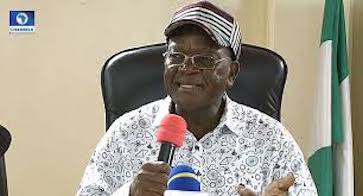
Gov. Samuel Ortom of Benue has called for lasting peace betweem the Egba and Ologba clans in Agatu Local Government Area of the state.
Ortom made the call in Otukpo the headquarters of Otukpo LGA of the state during the signing of the Agatu Natural Resource Peace Agreement between the Egba and the Ologba clans in Agatu.
The governor, represented by his Special Adviser on SDGs/NEPAD, Prof.
Magdalene Dura, called stakeholders to work with the Centre for Humanitarian Dialogue to bring lasting peace to the 20 Local Government Areas (LGAs) of the state that are experiencing various forms of conflicts.The News Agency of Nigeria (NAN) reports that with the commitment to end decades of intercommunal violence over water and land in Benue, 20 clans from the Agatu community signed a peace agreement on the sharing of resources that also covers free movement in the area and the safe return of thousands of displaced people.
The peace deal was brokered by the Centre for Humanitarian Dialogue (HD).
”As we sign today, leaving behind misgivings and grievances accumulated over the last 50 years, go back and do more for peace.
“I appeal to the centre to also work towards bringing peace between farmers and herders.
”We appreciate the centre for the peace process which culminated into the signing of the peace agreement,” he said.
Also speaking, the Regional Director of the centre, Dr Babatunde Afolabi disclosed that it was the first time that the communities would end their differences through signing of a natural resource-specific peace agreement in Nigeria.
“We are therefore, proud and happy to share this unique history with you.
“We have managed to facilitate dialogue and help Agatu community especially the Egba and Ologba clans agree on how best to manage the lingering disputes between them on the ownership, sharing and management of their fish ponds,” Afolabi said.
Also, Prof. Armstrong Adejo, a Professor of History at the Benue State University (BSU), in his key note address said that conflict was not healthy for any society because it causes hunger, poverty, and loss of lives and property.
”Peace has a lot of benefits,” he said.
Also contributing, the Tor Tiv, Prof. James Ayaitse who was represented by Mr Iorbee Ihagh, appealed to the centre to engage Bonta and Okpute communities in Konshisha and Oju LGAs rto agree on a peaceful resolution of their feud.
Also, the Och’ Idoma, Dr John Elaigwu, charged his subjects to take the peace agreement serious.
The First Class Chief of Apa/Agatu intermediate area, Chief Baba Odangla and the Agatu traditional ruler, Chief Godwin Onah, appreciated God for making the peace process possible, believing that their land would enjoy peace again.
The News Agency of Nigeria (NAN) reports that the peace accord, which recognises the need to involve women, youth and people with disabilities in the process, follows a Statement of Affirmation by the 22 clans in November 2021 that included their commitment to HD’s dialogue process.
Since the early 1970s, the area has suffered violence over natural resources, especially the ownership, access and management of water sources, farmland and fishponds.
The disputes have resulted in hundreds of deaths, thousands of people displaced, widespread criminal activity and interruption of economic, social and education programmes.
HD’s mediation and peacemaking work in various areas of Nigeria, includes three major intercommunal agreements in 2015 and 2016 and a landmark social media peace accord signed in July 2021 by the Bache, Fulani and Irigwe ethnic groups in the Bassa Local Government Area of Plateau.
With more than 50 projects and 300 staff across Africa, the Middle East, Eurasia, Asia and Latin America, HD is the leading international private diplomacy organisation working to prevent and resolve armed conflicts through dialogue and mediation. (NAN)




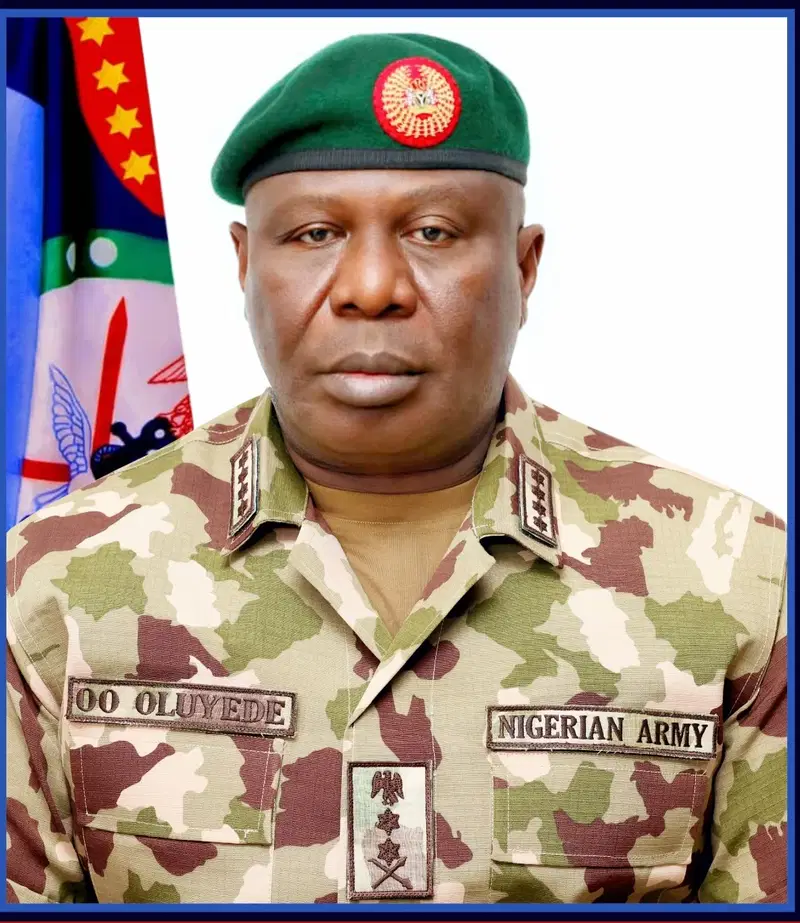
The United Kingdom has reaffirmed its commitment to deepening defence and security cooperation with Nigeria, with emphasis on military training, technology transfer and institutional capacity building.
The British High Commissioner to Nigeria, Pete Vowles, reiterated the commitment during a courtesy visit to the Chief of Defence Staff (CDS), Gen.
Olufemi Oluyede, at the Defence Headquarters, Abuja.This was contained in a statement by the Director of Defence Information, Maj.-Gen. Samaila Uba, on Tuesday in Abuja.
Vowles reaffirmed the UK’s commitment to sustaining existing security initiatives and exploring new areas of collaboration to address evolving regional and global security challenges.
He described defence and security cooperation as critical pillars of the longstanding bilateral relationship between both countries.
The high commissioner also stressed the need for a mutually beneficial partnership that would promote regional stability and strengthen Nigeria’s capacity to tackle contemporary security threats.
In his response, Oluyede highlighted the longstanding historical ties between Nigeria and the UK, noting that both countries had sustained productive defence relations over several decades.
He said the two countries had continued to collaborate in addressing shared security concerns.
The CDS emphasised the need to sustain and expand existing areas of cooperation, particularly in professional military education, technology transfer and institutional capacity building.
According to him, ongoing defence agreements and training programmes have contributed to improving the professional competence and operational capabilities of the Armed Forces of Nigeria.
Oluyede emphasised that continued collaboration with strategic international partners remained vital to strengthening the military’s capacity to respond effectively to emerging threats.
He added that such partnerships would also promote greater self-reliance, institutional resilience and operational efficiency within the Armed Forces.
Both parties expressed optimism about the future of the UK-Nigeria defence and security partnership, reaffirming their commitment to consolidating existing achievements and exploring further areas of cooperation for mutual benefit.
By Tambaya Julius, Abuja
Nigeria and Rwanda are exploring new areas of military cooperation, including personnel exchanges, specialised training and local defence equipment production, as both countries seek to strengthen regional security.
The proposals were presented by the Chief of Army Staff (COAS), Lieutenant General Waidi Shaibu, during an official working visit to Rwanda, where he held talks with the Army Chief of Staff of the Rwanda Defence Force, Major General Vincent Nyakarundi.
In a statement, the Acting Director of Army Public Relations, Colonel Appolonia Anele, said the discussions focused on expanding professional military cooperation and improving the operational capacity of both armies.
Shaibu proposed that two cadets of the Nigerian Defence Academy (NDA) undertake a four-year training programme at the Rwanda Military Academy, with similar opportunities to be made available to Rwandan cadets in Nigeria.
He also called for collaboration between the Defence Industries Corporation of Nigeria (DICON) and relevant Rwandan institutions to boost local defence production and encourage technology development.
Other areas identified for cooperation include logistics, Military Police training, pre-deployment preparation for peace support operations and the exchange of operational experience in counterterrorism and counterinsurgency.
The Army Chief said both countries could draw on their respective military experiences to tackle emerging security threats, improve operational readiness and promote stability across the region.
He further stressed the need for closer ties between DICON and Rwanda’s defence engineering and procurement institutions to support indigenous equipment manufacturing, technological advancement and greater self-reliance.
During the visit, Shaibu paid tribute to the courage and sacrifices of the Rwandan Patriotic Army, particularly the 600 personnel who defended Kigali during the 1994 Genocide against the Tutsi.
He described their resilience and patriotism as enduring lessons in national determination and military leadership.
In his response, Nyakarundi commended the Nigerian Army for providing specialised Military Police and Intelligence training to Rwandan personnel.
He called for expanded professional military education through institutions such as the Armed Forces Command and Staff College, Army War College Nigeria and the National Defence College.
The Rwandan Army chief also welcomed the proposed cadet exchange programme and defence industrial partnership, describing the visit as a reflection of growing mutual trust and professional solidarity between the two armies.
The proposed initiatives are expected to provide a framework for deeper military engagement between Nigeria and Rwanda, particularly in training, defence technology and regional security cooperation

From Dan Amasingha, Minna
An Assistant Superintendent of Corps (ASC), Usman Isah Ndamaka, was moved to tears yesterday as he appeared before the Justice Mohammed Mohammed-led Judicial Commission of Inquiry in Minna.
He offered an unreserved apology over the death of 37 miners while in the custody of the Niger State Command of the Nigeria Security and Civil Defence Corps (NSCDC).
Ndamaka, who was the officer in charge of the command’s detention facility when the incident occurred on September 17, admitted full responsibility for the tragedy, describing it as a grave mistake.
The judicial panel was set up by the Niger State Government to probe the circumstances surrounding the fatalities, which reportedly occurred following the arrest of 58 suspected illegal miners comprising 33 males and 25 females.
Recounting the events that led to the deaths, Ndamaka explained that the facility was originally designed to accommodate between 28 and 30 detainees.
He stated that while female suspects were separated and relocated to another facility, accommodating the remaining male detainees presented a severe logistical challenge.
According to him, the suspects arrived late in the evening during a heavy downpour, making an immediate transfer difficult. An attempt to relocate some of the detainees to the old command facility failed after the Mining Marshal rejected the arrangement.
Ndamaka told the commission that heat, severe overcrowding, and distress caused the male suspects to scream and shout inside the cell.
However, he admitted that fear of being overpowered prevented him and his subordinates from unlocking the door
”An error has already been committed. I am very sorry for the death of the miners under my custody,” Ndamaka said in an emotional testimony. “It is unfortunate that this happened under my watch. I am pained, and I admit my mistake.”
Also testifying, the head of the NSCDC investigation unit, Chief Superintendent of Corps Sunday Oluwadere, confirmed that he profiled and investigated the suspects following their arrest and recovered several exhibits.
Under cross-examination by the Niger State Head of the Legal Aid Council, Mrs. Bolanle Jibogun, Oluwadere expressed regret over operational shortcomings during the handling of the suspects.
Earlier, the Chief Consultant Pathologist at the General Hospital, Minna, Dr. Alfa Sule, informed the panel that post-mortem examinations were required to determine the precise cause of death.
Dr. Sule stated that conducting the autopsies requires coroner approval, while obtaining toxicology and histology samples for forensic laboratory analysis in Lagos requires the consent of the deceased persons’ families.
He projected that full forensic results would be ready within two weeks once samples are dispatched.
Following the incident, the Commandant-General of the NSCDC, Dr. Ahmed Abubakar Audi, ordered the arrest of 22 officers, including the suspended Niger State Commandant, Siaka Zubeiru Anirive.
The officers were escorted to the corps’ national headquarters in Abuja for administrative procedures.
Eight personnel have so far testified before the judicial panel as proceedings continue.




Bayelsa Spends N13.2b on Salary-related Items in September
ShareFrom Mike Tayese, Yenagoa Bayelsa State Government over the weekend said the total salary-related items to civil servants in the...


OPay Provides Update on Planned NYSE IPO, Reaffirms Normal Business Operations
Share From Tony Nwachukwu, Lagos Fintech company OPay has announced the postponement of its planned public offering on the New...


Aba Commercial Smart City Celebrates COO, Mazen Kalassina at 39
ShareBy David Torough, Abuja Aba Commercial Smart City has celebrated its Chief Operating Officer (COO), Engr. Mazen Kalassina, on his...

Rebuilding Public Trust in Government Borrowing: The Case for Scaling Up Sukuk Financing in Nigeria
ShareBy Uche Joe Uwaleke The recent request by President Bola Tinubu to the National Assembly for approval to raise $20.52...

2027: Buba Yakub Mobilises Adamawa Support for Tinubu, APC
ShareFrom Yagana Ali, Yola The Director-General of the Nigerian Technical Aid Corps (NTAC), Rt. Hon. Yusuf Buba Yakub, has called...

2027: FOOG Women Coordinator Urges Nigerians to Support Tinubu’s Re-election Bid
ShareBy Francis Sadhere, Warri Chief (Mrs) Esther Orighomisan Okotie-Eboh, Coordinator of Felix Omagbemi Ogbe Group (FOOG) Women Support Group for...

Troops Neutralise 217 Terrorists, Rescue 349 Kidnap Victims, Arrest 333 Suspects in Oct
ShareBy David Torough, Abuja The Armed Forces of Nigeria (AFN) say troops neutralised 217 terrorists and other criminals, rescued 349...


2027: Tompolo Mobilises Support for Tinubu in Ogun, says Economy Stabilising
ShareThe Grand Patron of the PBAT Door-to-Door Movement, Government Ekpemupolo, has called on the people of Ogun State to massively...

Henry Okeke Commends Mbah for Clearing Pension Arrears in Enugu
ShareBy Raphael Atuu, Abuja Barrister Henry Nnanna Okeke, a member of the Governing Council of Enugu State Polytechnic, Iwollo, has...


2027: ADC Urges ECOWAS to Insist on Credible Elections in Nigeria
ShareThe National Chairman of the African Democratic Congress (ADC), Sen. David Mark, has urged the Economic Community of West African...