
Health
Radiologists Seek Govt, Private Sector Investments in ‘Interventional Radiology’

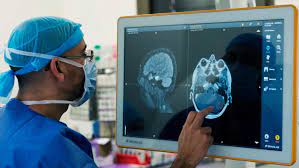
A professor of Radiology, Abiodun Adeyinka, has urged the Federal Government and private sector to invest in ‘Interventional Radiology’ to boost modern medicine practices in Nigeria.
Adeyinka, a consultant radiologist, College of Medicine, UCH, Ibadan, made the at the 2022 faculty day celebration by the Faculty of Radiology, National Postgraduate Medical College of Nigeria, on Monday, in Lagos.
Newsmen report that the theme of the programme is: “Role of Interventional Radiology In Modern Medicine In Nigeria”.
He described interventional radiology as a sub-specialty in radiology that performs various minimally-invasive procedures that diagnose, treat and cure many kind of conditions using medical imaging guidance such as X-rays, Magnetic Resonance Imaging (MRI) or ultrasound.
Adeyinka,the key speaker at event, said that interventional radiology had not replaced surgery but provided a less invasive way of doing some surgical procedures that would had kept patient in the hospital for about three to four weeks.
According to him, with the interventional radiology the surgical procedure is done on a daily basis and achieves the same result as surgery and the patient leaves the hospital within some hours.
He said that interventional radiology remained the best medical offer a patient could get because “it is an advancement in the medical practice.”
“Instead of an open surgical operation, the interventional radiology can be used to give a permanent cure to fibroids, cancer and cardiac conditions.
“It can be used to stop the supply of blood to fibroid tumor in women and once the tumor no longer gets blood, it shrinks and dies.
“But where we are having problems is in the area of equipment; the materials and equipment used in interventional radiology are quite expensive.
“That’s why we need government as well as private sector to come in and provide or subsidise the cost of some of the equipment,” he said.
Adeyinka, therefore, urged government to make it easier for the equipment to be imported into the country by reducing or totally removing the excessive tariffs placed on them at the ports.
“There are some of our partners abroad that want to donate some of the equipment to Nigeria but due to high tariffs, they are stocked there at the port.
“There are just about 19 centres in Nigeria that have interventional radiology. Even if government can’t provide the equipment, at least it can create the enabling environment for the equipment to easily enter the country,” Adeyinka said.
The Faculty Chairperson, Prof. Rachel Akinola, identified consumables and manpower as major challenges that limit the adoption and practice of interventional radiology in Nigeria.
Akinola, also a consultant radiologist, Lagos State University Teaching Hospital (LASUTH), said there were limited number of trained professionals to handle interventional radiology in Nigeria.
In her speech of welcome, Akinola, also lamented that the few available trained professionals were leaving the country to practice abroad.
She, therefore, called on the government to intensify efforts not only to train professionals on interventional radiology, but to retain the already trained doctors and medical professionals.
Another consultant radiologist, Dr Caleb Yakubu, said the essence of the programme was to sensitise and educate the general populace on the relevance of radiology in medical operations.
Yakubu, also the Coordinator, One-Stop-Breast Clinic, Lagos University Teaching Hospital (LUTH), said the objective was to educate the public on ways to benefit from the modern medical advancements that were evolving.
He emphasised the need for women to go for cancer screening with the aid of mammography machines.
Yakubu added that government ensure provision of the machines in states and federal hospitals across the country.
“The key to effective management of cancer is early detection. And eight out of every 10 Nigerian women has breast cancer. And the type of breast cancer they have is very aggressive and they are presented late.
“So, let government provide mammography machines in all government hospitals and make them readily available, accessible and affordable so that Nigeria women can easily be screened for cancer,” he said.
A retired consultant radiologist, Prof. Gbadebo Olusegun, urged the Federal Government to do everything possible to stop the increasing brain drain and medical tourism among the Nigerian citizens.
According to him, setting up functional and equipped interventional radiology centres with trained professionals will help to curb medical tourism and brain drain in the country.
“Unfortunately, hard times are here, where we are confronted with massive brain drain of medical professionals and unimaginable foreign exchange bastardisation.
“If people can get in Nigeria the same quality of healthcare they seek abroad, they will have no reason to travel to another country.
“This will also conserve foreign exchange and save capital flight,” Olusegun said. (NAN)






The Minister of State for Health and Social Welfare, Dr Iziaq Adekunle Salako, has called for increased investment in radiopharmaceutical therapy to strengthen cancer care and advance precision medicine in Nigeria.
Salako made the call at the International Symposium on Radiopharmaceutical Therapy (ISRT) event held on Friday in Lagos.
The World Association of Radiopharmaceutical and Molecular Therapy (WARMTH), International Centers for Precision Oncology Foundation and Chris Oyakhilome Loveworld Medical Centre, organised the two- day event.
The symposium targets better, more accurate and personalised cancer diagnosis and treatment for people in Africa.
Represented by Dr David Oladele, Deputy Director, Research, Nigerian Institute of Medical Research, Yaba, Salako commended the organisers and stakeholders for addressing Nigeria’s growing cancer burden.
He described radiopharmaceutical therapy as an important frontier in modern medicine, combining nuclear medicine, molecular imaging, pharmaceutical sciences, oncology and precision medicine for targeted cancer treatment.
The minister said the Federal Government remained committed to strengthening the health system under President Bola Tinubu’s Renewed Hope Agenda and the Health Sector Reform Investment Initiative.
He urged participants to deepen collaboration between Nigerian and international institutions, promote technology transfer, strengthen capacity development and develop partnerships to make radiopharmaceutical therapy more accessible.
Salako expressed hope that the symposium would produce actionable recommendations and partnerships capable of strengthening cancer care and advancing precision medicine across Nigeria.
He congratulated the organisers and wished participants fruitful deliberations and a successful symposium.
Delivering the opening remarks, Dr Deola Philips, Executive Minister, Ministry of Healing and Social Services and Chairman, Loveworld Medical Centre, commended Pastor Chris Oyakhilome for his compassion toward the sick.
Philips said Oyakhilome’s compassion had inspired healthcare initiatives, including trauma care, blood donation, volunteer medical services and community clinics.
She said ISRT promoted precise, personalised cancer care, strengthened local expertise and demonstrated Africa’s capacity to develop and deliver advanced diagnostics and targeted treatments to international standards.
President-elect of WARMTH, ISRT Scientific Chair and Director of Operations, Loveworld Medical Centre, Dr Masha Maharaj, said collaboration, education and research were crucial to advancing nuclear medicine globally.
She said ISRT symposiums provided practical workshops for young scientists and emerging departments to gain knowledge and confidence, exchange ideas and collaborate with international experts.
She said research showed that theranostics could improve outcomes for patients with advanced prostate cancer, adding that Nigeria had begun actinium treatments for breast cancer, sarcoma and lung cancer.
In a video displayed on a slide, Dr Savvas Frangeras, Nuclear Physician, Cyprus, and President, World Federation of Nuclear Medicine, praised Maharaj for fostering cooperation between the organisations.
Frangeras said the symposium supported efforts by international bodies to strengthen nuclear medicine in Africa and develop sustainable strategies for addressing the continent’s challenges.
He expressed hope that the Nigerian Society of Nuclear Medicine and Molecular Imaging would join the initiative, wishing participants a successful and productive symposium.
Prof. Richard Baum, a pioneer in molecular imaging, theranostics and radiopharmaceutical therapy, said the professional environment provided ideal conditions for learning, exchange and international friendships.
Baum commended Maharaj and her team for creating a platform that advanced radiopharmaceutical therapy, precision oncology, collaboration and global partnerships for patients in Africa and beyond.
Dr Emeka Eze, Medical Director, Loveworld, and Chairman, ISRT 2026, said precision oncology offered targeted cancer care, potentially reducing the side effects of conventional chemotherapy while improving diagnosis and treatment outcomes.
Eze said radiopharmaceuticals targeted diseased cells and helped detect cancers and other conditions, describing nuclear medicine technology at Loveworld Medical Centre as a major treatment breakthrough.
He commended the Nigerian government for supporting nuclear medicine and assured cancer patients of scientifically proven treatment alternatives, although he acknowledged that advanced medical care remained expensive.
Dr Anthony Oseghale, Director of Health Services, Ministry of Healing Health and Social Services, Loveworld Nation, Oyakhilome for his compassion and global healthcare interventions.
Oseghale said ISRT 2026 reflected Loveworld’s commitment to precision medicine, while Vision 10,000 provided free eye surgeries, eyeglasses, medication and specialist consultations, reaching thousands of people.
He said the Volunteer Medical Corps comprised millions of health professionals and students providing free healthcare, while Community Clinics offered free services, medications and consumables across communities.
According to him, Loveworld Medical Centre had expanded access to advanced healthcare, with plans for a community clinic in Kenya, enabling patients to receive specialised treatment without travelling abroad.(NAN)
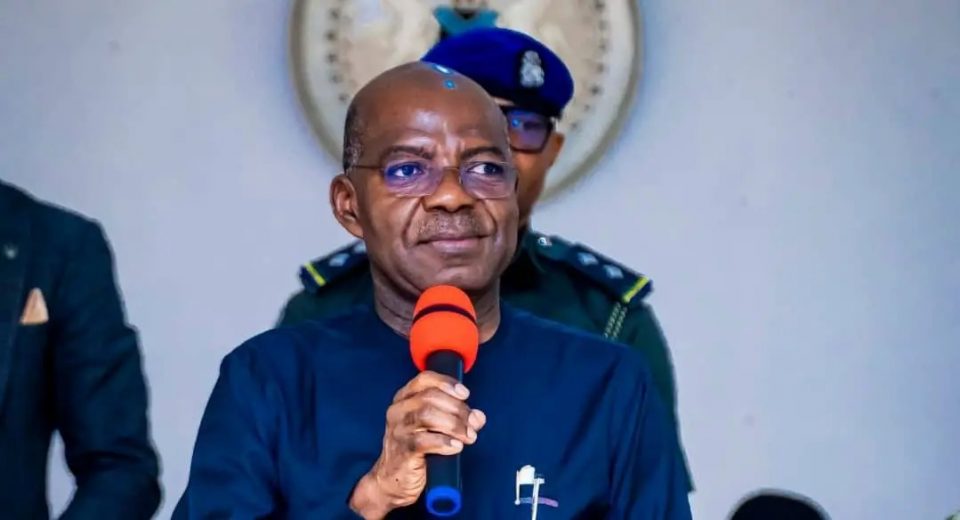
Abia State Governor, Alex Otti said the rising cases of cancer, brain tumour, stroke and tuberculosis among Abia youths poses serious concern to him.
Otti expressed the concern at the August edition of his media monthly chat, held at the Okpara Auditorium, Umuahia, on Thursday night.
He described the trend as one of the issues that “has continued to keep me awake all night”.
He said that there was an urgent need to identify factors contributing to the increase in serious health conditions among Abia youths.
The governor, therefore, directed the Commissioner for Health to intensify public health education, with focus on preventive healthcare.
He urged Abia people to pay attention to what they eat, how they eat, when they eat and the quantity they eat.
He emphasised that the government would prioritise prevention rather than waiting until illnesses escalated to when it required treatment.
Otti disclosed that the State Government was spending enormous financial resources for the treatment of Abia indigenes suffering various diseases in different hospitals in the country, including Lagos and Abuja.
He said that his administration was establishing specialist hospitals in the three senatorial zones in the state to make quality health care accessible to the people.
He said that other healthcare facilities in the state were being strengthened to respond to emerging health challenges.
According to him, the goal is to ensure that residents accessed quality and specialised health care within Abia, “instead of travelling outside”.
On infrastructure, he gave assurance that construction work on a major road that was delayed would resume and be completed soon.
He said that the challenge affecting the project had been resolved and that completion was close.
The governor also assured residents that the planned remodeling of Ubani Ultra-modern Market had not been abandoned.
He said that work on the market would commence soon, adding that the government remained committed to the project.
He said that his administration prioritised the welfare and educational needs of persons with disabilities, contrary to the allegations that they were being discriminated against in admission processes.
Otti directed the Commissioner for Basic and Secondary Education to investigate and correct any confirmed case.
He emphasised that the administration would continue to address genuine complaints by citizens and ensure fair implementation of programmes. (NAN)
From Dan Amasingha, Minna
A fresh outbreak of diphtheria has claimed 11 more lives in Niger State, raising the death toll from the disease to 28 as health authorities battle its spread across affected communities.
The latest fatalities were recorded in Chanchaga and Katcha Local Government Areas, where officials blamed low childhood immunisation coverage for the increasing number of deaths.
Executive Director of the Niger State Primary Health Care Development Agency (NSPHCDA), Dr. Junaidu Inuwa, disclosed this on Thursday in Minna during a two-day capacity-building workshop for Ward Development Committees (WDCs) on Community Engagement and Accountability to Affected Population (AAP), organised in partnership with the United Nations Children’s Fund (UNICEF).
Dr. Inuwa said the state had earlier confirmed 124 diphtheria cases between January and early August, with 17 deaths recorded before the latest outbreak.
He revealed that while 74 patients have been successfully treated and discharged from affected communities in Bida and Agaie local government areas, surveillance has been intensified in Suleja LGA to contain the disease.
The health official expressed concern over what he described as the refusal of some parents and guardians to vaccinate their children, warning that the trend was exposing children to preventable diseases.
“Most parents are not immunising their children, and the community structures need to do more in sensitising families. We recently recorded an outbreak in Chanchaga and Katcha where 10 patients died, and we lost another patient on Tuesday at the General Hospital, Minna,” he said.
He urged Ward Development Committees to intensify grassroots mobilisation and encourage mothers to present their children for routine immunisation, stressing that early vaccination remains the most effective protection against diphtheria.
UNICEF’s Social and Behavioural Change Specialist in the Kaduna Field Office, Ibrahim Mohammed, said the training was aimed at strengthening community structures to support healthcare delivery through awareness creation and accountability.
According to him, the programme adopts an integrated approach covering health, nutrition, water, sanitation and hygiene (WASH), child protection, and education to improve community response to disease outbreaks.
Health authorities have appealed to residents to promptly report suspected diphtheria symptoms and ensure eligible children receive routine vaccines to curb further spread of the disease across the state.


Nigeria Pledges Stronger Ties with Sao Tome on Maritime Security
ShareBy Tony Obiechina, Abuja The Federal Government has reaffirmed Nigeria’s commitment to strengthening bilateral relations with São Tomé and Príncipe,...
NAICOM Launches Programme to Strengthen Insurance Sector
ShareBy Tony Obiechina, Abuja The National Insurance Commission (NAICOM) has officially launched the Insurance Sector Strengthening Programme (ISSP), a new...
NESG Convenes Pre-Summit Dialogue on Bridging the Gap from Learning to Earning
ShareBy Tony Obiechina, Abuja The Nigerian Economic Summit Group (NESG), in collaboration with the Federal Ministry of Budget and Economic...

Enugu Govt Names Henry Okeke to Polytechnic Iwollo Governing Council
ShareBy Raphael Atuu, Abuja The Enugu State Government has approved the immediate appointment of Barr. Henry Okeke as a member...

NCS, Niger Customs Team Up to Revive Kamba Border Economy
ShareBy Tambaya Julius, Abuja The Nigeria Customs Service (NCS), Kebbi Area Command, has commenced fresh efforts to revive legitimate cross-border...
Equipping Educators for Excellence: Preparing for a New Academic Session
ShareBy Tolulope Sobiye Ogunbowale A new academic session is knocking at the door. But before the first lesson is taught,...
NFF: Why Nigeria Must Follow the Rules, not Sentiments
ShareBy Ken Ekwueme On Tuesday, September 1, 2026, the world football governing body FIFA formally accepted the resignation of Nigeria...


NOA Initiates Five-month Voter Education Exercise in Bauchi
ShareThe National Orientation Agency (NOA) in Bauchi State, says it will conduct a five-month voter education exercise to mobilise participation...


Sanwo-Olu Urges Media to Combat Misinformation Ahead 2027 Elections
ShareLagos State Governor, Babajide Sanwo-Olu has urged the media to uphold professionalism, verify information and combat misinformation ahead of the...


I Think I’d Have Won BBNaija Season 11 – Neche Speaks on Exit
ShareFormer Big Brother Naija housemate Neche said she believes she could have won the show if she had stayed, citing...