
Health
NCDC Reports 24 New Cases of MonkeyPox in one week

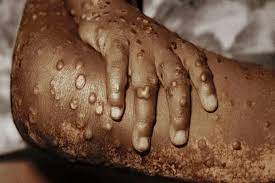
The Nigeria Centre for Disease Control (NCDC), has reported 24 additional monkeypox cases in seven days from across 12 states in the country.
The NCDC reported the cases via its official website.
It stated that a total of 157 positive infections of monkeypox were confirmed between January 1 and July 31.
Newsmen report that monkeypox is an ongoing outbreak, a viral disease that was confirmed in May 2022.
The initial cluster of cases was found in the United Kingdom, where the first case was detected on May 6, in an individual with travel links to Nigeria.
Researchers are yet to discover why monkeypox seems to be propagating so readily and unconventionally in the current global outbreak.
The monkeypox virus spreads through direct contact with respiratory secretions such as mucus or saliva or skin in lesions.
Skin lesions appear soon after infection as a rash , small pimples or round papules on the face, hands or genitalia.
These lesions may also appear inside the mouth, eyes and other parts of the body that produce mucus.
They can last for several weeks and be a source of viruses before they are fully healed.
People usually develop symptoms five to 21 days after exposure to the virus and symptoms last for two to four weeks.
The Public Health Agency said that out of the 24 additional cases, Ondo State has five while Lagos and Kano have three each.
Abia, Adamawa, Bayelsa and Kwara have two each and Delta, Anambra, Gombe, Rivers,and Nasarawa, one each.
It said that four deaths had been recorded in four states, which are; Lagos, Delta, Ondo and Akwa Ibom .
According to NCDC, from January 1 to July 31, there have been 413 suspected cases and 157 confirmed cases, with 105 males and 52 females.
The agency said that these cases were from 26 states.
“From September 2017 to July 31, 2022, a total of 12 deaths had been recorded in nine states:
“Lagos ( three), Edo (two), Imo (one ), Cross River (one ), the FCT (one ), Rivers (one ), Ondo ( one ) Delta (one ) and Akwa Ibom (one),” it stated.
Meanwhile, unlike COVID-19, the monkeypox virus requires intimate, often skin-to-skin contact with an infected individual’s rashes, scabs, bodily fluids, or contaminated linens to spread.
With at least some known transmission routes, available diagnostic tests, and two vaccines on offer, monkeypox should have been easy to manage across the globe.
Cases among men who have sex with other men—are still rising at an alarming rate that the World Health Organisation (WHO), has now declared a public health emergency,
Since May, more than 80 countries where monkeypox was not endemic had reported nearly 28, 000 cases. including about 7, 500 in the U.S.
All states, except Montana and Wyoming had confirmed cases, but more than half were recorded in New York, California, Illinois, Florida, and Texas.
Among the cases with available data, 94 per cent were in men who reported recent sexual or close intimate contact with other men.
54 per cent of cases were among Black and Hispanic people, a group that represents about 34 per cent of the general US population.
The share of cases among black people has grown in recent weeks, according to the US Centre For CDC analysis.
Meanwhile, some Public Health experts have recommended practising safer sex and having fewer sexual partners, particularly anonymous partners, even when they do not have symptoms.
They warned against stigmatising anyone from the LGBTQ+ community, adding, ”whenever any kind of infection is linked with sexual transmission, it comes with a stigma.”
They said that monkeypox has not been considered a sexually transmitted infection, although it is transmitted through close sexual contact. (NAN)


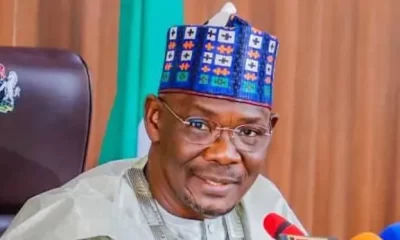

The Minister of State for Health and Social Welfare, Dr Iziaq Adekunle Salako, has called for increased investment in radiopharmaceutical therapy to strengthen cancer care and advance precision medicine in Nigeria.
Salako made the call at the International Symposium on Radiopharmaceutical Therapy (ISRT) event held on Friday in Lagos.
The World Association of Radiopharmaceutical and Molecular Therapy (WARMTH), International Centers for Precision Oncology Foundation and Chris Oyakhilome Loveworld Medical Centre, organised the two- day event.
The symposium targets better, more accurate and personalised cancer diagnosis and treatment for people in Africa.
Represented by Dr David Oladele, Deputy Director, Research, Nigerian Institute of Medical Research, Yaba, Salako commended the organisers and stakeholders for addressing Nigeria’s growing cancer burden.
He described radiopharmaceutical therapy as an important frontier in modern medicine, combining nuclear medicine, molecular imaging, pharmaceutical sciences, oncology and precision medicine for targeted cancer treatment.
The minister said the Federal Government remained committed to strengthening the health system under President Bola Tinubu’s Renewed Hope Agenda and the Health Sector Reform Investment Initiative.
He urged participants to deepen collaboration between Nigerian and international institutions, promote technology transfer, strengthen capacity development and develop partnerships to make radiopharmaceutical therapy more accessible.
Salako expressed hope that the symposium would produce actionable recommendations and partnerships capable of strengthening cancer care and advancing precision medicine across Nigeria.
He congratulated the organisers and wished participants fruitful deliberations and a successful symposium.
Delivering the opening remarks, Dr Deola Philips, Executive Minister, Ministry of Healing and Social Services and Chairman, Loveworld Medical Centre, commended Pastor Chris Oyakhilome for his compassion toward the sick.
Philips said Oyakhilome’s compassion had inspired healthcare initiatives, including trauma care, blood donation, volunteer medical services and community clinics.
She said ISRT promoted precise, personalised cancer care, strengthened local expertise and demonstrated Africa’s capacity to develop and deliver advanced diagnostics and targeted treatments to international standards.
President-elect of WARMTH, ISRT Scientific Chair and Director of Operations, Loveworld Medical Centre, Dr Masha Maharaj, said collaboration, education and research were crucial to advancing nuclear medicine globally.
She said ISRT symposiums provided practical workshops for young scientists and emerging departments to gain knowledge and confidence, exchange ideas and collaborate with international experts.
She said research showed that theranostics could improve outcomes for patients with advanced prostate cancer, adding that Nigeria had begun actinium treatments for breast cancer, sarcoma and lung cancer.
In a video displayed on a slide, Dr Savvas Frangeras, Nuclear Physician, Cyprus, and President, World Federation of Nuclear Medicine, praised Maharaj for fostering cooperation between the organisations.
Frangeras said the symposium supported efforts by international bodies to strengthen nuclear medicine in Africa and develop sustainable strategies for addressing the continent’s challenges.
He expressed hope that the Nigerian Society of Nuclear Medicine and Molecular Imaging would join the initiative, wishing participants a successful and productive symposium.
Prof. Richard Baum, a pioneer in molecular imaging, theranostics and radiopharmaceutical therapy, said the professional environment provided ideal conditions for learning, exchange and international friendships.
Baum commended Maharaj and her team for creating a platform that advanced radiopharmaceutical therapy, precision oncology, collaboration and global partnerships for patients in Africa and beyond.
Dr Emeka Eze, Medical Director, Loveworld, and Chairman, ISRT 2026, said precision oncology offered targeted cancer care, potentially reducing the side effects of conventional chemotherapy while improving diagnosis and treatment outcomes.
Eze said radiopharmaceuticals targeted diseased cells and helped detect cancers and other conditions, describing nuclear medicine technology at Loveworld Medical Centre as a major treatment breakthrough.
He commended the Nigerian government for supporting nuclear medicine and assured cancer patients of scientifically proven treatment alternatives, although he acknowledged that advanced medical care remained expensive.
Dr Anthony Oseghale, Director of Health Services, Ministry of Healing Health and Social Services, Loveworld Nation, Oyakhilome for his compassion and global healthcare interventions.
Oseghale said ISRT 2026 reflected Loveworld’s commitment to precision medicine, while Vision 10,000 provided free eye surgeries, eyeglasses, medication and specialist consultations, reaching thousands of people.
He said the Volunteer Medical Corps comprised millions of health professionals and students providing free healthcare, while Community Clinics offered free services, medications and consumables across communities.
According to him, Loveworld Medical Centre had expanded access to advanced healthcare, with plans for a community clinic in Kenya, enabling patients to receive specialised treatment without travelling abroad.(NAN)
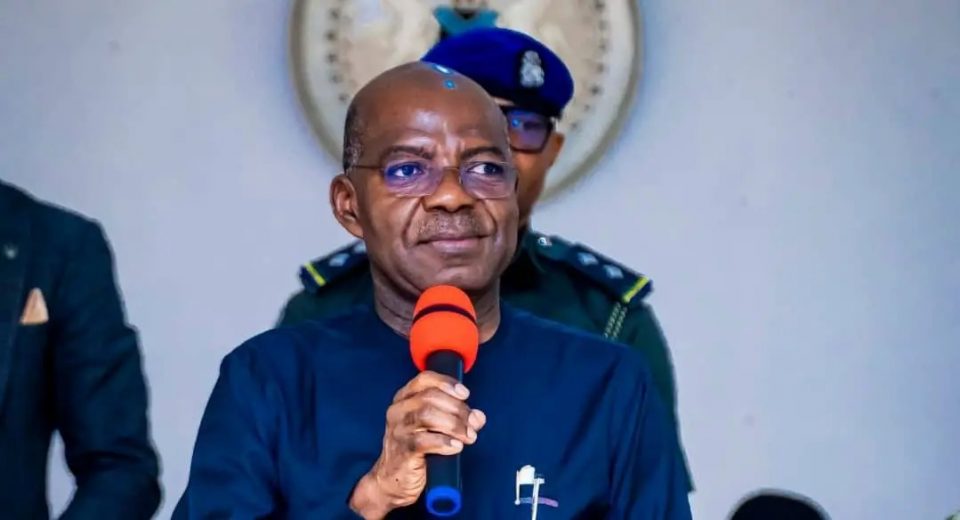
Abia State Governor, Alex Otti said the rising cases of cancer, brain tumour, stroke and tuberculosis among Abia youths poses serious concern to him.
Otti expressed the concern at the August edition of his media monthly chat, held at the Okpara Auditorium, Umuahia, on Thursday night.
He described the trend as one of the issues that “has continued to keep me awake all night”.
He said that there was an urgent need to identify factors contributing to the increase in serious health conditions among Abia youths.
The governor, therefore, directed the Commissioner for Health to intensify public health education, with focus on preventive healthcare.
He urged Abia people to pay attention to what they eat, how they eat, when they eat and the quantity they eat.
He emphasised that the government would prioritise prevention rather than waiting until illnesses escalated to when it required treatment.
Otti disclosed that the State Government was spending enormous financial resources for the treatment of Abia indigenes suffering various diseases in different hospitals in the country, including Lagos and Abuja.
He said that his administration was establishing specialist hospitals in the three senatorial zones in the state to make quality health care accessible to the people.
He said that other healthcare facilities in the state were being strengthened to respond to emerging health challenges.
According to him, the goal is to ensure that residents accessed quality and specialised health care within Abia, “instead of travelling outside”.
On infrastructure, he gave assurance that construction work on a major road that was delayed would resume and be completed soon.
He said that the challenge affecting the project had been resolved and that completion was close.
The governor also assured residents that the planned remodeling of Ubani Ultra-modern Market had not been abandoned.
He said that work on the market would commence soon, adding that the government remained committed to the project.
He said that his administration prioritised the welfare and educational needs of persons with disabilities, contrary to the allegations that they were being discriminated against in admission processes.
Otti directed the Commissioner for Basic and Secondary Education to investigate and correct any confirmed case.
He emphasised that the administration would continue to address genuine complaints by citizens and ensure fair implementation of programmes. (NAN)
From Dan Amasingha, Minna
A fresh outbreak of diphtheria has claimed 11 more lives in Niger State, raising the death toll from the disease to 28 as health authorities battle its spread across affected communities.
The latest fatalities were recorded in Chanchaga and Katcha Local Government Areas, where officials blamed low childhood immunisation coverage for the increasing number of deaths.
Executive Director of the Niger State Primary Health Care Development Agency (NSPHCDA), Dr. Junaidu Inuwa, disclosed this on Thursday in Minna during a two-day capacity-building workshop for Ward Development Committees (WDCs) on Community Engagement and Accountability to Affected Population (AAP), organised in partnership with the United Nations Children’s Fund (UNICEF).
Dr. Inuwa said the state had earlier confirmed 124 diphtheria cases between January and early August, with 17 deaths recorded before the latest outbreak.
He revealed that while 74 patients have been successfully treated and discharged from affected communities in Bida and Agaie local government areas, surveillance has been intensified in Suleja LGA to contain the disease.
The health official expressed concern over what he described as the refusal of some parents and guardians to vaccinate their children, warning that the trend was exposing children to preventable diseases.
“Most parents are not immunising their children, and the community structures need to do more in sensitising families. We recently recorded an outbreak in Chanchaga and Katcha where 10 patients died, and we lost another patient on Tuesday at the General Hospital, Minna,” he said.
He urged Ward Development Committees to intensify grassroots mobilisation and encourage mothers to present their children for routine immunisation, stressing that early vaccination remains the most effective protection against diphtheria.
UNICEF’s Social and Behavioural Change Specialist in the Kaduna Field Office, Ibrahim Mohammed, said the training was aimed at strengthening community structures to support healthcare delivery through awareness creation and accountability.
According to him, the programme adopts an integrated approach covering health, nutrition, water, sanitation and hygiene (WASH), child protection, and education to improve community response to disease outbreaks.
Health authorities have appealed to residents to promptly report suspected diphtheria symptoms and ensure eligible children receive routine vaccines to curb further spread of the disease across the state.



NCS, Niger Customs Team Up to Revive Kamba Border Economy
ShareBy Tambaya Julius, Abuja The Nigeria Customs Service (NCS), Kebbi Area Command, has commenced fresh efforts to revive legitimate cross-border...
Equipping Educators for Excellence: Preparing for a New Academic Session
ShareBy Tolulope Sobiye Ogunbowale A new academic session is knocking at the door. But before the first lesson is taught,...
NFF: Why Nigeria Must Follow the Rules, not Sentiments
ShareBy Ken Ekwueme On Tuesday, September 1, 2026, the world football governing body FIFA formally accepted the resignation of Nigeria...


NOA Initiates Five-month Voter Education Exercise in Bauchi
ShareThe National Orientation Agency (NOA) in Bauchi State, says it will conduct a five-month voter education exercise to mobilise participation...


Sanwo-Olu Urges Media to Combat Misinformation Ahead 2027 Elections
ShareLagos State Governor, Babajide Sanwo-Olu has urged the media to uphold professionalism, verify information and combat misinformation ahead of the...


I Think I’d Have Won BBNaija Season 11 – Neche Speaks on Exit
ShareFormer Big Brother Naija housemate Neche said she believes she could have won the show if she had stayed, citing...


Prophet Rolex Apologises to Alleged TMT Visa Scam Victims
ShareContent creator and comedian, Prophet Rolex, has broken his silence after being called out for previously promoting the visa services...


Why I Once Evicted My Son from Home – Patience Ozokwor
ShareVeteran Nollywood actress, Patience Ozokwor, aka Mama G, has said it is wrong for parents to completely shield their children...


Joeboy Shocks Fans: My Wedding, Marriage will be Kept Secret
ShareNigerian music star, Joseph Akinwale Akinfenwa-Donus, popularly known as Joeboy, has opened up on his plans for his future wedding,...


Burna Boy Makes History as First Nigerian Surpassing 4bn YouTube Views
ShareNigerian Grammy winning artiste, Damini Ogulu, popularly known as Burna Boy, has become the first Nigerian artiste to surpass four...