
OPINION
The Russo-Ukraine War and the Second Coming of Donald Trump


By Jideofor Adibe
In my column last week, I discussed how Trump’s victory could impact on Africa, noting that his presidency might not be as bad for Africa as generally thought. This week I will explore further how his election as the 47th President of the United States could possibly affect the Russo-Ukraine war, which has been going on since February 2022.
The general assumption is that Trump would pursue a somewhat isolationist policy within the framework of his campaign slogan of “Make America Great Again (MAGA)” and that he would more likely pull all the funding for Ukraine.
During the campaign, Trump had derisively called Ukraine’s President Volodymyr Zelensky the greatest salesman in history, implying that he had through sheer marketing skills got more than he deserved from the US and other NATO members, who had been supporting his war efforts. Trump had also suggested that he could impose a blanket 20 per cent tariff on all goods imported into the US, with a tariff of up to 60 per cent for Chinese products, and one as high as 2,000 per cent on vehicles built in Mexico. For the European Union, meanwhile, Trump has said the 27-nation bloc will pay a “big price” for not buying enough American exports.Zelensky also reinforced this belief that the second coming of Trump might be bad news for Ukraine when, after a telephone conversation with Trump following the latter’s electoral victory over Kamala Harris, he told his countrymen and women that he was certain that the war with Russia would “end sooner” than it should have been once Donald Trump is sworn in as the president of the United States in January 2025. “It is certain that the war will end sooner with the policies of the team that will now lead the White House.
This is their approach, their promise to their citizens,” he was reported to have said in an interview with the Ukrainian media outlet, Suspilne. He added that Ukraine “must do everything so that this war ends next year, ends through diplomatic means.”
It should be noted that the US has been the biggest arms supplier to Ukraine in the course of the war. For instance, between February 2022, when the war began, to the end of June 2024, America delivered or committed to deliver weapons and equipment worth $55.5 billion (£41.5 billion) to Ukraine, according to the German research organisation, Kiel Institute for the World Economy. At present, the momentum of the war seems to be with the Russians.
For instance, Russia is reportedly winning significant swathes of territory in eastern Ukraine. Russia’s recent seizure of the strategically important city of Vuhledar appears to have cleared the way for Moscow’s possible advances deeper into Ukraine.
It is also reported that Moscow is preparing for an offensive using about 10,000 North Korean soldiers and about 40,000 Russians in the Kursk region of Russia, where Ukrainian forces have been struggling to defend the territory they captured during the summer. With this picture in mind, it is understandable why there are apprehensions among Ukrainians and their supporters in the war.
The thinking appears to be that the country should use the remaining part of the supportive Biden presidency to do whatever they can to push back the Russians and strengthen their bargaining position before Trump becomes the substantive president in January 2025 and forces them to the negotiating table. Recently, it was announced that the Biden administration has allowed Ukraine to use long-range American missiles against targets in Russia, in a move that would mark a new round of tension in the war.
There is no doubt that Trump would like to reduce or drastically cut funding to Ukraine in keeping with his campaign promise of America First. There are however other considerations that might influence his decisions on the Ukraine war:
The first is that as he regards himself as the ultimate dealmaker, and is a very transactional politician, he might be open to being influenced by Ukraine or the Europeans, depending on the sort of ‘deal’ he is offered. The German Chancellor, Olaf Scholz, who spoke with Trump after the US election, alluded to this when he reportedly told the German media that the incoming US leader had a “more nuanced” position on the war than was commonly assumed.
It has been suggested that Zelensky could offer two ‘deals’ to Trump: The first will be for Ukrainian troops to replace some American units in Europe after the war, in order to reduce the cost of America’s commitment to NATO. The second could be opening up some of Ukraine’s resources to the US and other Western allies. Offers such as these would however be contingent upon Ukraine winning the war and being admitted into NATO – which at present is far from certain.
The second consideration for Trump is geopolitical and geo strategic. South Korea, an American ally, has reportedly supplied hundreds of thousands of artillery shells to Ukraine via the United States and had also pledged a $2.3 billion low-interest loan to Kyiv. South Korea is the world’s 10th-largest arms exporter and its clients already include four nations that border Russia – Poland, Estonia, Finland and Norway. The South Korean systems are meant to supplement Patriots, the advanced American air defence systems.
It is said that the South Korean laser needs nothing but electricity – and could be deployed to the Ukrainian cities that have no Patriots or similar Western or Taiwanese air defence systems. A crucial question is whether Trump would be insensitive to deals entered with Kiev by its ally, South Korea, in his decision on how he wants the Ukrainian war to end or even in any decision to stop funding Ukraine’s war efforts.
Related to the above is the report that around 10,000 North Koreans, USA’s historical enemy, have joined the war on the Russian side, with the possibility of Belarus also joining. Following the axiom that the friend to my enemy is my enemy or at least not to be trusted, the increasing collaboration between North Korea and Russia is also a factor to be taken into consideration by Trump in his decision on the Russo-Ukraine war.
Similarly, claims by Ukraine’s Western allies in September that Iran, another enemy of the West, has sent short-range ballistic missiles to Russia in a major escalation – a claim Tehran has rejected as “completely baseless and false,” will be another consideration.
A third major consideration that could influence Trump’s decision is the Truman Doctrine that made it an article of faith during the Cold War for the US to seek to contain Soviet expansionism. There have been signs of America’s revival of the Truman Doctrine since the Putin presidency, especially after Russia’s annexation of the Crimea in 2014.
Russia has not hidden its desire to create a multipolar world in a bid to overthrow or whittle down the influence of the current Western dominated security and governance systems around the world. Irrespective of the nature of the personal relationship between Putin and Trump, it is unlikely that Trump would not respond to a resurgent Russia’s attempt to whittle down its global influence.
As a dealmaker, Trump is likely to be looking for a deal which would reduce the US military presence in Europe, drastically cut the military assistance to Ukraine, and give Kiev a long term hope of joining NATO in exchange for territorial concessions to Russia. In this way, Trump would be able to publicly claim that he won the peace without undermining NATO and without making Russia appear the outright winner in any diplomatic negotiations to end the war.
However the war ends, it will be a mixed bag for the world and Africa globally. For instance, African countries that benefit from the current Western sanctions against Russia would have to re-adjust if Western sanctions are eased, while those that have been hurt by the sanctions, especially importers of wheat and fertilisers from Russia and Ukraine, may heave a sigh of relief.
Adibe is a professor of Political Science and International Relations at Nasarawa State University and founder of Adonis & Abbey Publishers (www.adonis-abbey.com). He can be reached at: 0705 807 8841 (WhatsApp and Text messages only).

By Uddin Ifeanyi
Much of the palaver over the recent meeting of the Central Bank of Nigeria’s policy committee was exercised by how well the apex bank is doing its job. Against its primary goal of maintaining price stability, the CBN’s Monetary Policy Committee’s decision to recalibrate its monetary policy rate (MPR) in order to align it with the market invited the most attention.
First, there is the question of what the MPR anchors.
In reality, nothing. Ideally, however, the CBN’s policy rate should transmit price signals through the financial system, influencing saving, borrowing, liquidity, inflation expectations, and in the end, the naira’s exchange rate. It should, in other words, signal the central bank’s intentions. Yet, we have had years in which the MPR stoically remained unchanged even as inflation ran riot, and the naira’s exchange rate came under severe downward pressure.The CBN has regularly papered over this crack with an often-bewildering arsenal of tools — including some eccentric flimflams that it has deployed in recent times. But this only raises further questions as to how useful even these are. Take the cash reserve requirement.
At 45 percent for deposit money banks, it means that nearly half of banks’ qualifying deposits are warehoused with the central bank at any given time. While these sums may not, therefore, be available to build bubbles in the foreign exchange and equity markets, they are not likewise available for lending. Even if we argue that long-term lending ought properly to be funded by equity, banks and not shareholders should bear the burden of financing businesses’ working capital needs. Then, there is the small matter of how the CBN’s cash reserve requirement might be just as orphaned as its policy rate.
Banks raising naira deposits end up paying the CRR tax. In an economy that has witnessed considerable dollarisation — “the process where a country uses a foreign currency (most often the greenback) alongside or completely in place of its own domestic currency” over the years, does it matter that deposits into domiciliary accounts are not CRR compliant? And how?
Might the “dollarisation” phenomenon hold the key to the CBN’s toolkit’s redundancies? Countries formally adopt the dollar in place of their domestic currencies when locals lose faith in the latter. This process restores the stability that struggling economies often find unable to achieve with their currencies and drives investment inflows.
Nigeria’s dollarisation is only partial and barely adjacent. Yet, while the country may not have lost the gains — seigniorage — from printing its own currency that is one consequence of dollarisation, the CBN looks to have partially lost control of the monetary policy space, with the sums that Nigerians increasingly park in their dollar accounts.
There are, thankfully, many ways to regain this control without having to nationalise dollar deposits. Neither the CBN nor the government can talk their way out of this, though. You cannot tell Nigerians to keep their savings in naira while offering them a savings rate below inflation. The smart choice in this circumstance is for domestic economic actors to move their savings into dollars, property, equities, commodities, inventory, or other assets.
Giving Nigerians a reason to save in naira should thus be the central goal of a policy reset. How to do this? We have got to keep inflation low. At 30% year-on-year a while back, the CPI numbers were an outrage. At a little over 15 percent today, it is still doing great injury to the naira. N100 today has roughly the purchasing power of only ₦50 after five years. The solution here goes beyond the CBN setting a credible, explicit medium-term inflation target.
It also transcends the CBN laying out incentive structures that make deviations from this target costly both politically and institutionally. More than this, the national commitment to the CBN not financing fiscal deficits must be religious and total. While this means that monetary policy is no longer subordinate to the federal government’s financing requirements, it must aim at positive real interest rates for savers.
Still a spectre haunts monetary policy in Nigeria. It is unfortunately not in the CBN’s gift to exorcise the nightmare that the federal government’s financing requirements have become.
How do we persuade our public sector boffins that a government that persistently spends more than it can sustainably pay for creates pressure for any of higher taxation, additional borrowing, monetary accommodation, inflation, or the naira’s depreciation? If the naira is only as strong as Nigeria’s balance sheet, then the task of getting both the fiscal and monetary authorities to operate under a common nominal inflation anchor must begin with reducing recurrent expenditure, broadening the tax base instead of increasing the tax rate, returning off-budget borrowing back to the budget, publishing complete fiscal accounts, improving the quality of public investment, establishing a credible medium-term strategy, and ceasing to use the CBN as a piggy bank.
Hopefully, this should help the economy produce more tradable goods and services. Because the naira represents a claim on the economy by anyone holding it, we cannot permanently defend the currency’s exchange rate through interest rates and reserves, if the economy continually uses up more foreign exchange than it earns. In other words, then, the economy must work for the naira to work.
Uddin Ifeanyi, a journalist manqué and retired civil servant, can be reached @IfeanyiUddin.
By Prince Charles Dickson Ph.D
There is an old story about a lawyer who sold his well to a teacher, then returned demanding payment for the water inside it. The teacher smiled. If the water still belonged to the lawyer, he replied, perhaps the lawyer should remove it or pay rent for storing it in somebody else’s well.
Suddenly, the lawyer remembered he had only been joking.It is funny until we recognise ourselves as lawyers.
We tell people with disabilities that public spaces belong to everyone. Then we demand an additional price for entering them.
We give them citizenship, but charge for the ramp. We promise education, but make the classroom unreachable. We proclaim equal opportunity, then construct the doorway too narrow for their wheelchair.That contradiction came home to me when Grace shared her story with me, she titled Public Place Accessible Report for Inclusion. It contained no sentimental appeal. It simply insisted that public places should allow everyone to enter, move, communicate, receive services and participate independently, safely and with dignity.
I listened to it in her voice once as a report. Then, I read it again as an indictment.
Behind every line was somebody’s ordinary day made unnecessarily difficult. A mother arrives at a hospital, already frightened for her child, discovering that the entrance has steps but no ramp. A young man preparing carefully for an interview, only to find his opportunity waiting upstairs without a lift. An older woman confronting a pavement that has forgotten her legs cannot move as quickly as they once did.
These are imagined scenes, but the barriers Grace identified are painfully real. Poorly enforced building standards. Toilets that exclude. Transport that humiliates. Signs people cannot read. Public information people cannot hear. Facilities built without consulting those who will need to use them.
Grace’s intervention mattered because she did not reduce accessibility to a construction problem. Her story and experience understood something profound: every inaccessible entrance is also a message. Sometimes it says, “We did not think of you.” Sometimes, more cruelly, it says, “We thought of you, but you were not worth the expense.”
What does that message do to a child’s heart?
Imagine a girl with cerebral palsy watching other children rush into a school assembly while she waits outside for someone to carry her over the steps. Imagine her learning, year after year, that she must be grateful for help rather than entitled to access. Imagine how quietly a society can teach someone to apologise for existing.
On 3 October 2026, at GlowingStar Empowerment Initiative and Development’s World Cerebral Palsy Day commemoration in Bukuru, I delivered a keynote titled Beyond Therapy: Seeing the Whole Person, Not Just the Condition. Its central argument was simple: a person has cerebral palsy; cerebral palsy does not have the person.
A diagnosis is information, not identity. Therapy is necessary, valuable and sometimes life changing. But therapy is supposed to be a bridge into life, not the whole landscape of living. Beyond treatment are friendships, classrooms, jobs, ambitions, relationships, leadership, laughter, choices and dreams that deserve room to breathe.
We can celebrate a child’s progress in therapy while failing that same child at the school gate. We can praise a parent’s devotion while exhausting that parent with inaccessible transport, expensive care and the endless labour of explaining why their child deserves a chance. We can call ourselves compassionate while our architecture remains indifferent. At the commemoration, parents spoke of stigma, costly therapy and limited support. Their courage was unmistakable, but courage should not be the currency families must spend to secure ordinary human rights.
That was why I argued that admission is not inclusion. Allowing a child through the gate means little if the classroom, teaching methods, toilet, playground or attitudes inside still tell that child to remain on the margins.
And communication must never be confused with intelligence. When someone speaks differently or needs more time, our responsibility is neither impatience nor pity. Ask. Then wait. Listen without finishing their sentences. A human voice does not lose its authority because it travels by an unfamiliar route.
I returned to Grace’s story and noticed how practical her demands were: sensible ramps and handrails, usable toilets, safe pathways, accessible transport, clear signage, Braille, captions, audio information and regular audits. It called for architects, officials and contractors to understand universal design, and for people with disabilities themselves to help plan and evaluate the spaces they use.
Nothing about us without us. That principle is not a decorative language for conferences. It is what stops a well-meaning official from installing a ramp that is too steep, or declaring a school inclusive without asking the students to navigate its corridors.
Nigeria has legal commitments against disability discrimination. Yet a law that cannot travel from the statute book to a bus stop, hospital, workplace or classroom remains a promise stranded on paper. Rights should not require influential relatives, public sympathy or a viral photograph before anyone honours them.
Sometimes, as I said in that keynote, society needs therapy. Our buildings need rehabilitation. Our policies need rehabilitation. Our assumptions, professional habits and careless language need rehabilitation. We must stop asking only how a person can adapt to a hostile environment and begin asking why we made that environment hostile.
I keep thinking about Grace, my newfound friend. As she shared recommendations, their moral weight was larger than the suggestions itself. She reminded me that inclusion often begins when someone refuses to look away from what everyone else has learned to step over. It begins with the uncomfortable decision to measure progress not by the elegance of our speeches, but by who can actually enter the room.
The lawyer in the story wanted to sell the well while keeping its water hostage. Too often, our society offers people with disabilities belonging without access, opportunity without accommodation, dignity without choice. Then it calls every concession generosity.
But the water was never ours to withhold.
Every child deserves more than survival. Every caregiver deserves more than exhaustion. Every adult with a disability deserves the freedom to work, love, contribute and belong without performing gratitude for rights already theirs. The purpose of inclusion is not to make people feel fortunate to be tolerated. It is to build a country where nobody must beg to be considered human.
So, Grace, thank you for disturbing our comfort with something as unromantic, and as revolutionary, as sharing your story with me. May we answer it with budgets, redesigned spaces, enforced standards and genuine listening. May the next child approaching a public doorway find no argument waiting there, only an opening.
By Chiamaka Okafor-Onumah
A child hears that there will be no school tomorrow. The message arrives through a friend, a family WhatsApp group or a video shared online. What should the child do: believe it, forward it or check? That simple moment captures one of the defining challenges of growing up today.
Children are surrounded by information, but they are rarely taught early enough how to question it safely and responsibly.
Media and Information Literacy (MIL) is often discussed as a response to fake news, election rumours or online manipulation.
It is all of these, but it is also something more basic and enduring: the everyday ability to ask where information came from, what evidence supports it, why it was shared and whether it should be passed on.These habits should begin in childhood, when curiosity is strong and the foundations of learning and judgement are being formed.
Children in Nigeria encounter information through family conversations, school announcements, radio, television, books, mobile phones, messaging platforms, social media, online games and, increasingly, artificial intelligence.
This environment brings enormous opportunities. A child can discover a new subject, hear a story from another part of the country or use a digital tool to create something original. The same environment can
carry false health advice, fabricated school notices, altered images, harmful content and messages designed to provoke fear or hostility.
That is the purpose of Young Truth Detectives, an initiative of the Media and Information Literacy and Intercultural Dialogue (MILID) Foundation. Its workbook turns a complex subject into a journey children can understand: six missions that move from recognising information and media to identifying sources, spotting falsehoods, investigating claims and protecting the truth. A child is not asked to master abstract theory. The child is invited to become a detective: ask a question, look for a clue, check the source and seek evidence.
This approach matters because a definition alone does not create a habit. Children need repeated chances to practise. They can learn that a radio or phone is a medium, while the person or organisation behind a message is its source. They can compare a rumour with an official school notice. They can distinguish misinformation, shared by mistake, from disinformation, created or shared deliberately to deceive. They can learn that even a familiar or trusted person may be mistaken, and that checking a claim is an act of care rather than disrespect.
The most useful lesson may be the simplest: stop before sharing. The workbook’s fact-checking questions what happened, when and where, who said it, why it might have been shared, and how we can now give children a practical routine. The final question, “Is it correct?”, leaves room for an honest answer: “I need to check more.” In a culture that rewards speed and instant reaction, teaching a child to wait, ask an adult and verify is a meaningful achievement.
Children should not be expected to investigate dangerous or complicated claims alone. The Facilitator’s Guide places teachers, parents, caregivers and community educators at the centre of the learning process. It offers lesson plans, warm-ups, role-play, reflection, assessment and home activities so that the same ideas can be explored in class and reinforced in family life.
A child who sees adults check a message before forwarding it learns that verification is normal. A child whose questions are welcomed learns that curiosity is a strength.
The guide also recognises that learners do not all begin at the same place. Some children will write answers independently; others will need an adult to read a prompt aloud, invite a spoken response or use a drawing. Age-sensitive activities and familiar Nigerian settings make the lessons more accessible. The aim is not to turn every lesson into a lecture about danger. It is to make critical thought engaging, respectful and useful in ordinary life.
Artificial intelligence makes this work more urgent. AI tools can help children learn and create, but they can also produce convincing text, pictures, audio and video that are inaccurate or invented. The answer cannot be to frighten children away from technology or assume they can identify every manipulation by
sight. Instead, they need a question they can use in different situations: who or what produced this, what evidence supports it, and where else can we check? That habit serves them whether a claim comes from a person, a website or a machine.
For Nigeria, the stakes reach beyond individual screen use. Communities depend on information to make decisions about health, education, safety and public life. False claims can create confusion, damage trust and deepen division. Young people who learn to respect evidence, communicate kindly and correct mistakes without ridicule can contribute to a healthier information environment. MIL does not ask children to distrust everyone. It teaches them to place trust thoughtfully, recognise uncertainty and treat others with dignity.
Media and information literacy belongs alongside reading, writing and other foundational skills. It supports the wider purpose of education: helping children understand the world and participate in it. It also complements the commitment to inclusive, equitable quality education and lifelong learning in Sustainable Development Goal 4.
A child who can read a message but cannot question its source remains vulnerable. A child who can question, verify and communicate responsibly has gained a skill for life.
Schools cannot do this work alone, and parents cannot be expected to know every platform or trend. Young Truth Detectives offers a practical starting point. Schools can make space for short, regular MIL activities. Families can talk about where a message came from before deciding whether to share it. Libraries and community programmes can host detective games and story-based discussions. Facilitators can adapt examples to local languages and experiences while keeping the core questions consistent.
For this to take root, MIL should be treated as a continuing practice rather than a one-off event. Teachers need time and confidence to facilitate discussion; parents need simple prompts they can use without specialist training; and programme designers need to review activities as children’s media habits change.
Partnerships with libraries, schools, community organisations and public educators can help extend the work beyond a single classroom. Consistency matters: children learn best when the same habits are modelled across the places where they live, learn and play.
The measure of success will not be how many lessons children complete. It will be whether, over time, they pause when something sounds startling, ask who made the claim, look for evidence and seek help
when needed. It will be whether they can say, “I was wrong,” or “Let us check together.” These are modest actions, but they help protect children and the people around them.
Every child deserves the tools to navigate the information world with curiosity and care. Inviting children to become Young Truth Detectives does not ask them to carry the burden of fixing the information ecosystem. It gives them age-appropriate ways to take part in it wisely. The questions they learn to ask today can shape the citizens and community members they become tomorrow—and the kind of society they help build.
Chiamaka Okafor-Onumah is Co-founder and Executive Director of MILID Foundation. She can be reached via info@milidfoundation.org




NDLEA Nabs 85-year-old Woman, Seizes 407kg Cannabis
ShareThe National Drug Law Enforcement Agency (NDLEA) has arrested an 85-year-old grandmother and five other suspected drug traffickers during coordinated...
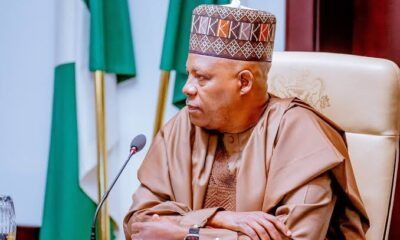

Economy would’ve Collapsed without Tinubu’s Reforms, Says Shettima
ShareVice President Kashim Shettima has said Nigeria’s economy would have collapsed had President Bola Tinubu not taken what he called...


House of Reps Seeks 90-Day Fuel Reserve for Nigeria by 2027
ShareFrom Rabiu Sanusi, Kano The House of Representatives has backed plans to increase Nigeria’s strategic petroleum reserve from 20 days...

56,000 Candidates Register for 2026 Private WASSCE
ShareThe West African Examinations Council (WAEC) said no fewer than 56,000 candidates registered for the 2026 West African Senior School...


JAMB Warns Varsities Against Issuing Admission Letters
ShareThe Joint Admissions and Matriculation Board (JAMB) has warned universities against issuing admission letters to candidates, insisting that only admissions...
Beyond Survival: Building A Healthier Nigeria For A Longer Life
ShareBy Yussuf Mubaraq Damilare What does it mean to live a long life if access to basic medical care remains...


Jigawa to Increase Corps Members Allowance – Namadi
ShareThe Jigawa government has announced plans to increase monthly allowance for the National Youth Service Scheme (NYSC) members posted to...

NCDMB, Dangote Push for Sustainable Nigerian Content
ShareFrom Mike Tayese, Yenagoa The Nigerian Content Development and Monitoring Board (NCDMB) and the Dangote Group have urged a decisive...
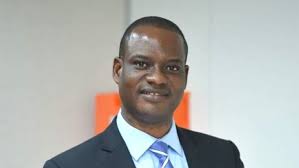

Oyedele Unveils Capital Market Master Plan, Targets $1trn Market by 2036
ShareBy Tony Obiechina, Abuja The Minister of Finance and Coordinating Minister of the Economy, Prof. Taiwo Oyedele, has unveiled the...
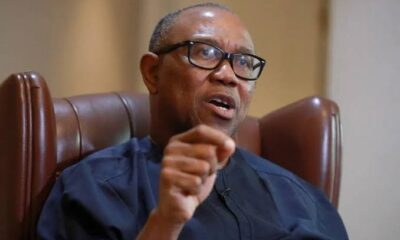

OBI In London, URGES DIASPORA TO Stop FUNDING RELATIVES
ShareBy Elijah Oguche, Abuja The presidential candidate of the Nigeria Democratic Congress (NDC), Peter Obi, has urged Nigerians living in...