
POLITICS
Tinubu’s Reforms Laying Foundation for National Growth – Folarin

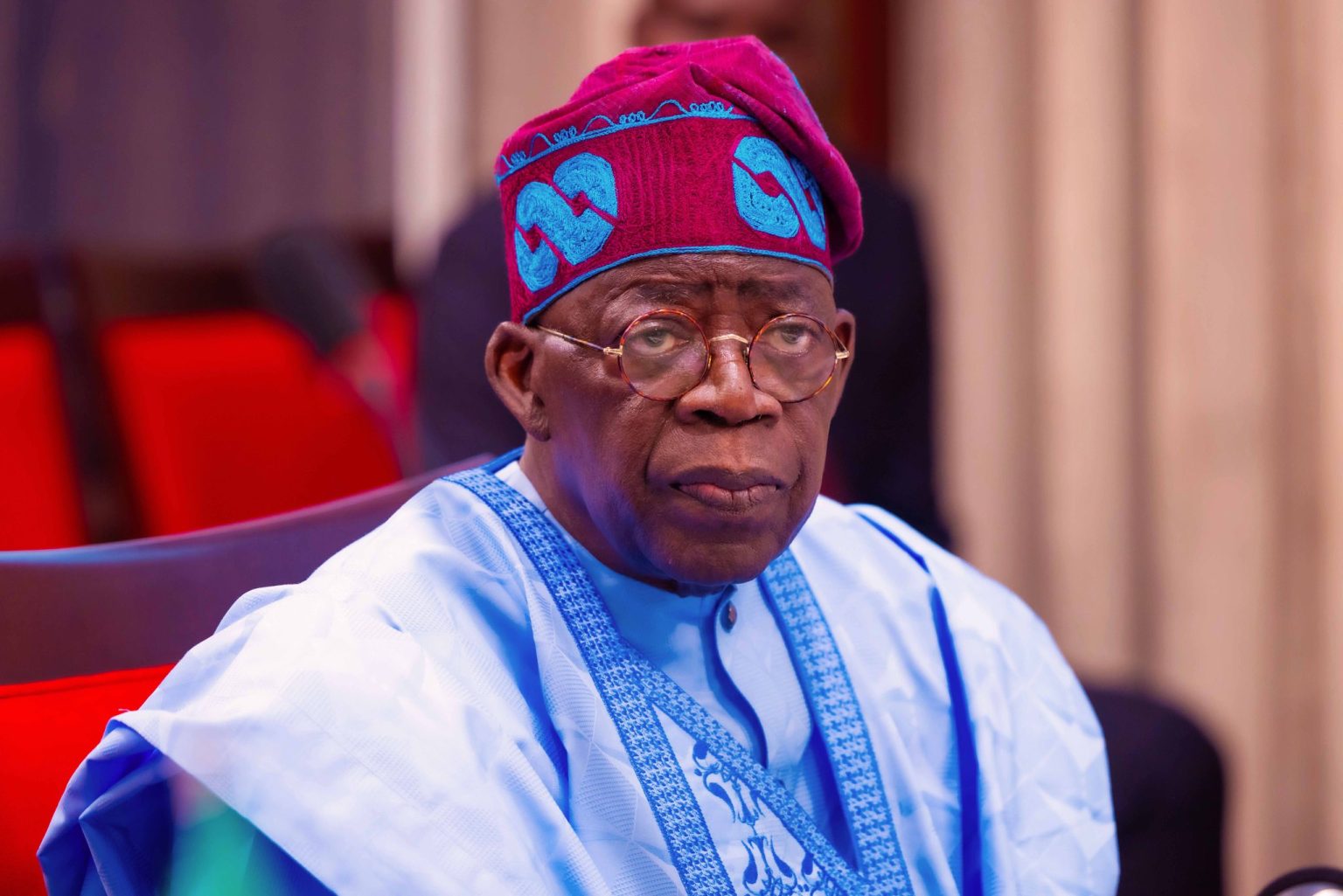
Former Senate Leader and Oyo State Ambassador for Renewed Hope, Sen. Teslim Folarin, said President Bola Tinubu’s bold reforms will lay a strong foundation for long-term national growth.
He stated this on Monday during the ongoing 14-Federal Constituency Tour jointly organised by the Renewed Hope Ambassadors in collaboration with Oyo All Progressives Congress(APC), at Ibadan North-East/Ibadan South-East and Ibadan North-West/Ibadan South-West Federal Constituencies.
Folarin noted that the ongoing reform agenda is necessary to stabilise the economy, stressing that effective communication of these reforms at the grassroots level would be critical to winning public understanding and sustained support.
He stated that the federal constituency tour was designed to strengthen internal cohesion, rebuild confidence within party structures, and lay a solid foundation for early and disciplined mobilisation ahead of the 2027 polls.
“Ibadan is the political nerve centre of the South-West. Oyo state proved its strength in 2023 by giving the president the highest differential votes nationwide.
“In 2027, we are ready to raise the bar and deliver record votes for Mr. President.
“Leaders of the APC in Oyo state have resolved to mobilise a record number of votes for the president in the 2027 general elections, signalling an early and coordinated consolidation of party structures across the state,” Folarin said.
The Minister of Power, Chief Adebayo Adelabu, emphasised the importance of unity, early reconciliation, and disciplined mobilisation.
He noted that electoral success depends on consistent engagement at ward and polling unit levels, rather than last minute campaigns.
The Oyo State Chairman of the APC, Olayide Abas, called for intensified voter education, continuous voter registration, and coordinated mobilisation ahead of the next general elections.
Former First Lady of Oyo State, Florence Ajimobi, urged party leaders and supporters to remain united, stressing that cohesion and discipline were vital to sustaining the APC’s strength in the state.
She said the engagements provided an opportunity to reconnect with the grassroots and consolidate support for the president ahead of 2027.
A gubernatorial aspirant, Dr. Adewale Kareem, described the federal constituency tour as timely, noting that it had helped to rebuild confidence within party structures.
He called for sustained mobilisation and voter education, adding that the unity of stakeholders and early preparation would be key to securing victory for the president in the 2027 general elections.
APC chieftains at the event included Sen. Sharafadeen Alli, Sen. Abdulfatai Buhari, Sen. Yunus Akintunde, Sen. Femi Lanlehin, Sen. Ayo Adeseun, Sen. Hosea Agboola, Sen. Kola Balogun, and other key party stakeholders.
Others were Hon. Remi Oseni, Hon. Akeem Adeyemi, former Minister of Communication, Adebayo Shittu and Barrister Akeem Agbaje among others.

By Julius Tambaya, Abuja
The presidential candidate of the Young Progressive Party (YPP), Peter Agada, has pledged to usher in a fresh era of transparent, technology-driven governance if elected President of Nigeria in the 2027 general elections.
Agada, a former Director of Finance for the Obidient Movement in the 2023 elections, voiced strong optimism about defeating his political rivals.
He made the commitment while unveiling his bold policy roadmap tagged “Labour Direct” , a people-centered agenda designed to tackle Nigeria’s most pressing challenges head-on.The YPP presidential flag bearer who, spoke in an exclusive interview with DAILY ASSET, stated that his administration would be anchored on an “open-network governance” model, emphasizing total inclusivity, accountability, and direct citizen engagement through the ‘Labour Direct’ framework.
He further stressed the urgent need to align skills development with current market demands. He further called for a complete overhaul of the public service, advocating for a merit-based recruitment system to replace favoritism and mediocrity.
“As an accomplished professional architect with vast international experience, I will approach national security through a smart blend of community-based intelligence and cutting-edge technology,” Agada noted.
He also highlighted massive job creation plans, with a strategic focus on agricultural industrialization and the solid minerals sector—two areas he believes hold the structural key to absorbing Nigeria’s teeming youthful population
On the alleged politicization of the Independent National Electoral Commission (INEC) by the current administration, Agada revealed ongoing, high-level international collaborations aimed at restoring public confidence in the nation’s electoral process.
“We are already working with corporate development partners and the governments of the United States and China to build and deploy a robust, technology-based system,” Agada declared. “This will ensure prompt, transparent, and tamper-proof transmission of election results.”
Positioning himself as a bridge between competence and compassion, the YPP candidate promised a government that works for every citizen, irrespective of tribe, religion, or political affiliation.
African Democratic Congress (ADC) has dismissed the claims by a rival group of uploading presidential nomination details to the Independent National Electoral Commission (INEC) portal, describing it as false.
Consequently, the party has urged INEC to investigate what it described as forgery and unauthorised use of documents it purportedly issued.
The party’s National Publicity Secretary, Mallam Bolaji Abdullahi, in a statement issued on Monday in Abuja, said it was not true that a group, led by Nafiu Bala, uploaded names of presidential and other candidates into the INEC nomination portal.
According to him, INEC cannot issue nomination portal access or nomination codes to a leadership it does not officially recognise under the Electoral Act.
He said that the commission would not issue separate nomination portal codes to different groups claiming leadership of the same registered political party.
“The claim is a blatant lie. INEC does not issue nomination portal access or nomination codes to a leadership it does not recognise,” Abdullahi said.
He challenged those making the allegation to provide credible evidence showing that an unrecognised group successfully accessed and uploaded nominations on the commission’s portal.
The spokesman said the party had formally notified INEC of what it considered apparent forgery and unauthorised use of documents bearing the commission’s identity.
“We trust that the commission will investigate this matter and take necessary steps to correct this blatant misrepresentation,” he said.
Abdullahi declared that ADC was not factionalised, insisting that INEC recognised only one leadership which had completed its nomination process lawfully.
He said the party had already uploaded details of its presidential candidate, Alhaji Atiku Abubakar and vice-presidential candidate, Rotimi Amaechi, on the INEC portal.
“Our focus remains firmly on presenting Nigerians with a credible alternative that can restore security, revive the economy and create jobs in 2027,” he said.
The spokesman urged party members, supporters, the media and the public to disregard contrary claims and rely only on official communications issued through authorised ADC channels.
By David Torough, Abuja
The Court of Appeal in Abuja on Monday, upheld a Federal High Court judgment restraining the Independent National Electoral Commission (INEC) from recognising or participating in state congresses organised by committees appointed by the Senator David Mark-led caretaker leadership of the African Democratic Congress (ADC), in a ruling that has deepened the party’s internal leadership crisis ahead of the 2027 general elections.
In a split two-to-one decision, the appellate court affirmed the April 29, 2026 judgment of Justice Joyce Abdulmalik, which barred the caretaker leadership from interfering with the tenure and functions of the party’s duly elected state executive committees and prevented INEC from recognising any state congresses conducted under the caretaker arrangement.
Delivering the lead majority judgment, Justice Okon Abang held that the power to conduct state congresses resides with the party’s elected state executive committees and not the national caretaker leadership. He ruled that the ADC violated Section 223(1)(a) of the Constitution and breached its own constitution by appointing a caretaker committee to conduct state congresses while the tenure of elected state executives remained valid.
Justice Abang, who delivered the judgment supported by Justice Donatus Okorowo, held that once constitutional violations are alleged, disputes within political parties cease to be mere internal affairs and become justiciable. He stressed that judicial intervention was necessary to safeguard democratic principles and prevent anarchy.
The appellate court consequently dismissed the appeal filed by the ADC, upheld the restraining orders issued by the Federal High Court, and awarded N10 million costs against the party in favour of the plaintiffs.
However, the Presiding Justice, Abba Mohammed, dissented, maintaining that the dispute was an internal affair of the party beyond the jurisdiction of the courts. He argued that the plaintiffs failed to exhaust the party’s internal dispute resolution mechanisms before instituting the suit and described both the trial court’s judgment and the majority decision as erroneous.
The suit was instituted by aggrieved members of the ADC, who challenged the constitution of committees by the Senator David Mark-led caretaker leadership to conduct state congresses. They argued that only duly elected party organs recognised by the party’s constitution possess such powers. The Federal High Court agreed, nullifying all processes initiated by the caretaker leadership in relation to the state congresses.
Despite the setback, the ADC dismissed suggestions that the judgment could affect its preparations for the 2027 general elections.
In a statement, the party’s National Publicity Secretary, Bolaji Abdullahi, insisted that the judgment dealt solely with congresses for the election of ward, local government and state executive committees and had no bearing on the direct primaries through which the party’s candidates emerged.
He announced that the party had commenced the process of appealing the judgment at the Supreme Court, describing the Court of Appeal’s decision as legally unsustainable while expressing confidence in the dissenting judgment.
“The judgment has no effect whatsoever on the direct primaries through which the party’s candidates have emerged at all levels,” Abdullahi said, urging party members and supporters to remain calm and focused on the party’s mission of providing Nigerians with a credible political alternative.
Former Vice President Atiku Abubakar also sought to reassure supporters, saying the ruling did not invalidate the ADC’s primary elections or the emergence of its candidates for the 2027 polls.
In a statement by his Senior Special Assistant on Public Communication, Phrank Shaibu, Atiku described reports suggesting that the judgment had nullified the party’s presidential ticket as misleading propaganda.
According to him, the appellate court ruled only on the legality of the party’s state congresses and the tenure of state executives, stressing that congresses for electing party officials are legally distinct from statutory primary elections conducted to nominate candidates under the Electoral Act.
He maintained that only issues placed before a court can be determined and insisted that any attempt to interpret the judgment as invalidating the party’s primaries amounted to a misrepresentation of the law.
Atiku affirmed the party’s decision to approach the Supreme Court and urged supporters not to be discouraged, insisting that the ADC remained committed to pursuing its political objectives through constitutional and legal means as preparations for the 2027 general elections continue.




Dangote Cement Commissions Multi-million Naira Hospital in Kogi
ShareBy David Torough, Abuja Nigeria’s healthcare sector received a major boost on Friday as Dangote Cement Plc commissioned a multimillion...


Police Arrest Four Suspects over Alleged Armed Robbery, Cultism in Delta
ShareThe Police in Delta has arrested four suspects over alleged armed robbery and cultism in separate operations across the state....


DHQ Engages Military Veterans, Reaffirms Commitment to Welfare, Pension Reforms
ShareBy David Torough, Abuja The Defence Headquarters (DHQ) has held a one-day strategic retreat with the leadership of various military...


2027: We’ll Ensure Benue Returns to its Past Glory – Akume
ShareBy David Torough, Abuja As the 2027 general elections draw nearer, the Secretary to the Government of the Federation (SGF),...


Nigerian Army at 163: Legacy of Sacrifice, Service and Transformation
ShareBy Sumaila Ogbaje When officers, soldiers and defence stakeholders gathered in Port Harcourt for the Nigerian Army Day Celebration (NADCEL)...


The Battle before the 2027 Ballots
ShareBy Dakuku Peterside By the time Nigerians file into polling units in 2027, the most consequential battle for the nation’s...


The Rising Rate of Corruption in Nigeria
ShareBy Monday Priscillia Ogheneyole Corruption remains one of the greatest challenges facing Nigeria today. Despite numerous efforts by governments, anti-corruption...


#NBADecides2026: What Future for an Independent Bar?
ShareBy Chidi Anselm Odinkalu Three score and three years ago, a defining dispute erupted in the old Western Region of...

FG Reviews Economic Reforms, Unveils Advisory Committee
Share By Tony Obiechina, Abuja The Federal Government on Tuesday inaugurated a Ministerial Advisory Committee to provide independent, evidence-based reviews...


Suspected Herders Invade Benue Community Again, kill Youth Leader, Injure Scores
ShareBy Attah Ede, Makurdi Fresh violence erupted in Otukpo Local Government Area of Benue State yesterday as gunmen suspected to...