
NEWS
Reps back choice of Elumelu as Minority Leader

By Orkula Shaagee, Abuja
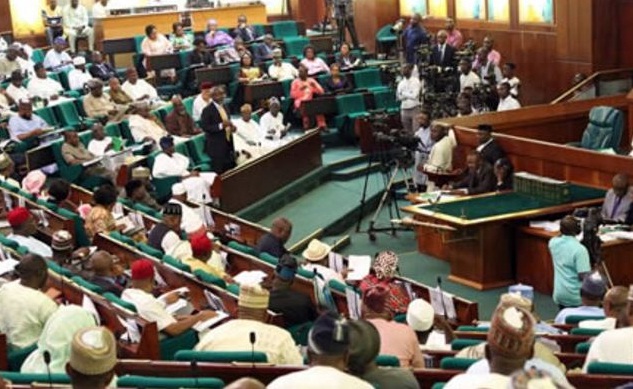
Some members of the House of Representatives have thrown their weight behind the nomination of Ndudi Elumelu as the new Minority Leader, saying the nomination was based on the House Standing Rules and the 1999 Constitution.
Reacting to the controversy that followed Elumelu’s nomination on Wednesday, Leke Joseph (ADC, Kogi) said the minority leadership in the House “is not just for PDP alone but for all minority parties.
”Similarly, Anthony Ibezim (APGA, Anambra) and Uju Kingsley (AA, Imo) said the choice of Elumelu as Minority Leader was in line with the position of the leadership of their various political parties.
“We decided to unanimously elect Elumelu and other minority officials to drive the business of the House in the next four years. That’s the decision of our parties and we have no regrets whatsoever.”
On the position of the 9th House of Representatives on the matter, Yusuf Gandi (APC, Plateau) and Bamidele Salam (PDP, who briefed journalists on behalf of the House ad hoc Committee on Media, said the lawmakers had adopted the names of the minority leadership as announced by the Speaker.
“On behalf of the ad hoc Committee on Media, we wish to issue statements over what happened at plenary today.
“Mr. Speaker received communication from members of the minority parties, which contained 99 signatures, and relied on Order 7 Rule 8 of the House Standing Rule, to announce the minority leadership thus: Ndudi Elumelu, Majority Leader; Toby Okechukwu, Deputy Majority Leader; Gideon Goni, Chief Whip; and Adesegun Adekola, Deputy Minority Whip,” the committee announced.
There was rowdy session on Wednesday in the House of Representatives as two groups of opposition lawmakers claimed minority leadership of the 9th House after the announcement of Ndudi Elumelu ( PDP, Delta); Toby Okechukwu (PDP, Enugu); Gideon Goni (PDP, Kaduna); and Adesegun Adekola (PDP, Ogun) as the House Minority Leader, Deputy Minority Leader; Minority Whip and Deputy Minority Whip respectively.







The Independent Corrupt Practices Commission (ICPC) and Nigerian Financial Intelligence Unit (NFIU) on Monday in Abuja commenced a three-day stocktake meeting focused on converting financial intelligence into prosecutions and asset recovery.
The ICPC Chairman, Dr Musa Aliyu, SAN, said this at the opening of the exercise, held in preparation for Nigeria’s Financial Action Task Force (FATF) 3rd Round Mutual Evaluation Exercise.
Represented by the Commission’s Secretary, Clifford Oparaodu, Aliyu said the exercise would test how effectively ICPC investigations were converting financial intelligence into prosecutions, asset recovery and stronger enforcement outcomes.
He said the stocktake provided an internal mirror to measure performance under the Money Laundering (Prevention and Prohibition) Act 2022, POCA 2022 and POCR 2024 regulations.
According to him, the Commission had in recent years made parallel financial investigations mandatory in every corruption case to strengthen the tracing of illicit funds and recovery efforts.
While stating that previous reviews focused largely on laws and policies, he said the stocktake would drill deeper into operational performance and assess Nigeria’s enforcement effectiveness.
He listed five Immediate Outcomes as benchmarks, emphasising that the exercise focused on FATF Immediate Outcomes 1, 2, 6, 7 and 8 for institutional assessment.
He said these included risk understanding, international cooperation, financial intelligence use, effectiveness of money laundering investigations and asset recovery, adding that participants would assess operational implementation.
On corruption risks, he said participants would assess whether the ICPC and sister agencies were aligning investigations with Nigeria’s national risk profile and identified priority threats.
“We must show that our operations reflect where the real threats are, including bribery and grand corruption,” he said.
For cross-border crime, he said the team would review formal Mutual Legal Assistance channels and informal intelligence networks to assess Nigeria’s capacity for international cooperation.
The goal, according to him, was to demonstrate that Nigeria could swiftly share information, support investigations and secure convictions through effective cooperation with international partners.
“A major focus will be on financial intelligence under Immediate Outcome 6. The question before the room: are agencies not just generating reports, but actually using them to trace illicit flows and freeze assets before they disappear?”
He said enforcement would receive significant scrutiny under Immediate Outcomes 7 and 8, with Nigeria expected to demonstrate results from relevant money laundering laws and regulations.
“That means convictions, confiscations, and proper management of recovered assets,” he said, urging institutions to provide verifiable evidence of operational effectiveness during the stocktake exercise.
He urged visiting Country Experts to be blunt in their assessment, saying their feedback would help Nigeria close gaps, clean up statistics and sharpen strategies before the main evaluation.
He said the commission had aligned with the NFIU’s strategy by making parallel financial investigations mandatory in every corruption case handled by its investigators.
He added that the ICPC now leveraged the Corporate Affairs Commission Beneficial Ownership Register to expose corporate shells and strengthened systems for managing recovered assets.
He, however, warned that laws alone would not secure a good rating, stressing that effective implementation and measurable enforcement outcomes remained critical to Nigeria’s assessment.
“Technical compliance is only half the battle. What ultimately safeguards our financial system is demonstrating high operational effectiveness across these Immediate Outcomes,” he said.
He charged ICPC investigators and prosecutors to be candid and data-driven, while welcoming country experts to provide objective feedback that would help close gaps before the evaluation.
Speaking, the Chief Executive Officer of NFIU, Hajia Hafsat Bakari, said the exercise was designed to measure how effectively anti-corruption agencies converted financial intelligence into concrete enforcement outcomes.
Represented by Dr Emmanuel Sotande, an NFIU official, Bakari said the exercise was not about fault-finding but about assessing institutional preparedness ahead of Nigeria’s next FATF assessment.
“We want to be able to see how well the information and investigation lead to prosecution, seizure of assets and whether there’s a deterrent mechanism in place,” she said.
According to her, the core objective was to track the full value chain of intelligence use, from information supplied by the NFIU to enforcement outcomes.
“That includes how data supplied by the NFIU is consumed by the ICPC and other agencies, and whether it translates into convictions, asset recovery, and stronger deterrence against illicit financial flows.”
The NFIU boss emphasised that the timing was critical, noting that Nigeria was preparing for its 3rd Round Mutual Evaluation 2027 and needed institutional readiness.
“This is not a witch-hunt exercise but to ensure that we prepare for the next evaluation, which is going to be taking place next year.
“We want all institutional agencies and systems in Nigeria to be ready for the FATF assessors that will be coming from all parts of the world,” she said.
She explained that the framework for the stocktake was developed by the NFIU specifically to enable agencies to evaluate their preparedness and identify areas requiring improvement before assessment.
She said that assessors would demand detailed data and evidence, much of which the ICPC already held, making inter-agency coordination essential to Nigeria’s preparedness.
“It is in that context that the CEO of NFIU deems it fit to put the framework of the stocktake exercise in place for us to evaluate ourselves before the assessors will come,” she added.
She called for stronger collaboration, warning that the goal was to ensure Nigeria did not slip back onto the FATF grey list when the evaluation was concluded in 2027.
“The assessors will be asking for a lot of information, which I am sure the ICPC already have and it is only pertinent for us to work together,” she said.(NAN)
By Tony Obiechina, Abuja
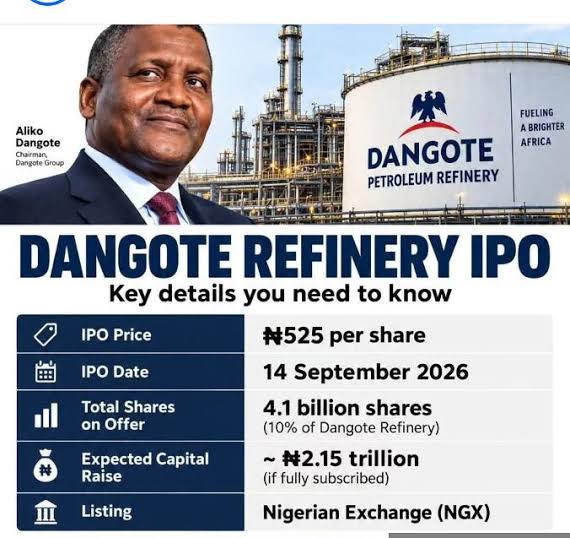
The much-anticipated public offering of Dangote Petroleum Refinery and Petrochemicals FZE sparked a rush among retail investors on Monday, sending traffic on two major Nigerian investment platforms, Bamboo and Cowrywise, soaring beyond expected levels.
The unprecedented demand temporarily disrupted access to both platforms, with some investors reporting difficulties logging into their accounts as they attempted to subscribe to the Dangote Refinery share offer.
Bamboo acknowledged the disruption in a post on X, explaining that the platform was experiencing unusually high traffic from investors seeking to participate in the initial public offering.
“Hey everyone, we’re getting much higher than expected traffic trying to get into the Dangote IPO and it’s making it difficult for some users to log into the Bamboo app. We’re working on a fix and it will be up and running shortly,” the company said.
Cowrywise similarly reported a spike in activity on its platform, assuring users that its technical team was working to restore normal service.
“We’re currently seeing more traffic than usual on the Cowrywise app. Our team is already on it and working to get things back to normal. Thanks for your patience, everyone,” the platform said on X.
Bamboo and Cowrywise are among the approved fintech channels through which investors can participate in the Dangote Refinery public offer.
The offer opened on Monday and seeks to raise approximately N2.15tn through the sale of 4.1 billion ordinary shares at N525 per share.
To encourage wider participation, investors can subscribe for as few as 10 shares, requiring a minimum investment of N5,250.
The Dangote Refinery IPO ranks among the largest public share offerings in Africa. Owned by the Dangote Group, the refinery plans to deploy proceeds from the offer towards expansion and increasing its refining capacity.
The offer has attracted considerable attention from retail investors, particularly amid efforts to position the share sale as an opportunity for Nigerians and other African investors to take ownership stakes in one of the continent’s largest industrial projects.
The technical difficulties experienced by Bamboo and Cowrywise underscore the intensity of investor interest while also highlighting the strain that major investment campaigns can place on digital financial platforms.
The Securities and Exchange Commission had previously warned investors about unauthorised promotions surrounding a purported Dangote Refinery IPO before the offer received regulatory approval.
In June, the commission said no application for the IPO had been submitted or approved at the time and instructed capital market operators to stop accepting deposits or expressions of interest related to the proposed offer.
Following the necessary regulatory approvals, the Dangote Refinery public offer was cleared to proceed. The company subsequently released a list of approved banks, fintech platforms, mobile operators and NGX Invest through which investors can subscribe to the offer.
By David Torough, Abuja
As preparations intensify for the 2027 general elections, political parties are stepping up demands for greater electoral credibility while strengthening their structures to protect votes and mandates.
The African Democratic Congress (ADC) has called on the Independent National Electoral Commission (INEC) to review its policy of appointing university lecturers and other academics as Returning and Collation Officers following reports that more than 600 senior lecturers from public universities in northern Nigeria endorsed President Bola Ahmed Tinubu for the 2027 presidential election.
In a statement signed by its National Publicity Secretary, Mallam Bolaji Abdullahi, the ADC said the reported endorsements raise questions about possible conflicts of interest, particularly because academics and vice chancellors have routinely been entrusted with the sensitive responsibility of collating and declaring election results.
While acknowledging the constitutional right of academics to support any candidate of their choice, the party argued that those who openly take partisan positions should not subsequently be assigned roles that could involve determining the outcome of the same election.
The ADC urged INEC to establish and publish clear criteria that would disqualify prospective election officials who have publicly endorsed candidates, participated in partisan political activities or demonstrated an obvious political affiliation.
It also asked the electoral commission to publish the names of proposed Returning and Collation Officers sufficiently ahead of the elections to enable political parties and members of the public to identify and raise legitimate conflict-of-interest concerns.
The party maintained that electoral integrity begins before voting, insisting that the neutrality of those responsible for administering, collating and declaring results is fundamental to public confidence in the process.
Meanwhile, the Allied Peoples Movement (APM) said it was strengthening its structures nationwide to ensure that its votes and mandate are protected during the 2027 elections.
The party’s National Publicity Secretary, Abubakar Yusuf, said in a statement issued in Abuja that the move was necessary amid what the party described as growing support for its presidential candidate, Governor Seyi Makinde, particularly among young Nigerians.
The APM cited Makinde’s reported involvement in the 2020 EndSARS protests and his opposition to the Federal Government’s 2021 suspension of X, formerly Twitter, as examples of his engagement with issues affecting young people.
The party said it was encouraged by what it described as growing public recognition of the difference between campaign promises and demonstrated commitment and capacity to serve.
The APM, while thanking Nigerians for their support, urged citizens not only to vote but also to remain vigilant and use lawful means to protect their electoral mandate.
The two parties’ positions underscore the growing focus on the credibility of the 2027 electoral process, with attention shifting beyond campaigns to the neutrality of election officials, protection of votes and acceptance of credible outcomes.



When Managers of Social Clubs Continue to Run Our Economy
ShareBy Uddin Ifeanyi The spectacle of a senior adviser on economics to the Tinubu government dissing the numbers on the...


LASCOPA Warns against Rusty Grinding Machines over Contamination Risks
ShareThe Lagos State Consumer Protection Agency (LASCOPA) has warned operators of pepper and grinding machines against using rusty or poorly...

ICPC, NFIU Open Stocktake on Financial Intelligence, Asset Recovery
ShareThe Independent Corrupt Practices Commission (ICPC) and Nigerian Financial Intelligence Unit (NFIU) on Monday in Abuja commenced a three-day stocktake...


Dangote Refinery IPO Frenzy Overloads Two Investment Sites
ShareBy Tony Obiechina, Abuja The much-anticipated public offering of Dangote Petroleum Refinery and Petrochemicals FZE sparked a rush among retail...


2027 Polls: Parties Demand Credible Vote, Vow to Protect Mandates
ShareBy David Torough, Abuja As preparations intensify for the 2027 general elections, political parties are stepping up demands for greater...


Tinubu Unveils 20-Year North Central Economic, Infrastructural Growth Plan
ShareBy David Torough, Abuja President Bola Tinubu has directed the timely release of funds due to Regional Development Commissions across...


Sasakawa Africa Establishes Agro-Enterprise Centre, Empowers Over 8900 Smallholder Farmers In Benue
ShareFrom Attah Ede Makurdi The Sasakawa Africa Association Nigeria (SAA Nigeria), with funding support from The Nippon Foundation (TNF), has...


Hope Rekindled as Ankwa Amo Inspects Modern Market, Promises Govt Attention
ShareBy Julius Tambaya, Abuja Hope of renewed government intervention has risen among traders at Modern Market, Makurdi, following an inspection...


North Central Devt Commission ‘ll Drive Regional Transformation, Restructuring – Golu
ShareBy David Torough, Abuja Former member of the House of Representatives from Plateau State, Hon. Timothy Golu, has described the...
Fire at Nursing Home in Chile Kills 16
ShareA fire at a nursing home in Chile has killed 16 people, authorities said Saturday. The blaze began on Friday...