
Foreign News
UK Slams Bribery Charges on Diezani Alison-Madueke

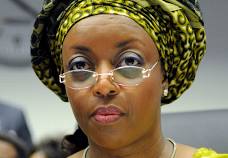
Nigeria’s former oil minister Diezani Alison-Madueke has been charged with bribery offences in the UK.
She is suspected of accepting financial rewards for awarding multi-million dollar oil and gas contracts.
A key figure in ex-President Goodluck Jonathan’s administration, she also served as the first female president of the oil exporters group Opec.
The 63-year-old, who has been on bail since her arrest in London in 2015, has denied corruption allegations.
Assets worth millions of pounds relating to the alleged offences have been frozen as part of an ongoing probe by the UK’s National Crime Agency (NCA).
“These charges are a milestone in what has been a thorough and complex international investigation,” Andy Kelly, from the NCA’s International Corruption Unit, said.
The NCA says Ms Alison-Madueke, who served as oil minister from 2010 until 2015, is alleged to have benefited from:
At least £100,000 ($127,000) in cash, Chauffeur-driven car, Flights on private jets
Luxury family holidays. Use of multiple London properties, Furniture, renovation work and staff for the properties, Payment of private school fees, Gifts from designer shops such as Cartier jewellery and Louis Vuitton goods.
The US Department of Justice has been able to recover assets totalling $53.1m linked to Ms Alison-Madueke’s alleged corruption thanks to evidence provided by the NCA in March, the agency says.
The NCA added that its agents had also worked closely with Nigeria’s anti-corruption agency, the Economic and Financial Crimes Commission (EFCC).
Last year, the EFCC said about $153m and more than 80 properties had been recovered from the politician, who was in the cabinet from 2007.
She first held the post of transport minister, then moved to the ministry of mines before taking over the oil portfolio.
Ms Alison-Madueke, who currently lives in London’s St John’s Wood suburb, will appear at Westminster Magistrates Court on 2 October, the NCA says.
Nigeria is one of the world’s largest oil producers, but few of its more than 225 million inhabitants have benefited from this wealth.
It is one of the 13 members of the Organisation of Petroleum Exporting Countries (Opec), set up to deal with the worldwide supply of oil and its price.
Health authorities in the Democratic Republic of Congo are celebrating after five patients, who had Ebola and now recovered, were allowed to leave the hospital.
The current outbreak is suspected to have killed almost 250 people.
But those infected can get better and officials stress that people should seek medical help if they believe they have contracted the virus.On Sunday, there was a ceremony for a group of four nurses who were discharged from a hospital in Bunia, the provincial capital of Ituri, the epicentre of the outbreak.
“We were really demoralised because we knew that at some point… we were going to die. That was it… I’m telling you, if you have never been isolated, you will not know that it’s not easy,” Nurse Etienne Ezo told the Reuters news agency as he reflected on his experience.
The first survivor, a laboratory worker, to have recovered left hospital last week.
Health workers are on the frontline in the battle against the spread of the virus and are often the most at risk.
“This encouraging milestone bears witness to the effectiveness of field interventions: early detection, medical care, contact tracing and community engagement,” DR Congo’s Institute of Public Health wrote on social media.
Its director, Dr. Mwamba Kazadi, described the recoveries as a victory worth celebrating, adding that early detection and strong care make a difference.
Tedros has called on communities to work with medical staff after some residents attacked health centres over strict burial rules. The bodies of those suspected of having died of Ebola are not allowed to be handled by grieving relatives, regulations which clash with local traditions.
In a joint statement with the Congolese government on Sunday, he said local communities are “at the heart of the solution” and that “success” in their response depends on their trust and engagement.
“Persistent challenges include early detection and isolation of cases, contact tracing, safe and dignified burials, robust infection prevention and control in health facilities, and strong community awareness.
“The Government and WHO call on all communities to continue adopting protective behaviours, including regular hand hygiene, early care seeking in health facilities, and sharing accurate information.”
There are now more than 1,000 suspected Ebola cases in the DR Congo, and at least 246 deaths. Neighbouring Uganda has reported nine confirmed cases and one death.
But in some affected areas, there is a sense of normality. In Bunia, schools and markets are open as people continue to go about their daily activities.
The current outbreak – the 17th in DR Cngo’s history – is caused by the Bundibugyo species of Ebola, which has no approved vaccines, though some are being worked on now.
While cases are concentrated in DR Congo’s Ituri, North and South Kivu provinces, and some in Uganda’s capital Kampala, people have also been tested outside of Africa.
Health officials in Brazil said on Saturday that they were investigating two suspected Ebola cases in São Paulo state.
Meanwhile, protests have erupted in the Kenyan town of Nanyuki over US plans to construct an Ebola quarantine facility for American citizens at an air base.
Residents marching through the streets say the facility may expose local people to infection and an outbreak of the virus. There have been no recorded cases of Ebola in the country.
The parliament in Ghana has approved a new bill criminalising homosexuality and the promotion of LGBTQ+ activities.
It proposes that identifying as lesbian, gay, bisexual, transgender or queer be punished by up to three years’ imprisonment.
The bill also introduces a “Duty to report” prohibited acts to police.Religious leaders have pressured President John Dramani Mahama, who still needs to ratify the legislation, to strengthen anti-gay laws since he came to power last year.
The ban has been sharply criticised by international organisations, including Human Rights Watch, which said it placed LGBTQ+ peoples’ lives at risk while also “encouraging citizens to surveil and denounce one another”.
Same-sex relationships have been banned in Ghana under laws dating from the British colonial era.
In an address to parliament, the bill’s sponsor Reverend John Ntim Fordjour said it would protect Ghanaian family and cultural values.
He said the new bans would make existing laws “more robust, more encompassing and more stringent in dealing with the practices of LGBTQI”.
Anyone who identifies as an “ally”, a general term for a supporter of LGBTQ+ people, could also face a prison sentence.
Exemptions were included for legal, media and healthcare professionals who report on LGBTQ+ issues or provide medical treatment or other services for gay people.
Human Rights Watch recommended the bill be abandoned in a formal submission to the constitutional and legal affairs committee scrutinising the legislation in the capital, Accra.
Ghana passed a similar bill in 2024 but it did not become law after former President Akufo-Addo failed to sign it amid legal challenges.
The current President Mahama has indicated he would support the bill’s passage, saying shortly after he took office that “I believe in the principles and values that only two genders exist – man and woman – and that marriage is between a man and a woman.”
Several African countries have cracked down on LGBTQ+ rights in recent years.
Senegal’s parliament approved similar legislation in March prescribing a maximum prison term of 10 years for sexual acts by same-sex couples and criminalising the ”promotion” of homosexuality.
Uganda introduced a death penalty for certain same-sex acts in 2023.
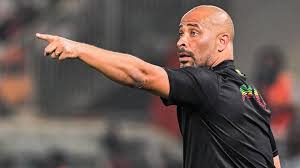
Super Eagles head coach Éric Chelle has demanded more work from his players despite the impressive victory over Zimbabwe.
Nigeria defeated the Warriors 2-0 in the semi-final of the Unity Cup at the Valley on Tuesday night.
Femi Azeez emerged the hero for the Super Eagles, scoring twice to guide the three-time African champions into the final, where they will face either Jamaica or Iran.
The 24-year-old who plays for Millwall FC in the English Championship, swiftly put the Super Eagles in the lead after only five minutes, when he finished off a great team move with a left-footed rocket that Zimbabwe goalkeeper Future Sibanda could not stop.
Alhassan Yusuf, Tochukwu Nnadi and Philip Otele all came close to increasing Nigeria’s lead afterwards.
Azeez netted his and Nigeria’s second of the night in the 62nd minute after beating Sibanda in the box following another swift team move, with Otele finding Terem Moffi who then located the Millwall man in the vital area.
Moffi also set up Azeez for the opening goal.
Chelle is expecting a better performance from his players in the final.
“This is only a friendly game. This is not the World Cup qualifier. They need to work hard,” Chelle said at his post-match interview after the game at The Valley in London.
“They need to try to understand what I want, what the technical staff want and the high level is difficult.
“So you see, we made some mistakes with the ball. For sure, you see tomorrow we will work out during training,” he said.
In Saturday’s final at the Valley, the Super Eagles will take on the winner of Wednesday’s second semi-final between last year’s runners-up Jamaica and India.


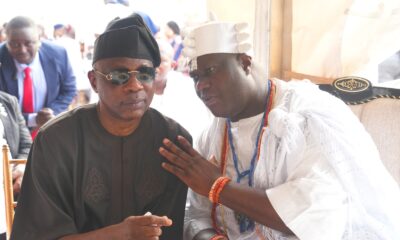

Ooni Hails Adeniyi’s Leadership, Says Tinubu’s Commendation Reflects Confidence in Customs Boss
ShareBy Tambaya Julius, Abuja The Ooni of Ife, Oba Adeyeye Ogunwusi II, has described President Bola Ahmed Tinubu’s public commendation...
Rainstorm Destroys Houses, Health Facilities, Others in Plateau
ShareMore than 100 houses were destroyed and scores of families displaced after a devastating rainstorm ravaged Tom Gangare community in Sopp Ward of Riyom...
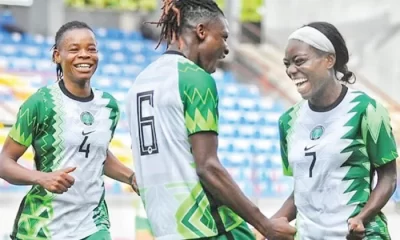

Falcons Open Camp for Senegal Double-header
ShareSuper Falcons players are expected to start arriving in camp in Ikenne, Ogun State, ahead of their upcoming pre-WAFCON double-header friendlies against Senegal. The Nigeria Football...

Five Patients Recover from Ebola in DR Congo
ShareHealth authorities in the Democratic Republic of Congo are celebrating after five patients, who had Ebola and now recovered, were allowed to leave the hospital. The...


Multichoice Announces Premiere Date for BBNaija Season 9 Reunion
ShareMultichoice Nigeria, organiser of Big Brother Naija reality TV show has officially announced June 23 for the premiere of its highly anticipated season 9 edition reunion show titled ‘No Loose Guard’...


Wike Begs Abuja Residents for Cattle Roaming FCT Major Roads
ShareBy Laide Akinboade Abuja Minister of the Federal Capital Territory (FCT), Nyesom Wike on Monday took responsibility for the continued presence of cattle on major roads and...


TAJBank Makes Nigeria’s Biggest Non-interest Bank by Assets, Profit
ShareBy Tony Obiechina, Abuja TAJBank Limited, Nigeria’s innovative-driven non-interest bank (NIB) has maintained its lead position as Nigeria’s biggest ethical...
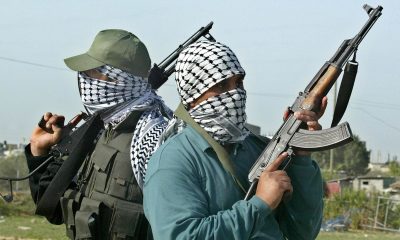

Gunmen Attack Kogi Community, Kill One, Kidnap Over 30 Travelers, Residents
ShareFrom Joseph Amedu, Lokoja Kogi State was on Monday placed on heightened security alert following a deadly bandit attack in...
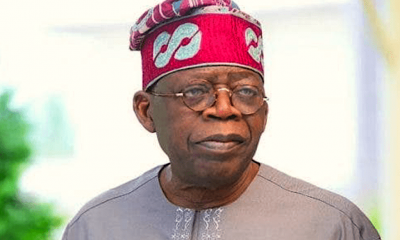

Navy Marks 70th Anniversary, Tinubu Extols Continental Leadership
ShareBy David Torough, Abuja President Bola Tinubu on Monday hailed the Nigerian Navy for attaining continental leadership as it marked...

2027 election: l Nwanyanwu emerges as ZLP Consensus Presidential Candidate
ShareBy Laide Akinboade, Abuja The Zenith Labour Party (ZLP) has endorsed its National Chairman, Chief Dan Nwanyanwu, as the party’s...