
OPINION
EFCC: Separating Facts from Fiction

By Williams Oseghale
There is no greater evidence of the monstrous and audacious activities of internet fraudsters, a.k.a yahoo boys, than a trending video where some of these fraudsters are seen, standing on the roof of exotic cars at a popular plaza in Benin City, Edo State and, throwing wads of naira notes into the air.
The online comments on this show of shame provide a window into the minds of some young Nigerians who see nothing wrong with such reckless display of wealth, though a few were equally aghast at the obscene spectacle.Indeed, activities of internet fraudsters have assumed a frightening dimension as they now more daring. Not too long ago, it was a shameful to be identified as a ‘yahoo boy’ and those involved carried out their nefarious activities surreptitiously.
But all that has changed as internet fraudsters now operate with impunity and flaunt their ill-gotten wealth and outlandish lifestyles.Even more worrisome is the support and collaboration some parents provide for their wards and children who are involved in this despicable trade by procuring for them instruments of fraud such as mobile phones, iPads, and laptops.
Some parents go as far as sending their teenage children for apprenticeship, to learn the art of trickery in cyberspace. Recently, a heartbreaking video of an association of yahoo boys’ mothers, wearing asoebi attending an event in a grandiose fashion emerged on the internet, an epitaph of how far we have sunk in values and morals.
The Economic and Financial Crimes Commission, as an agency of government, saddled with the responsibility of curbing economic and financial crimes has been relentless in its drive to stamp out cybercrimes from Nigeria. Under the leadership of Abdulrasheed Bawa, it has upped the ante. This year alone, the Commission has arrested over 1500 internet fraudsters and have so far secured over 900 convictions. Victims of internet fraud have also been restituted through the efforts of the Commission.
Ordinarily, such success should draw commendation and accolades. However, that is not the case as social media influencers and celebrities would rather condemn and castigate the EFCC. They condemn the Commission’s style which they tagged Gestapo-like.
Sadly, most of the accusations hurled at the Commission are grossly exaggerated and sometimes, outright lies contrived to impugn its reputation for reasons that are unclear. Except in the observation of the Covid-19 protocols, officers of the Commission do not mask themselves during operations neither are they hooded in black attires as alleged by one of its accusers. EFCC operatives are noted for their red jackets with EFCC NIGERIA boldly emblazoned at the back.
Even more shocking is the allegation that the Commission break into homes, shot sporadically and manhandles suspects during operations. Though operatives of the agency are often accompanied by armed mobile police officers during operations as security back-up, there has never been a single shooting incident involving the Commission’s operatives.
Significantly, critics of the EFCC may need to be a little circumspect about atrocities ascribed to so-call EFCC operatives. Sadly not all those who parade themselves as operatives of the Commission are truly bonafide detectives of the EFCC. The Commission has severally arrested fraudsters who impersonated its officials in their attempt to give legitimacy to their illicit activities.
A few months ago, some daring fraudsters parading themselves as EFCC operatives, went on a raid in Lagos, brandishing a fake Court Order to confiscate the property of an innocent Nigerian whom they claimed was involved in fraudulent activities. The ‘operatives’ came with a truck meant to convey the properties of the supposed fraudster to ‘EFCC office’. What saved the day, was that the Commission received credible intelligence and swung into action, arresting the fraudsters in the process. If this fraudsters had succeeded, the victim would have been on the social media, condemning the EFCC.
Accusation that the EFCC regularly manhandles suspects is not supported by facts as those who have been arrested by the Commission, whether politically exposed persons or internet fraudsters, can attest to EFCC’s civility. This explains why suspects/defendants and their lawyers often plead with judges to remand them in the Commission’s custody.
From the recent attack on EFCC, it is clear that critics would rather EFCC handle yahoo boys with kid-gloves. It is now common to hear some people calling on the Commission to desist from arresting yahoo boys, claiming that they are not the problem of Nigeria but young men struggling to make a living in a difficult economy. How absurd! Acts of criminality cannot be legitimate or justifiable by whatever reason.
Whichever prism we look at it, EFCC determination to rid the nation of economic and financial crimes is a patriotic duty. And all well-meaning Nigerians must collaborate with the Commission by raising their voices against this malaise. Celebrities and social media influencers should take up the gauntlet to salvage our country from economic and financial crimes rather than deploy their popularity to support the activities of fraudsters. Castigating the EFCC is an unnecessary distraction.
Williams Oseghale is Head, Public Affairs, Benin Zonal Command of the EFCC.








By Fortune Abang
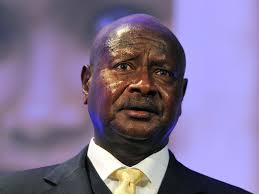
Uganda’s President Yoweri Museveni, 81, sworn in for a seventh term after nearly four decades in power, has once again intensified debate over gerontocracy and political succession in Africa.
Museveni, who first assumed office in 1986, has now extended his rule into a fifth decade, making him one of the world’s longest-serving heads of state.
His latest mandate, expected to run until 2031, follows the January 2026 election in which he secured about 71.
65 per cent of the vote, according to official results, defeating opposition leader Robert Kyagulanyi, popularly known as Bobi Wine.His continued stay in power has been enabled by key constitutional changes over time, including the removal of presidential term limits in 2005 and the abolition of the presidential age ceiling in 2017, reforms that effectively removed legal restrictions on tenure.
Across Africa, analysts say Uganda reflects a broader governance pattern in which long-serving leaders consolidate authority over extended periods.
Comparable examples often cited include Cameroon’s Paul Biya, in power since 1982, and Congo-Brazzaville’s Denis Sassou Nguesso, who first assumed office in 1979, both of whom have also presided over decades of uninterrupted or repeatedly renewed rule.
While Museveni’s supporters argue that his leadership has provided continuity and relative stability in a region frequently affected by conflict, critics say prolonged incumbency has gradually narrowed political competition and weakened institutional independence.
Uganda has maintained a degree of internal stability and played active roles in regional diplomacy and security operations in East and Central Africa.
Supporters point to these outcomes as evidence that long-term leadership can deliver policy continuity and state cohesion.
However, opposition voices and analysts argue that stability has come at a democratic cost, pointing to declining electoral competitiveness, constrained civic space and increasing centralisation of power around the executive.
The debate intensified after the removal of presidential term limits in 2005, followed by the scrapping of the age ceiling in 2017, which together removed two major constitutional barriers to leadership rotation.
These changes have been widely cited by governance analysts as pivotal in reshaping Uganda’s democratic structure.
In the January 2026 election, Museveni again defeated Bobi Wine, who garnered roughly 24.7 per cent of the vote, amid allegations from the opposition of irregularities and political repression during the electoral process.
Supporters of Museveni argue that his long rule has enabled economic transformation, infrastructure development and strengthened Uganda’s role in regional diplomacy.
Some regional leaders, including Burundi’s President Évariste Ndayishimiye, have previously described him as a stabilising figure in East Africa, crediting Uganda with supporting peace processes and regional cooperation.
Yet, critics argue that prolonged rule risks institutional stagnation, where governance structures become overly dependent on individual leadership rather than strong, independent institutions.
Analysts warn that this can weaken succession systems and limit democratic renewal.
A foreign policy analyst, speaking anonymously, said prolonged leadership can normalise “institutional dependence on individuals rather than systems,” arguing that such conditions undermine long-term democratic consolidation.
“No nation can sustainably develop when power remains concentrated in the same hands for decades while institutions fail to mature independently,” he said.
Beyond Uganda, Africa continues to record some of the world’s longest-serving leaders, reinforcing concerns about generational turnover in governance.
In several of these systems, electoral competition remains limited and constitutional reforms have often coincided with extended presidential tenure.
Foreign affairs commentator Collins Nweke argues that the central issue is not age itself, but accountability and leadership renewal, noting that political systems weaken when succession is delayed or constrained.
Other analysts emphasise the importance of civic awareness and institutional safeguards, particularly term limits, which they describe as critical tools for preventing excessive concentration of power.
A diplomat, also speaking on condition of anonymity, called for stronger electoral transparency mechanisms, including credible voter registration systems, independent election management bodies, and robust domestic and international observation frameworks.
An academic, who spoke on condition of anonymity, said stronger civic awareness could help societies resist unconstitutional tenure elongation.
“When citizens are politically informed and organised, sit-tight ambitions lose legitimacy and public support,” he said.
Museveni’s seventh term therefore reflects a wider continental tension between political continuity and democratic renewal, raising questions about whether African democracies are evolving toward stronger institutions or settling into prolonged cycles of personalised rule.
For supporters, his leadership represents stability in a volatile region.
For critics, it signals the entrenchment of gerontocracy and weakening democratic competition.
Between these positions lies a structural challenge that extends beyond Uganda; whether institutions in African states are strong enough to outlast individuals and guarantee orderly political succession. (NAN)
By Bart Nnaji
Africa’s energy journey is often portrayed as a stark choice between climate responsibility and development. In reality, the continent faces a more nuanced challenge: finding a fair, gradual energy transition that matches its unique needs and ambitions.
Technology and innovation can drive this change, helping secure affordable and sustainable energy for all.In the coming decades, Africa’s population is expected to soar to nearly 2.
5 billion. Cities will grow. Industries will expand. Digital connections will multiply. The demand for energy will increase significantly. Right now, expecting Africa to abandon fossil fuels overnight is neither realistic nor fair. In the near future, fossil fuels remain crucial for base power that is reliable, and affordable. In particular, natural gas is key transition fuel that will remain the base power solution for the next decade. Africa must not embrace renewable energy primarily when they have abundance of fossil fuel for their industrialization as other emerging and emerged nations have done. A just energy transition recognises these realities and seeks ways to build cleaner, more resilient systems over time.Technology as the Enabler of Africa’s Energy Future
Exciting new technologies are already reshaping Africa’s energy landscape:
Decentralised solutions, like mini-grids, off-grid solar, and batteries, bring electricity to places traditional grids can’t reach. By 2030, these distributed renewables could provide most new connections in underserved communities.
Smart grids and AI-driven management can reduce waste. They help utilities serve people better.
Modern batteries ensure that solar and wind energy can be delivered steadily, even when the sun isn’t shining or the wind isn’t blowing.
Decentralised approaches are essential to Africa’s path toward universal energy access. While technology is not a fix-all solution, it is a crucial enabler of efficiency, resilience, and affordability, shaping Africa’s energy future.
African entrepreneurs are leading much of this change. They’re developing solutions that meet local needs, such as pay-as-you-go solar, community-run mini-grids, and mobile payment platforms. These innovations don’t just bring power; they create jobs, build skills, and reap economic benefits for the continent.
But innovation alone isn’t enough. Investment is critical. According to the International Energy Agency, Africa needs about $90 billion annually to achieve a successful energy transition, but current funding falls short. Governments can help by setting clear, supportive policies that attract investment and make projects more affordable. Organisations like the African Development Bank say grid investment must rise dramatically, and clean energy spending should double by 2030 to keep up with growing demand.
From Energy Access to Economic and Human Impact
Reliable energy is more than just a technical necessity – it’s what fuels industrial growth. Picture the continent’s factories buzzing with activity, transport networks connecting people and goods, and data centres powering a vibrant digital economy.
Expanding decentralised solutions brings light to places that have been left in the dark for too long. It’s about giving children a place to study at night, helping clinics store vaccines safely, and empowering entrepreneurs to launch new businesses.
Of course, none of this works in isolation. Supportive policies, strong regulations, and partnerships between governments and private companies are essential. When African countries harmonise their rules and work together, they can create bigger markets. This draws even more investment and innovation.
Ultimately, Africa’s energy transition must be shaped by Africans themselves. The path forward is about collaboration, pragmatism, and investing in homegrown solutions. Africa’s mobile phone revolution showed the world how quickly the continent can leapfrog old systems. The same can happen with energy; by embracing flexible, tech-driven models that serve today’s and tomorrow’s needs.
Now is the time to come together to act boldly and invest in Africa’s energy future. By uniting efforts, we can turn potential into progress, ensuring resilient, inclusive, and sustainable energy for generations to come. Let’s power Africa’s future, together.
Prof. Bart O. Nnaji FAS, FA Eng. CON, NNOM – Founder/Chairman, Geometric Power Limited and former Nigerian Minister of Power
By Omagbitse Barrow
I met with a CEO and HR Manager of a leading company in Nigeria to discuss this subject. I defined A Players and asked both to independently rate their team on a scale of 1-10 in terms of “A” Player quality. The HR Manager said 8, and the CEO said 2.
The CEO laughed and responded, “If our people are 8/10 as you claim then we will be surpassing our targets and very few managers would require significant input from me to achieve results”. The bigger revelation was that performance appraisals consistently showed that most people were exceeding their KPIs (the HR manager used this to defend her number) – KPIs that she didn’t realize were defective because they were based on business-as-usual activities, rather than strategic priorities. The people were busy, but their “busyness” was not translating to results. I experience a similar disparity in many conversations with CEOs and HR Managers, and it tells us something about not only the talent gaps that exist, but the gulf between the lens through which CEOs and HR leaders see their organizations.Organizations were created to achieve goals that individuals cannot easily accomplish alone. However, the ability of an organization to achieve those goals depends largely on the capabilities, attitudes, discipline, and alignment of its workforce. This is why one of the most important responsibilities of leadership and
HR is ensuring that the organization attracts and retains what are commonly described as “A Players” – a concept made popular by Bradford Smart in his critically acclaimed book – TopGrading.
Players are high-performing individuals who consistently deliver strong results while aligning with the culture and expectations of the organization. They require minimal supervision, take ownership of their responsibilities, and contribute positively to the performance of others around them. Beyond competence, they often demonstrate discipline, initiative, adaptability, and strong personal standards. In many cases, they also become magnets that attract and retain other high-performing individuals.
One of the biggest mistakes organizations make is rushing recruitment. Vacancies create pressure, managers become desperate to fill roles quickly, and hiring decisions are made with limited rigor. Unfortunately, the cost of hiring the wrong person is often far greater than the temporary inconvenience of waiting longer to find the right one. Poor hiring decisions affect productivity, culture, customer experience, and team morale, and in many cases, organizations spend years managing the consequences of a single weak recruitment decision.
Competency-based interviews are important, but they are often insufficient on their own. Candidates must also be assessed through practical demonstrations or auditions that reveal how they think and perform. Organizations should pay close attention not only to what candidates say, but also to evidence of execution, consistency, and growth throughout their careers.
Equally important is cultural and behavioral alignment. Some organizations hire individuals primarily because of technical skill while ignoring attitude, discipline, or alignment with organizational values. Over time, this creates toxic environments where competence exists without collaboration, accountability, or shared purpose.
The best organizations therefore assess both competence and behavioral expectations during the selection process.
Another important but often neglected concept is the realistic job preview.
Organizations frequently oversell roles during recruitment, presenting idealized versions of the work environment while hiding operational realities or performance expectations. While this may help secure quick acceptances, it often leads to disappointment, disengagement, and early turnover. Candidates should instead receive a realistic understanding of the expectations, pressures, opportunities, and culture of the organization. This improves alignment and reduces costly mismatches.
Reference checks and background investigations also remain important. In many organizations, these activities are treated as routine formalities rather than serious due diligence processes. Yet, patterns of behavior often leave clues across previous roles, career progression and professional relationships. Organizations that take these processes seriously significantly reduce the risk of poor hiring decisions.
However, building an organization of A Players goes beyond recruitment and selection. Organizations must also create systems that sustain high performance after employees are hired. This includes strong onboarding, continuous learning and development, effective performance management, and reward systems that reinforce excellence. Without these supporting systems, even strong employees can become disengaged over time. Perhaps most importantly, organizations must recognize that A Players are influenced by the environments in which they work.
High performers are more likely to thrive in organizations that value accountability, merit, discipline, and continuous improvement. Conversely, when weak performance is tolerated and excellence is ignored, A Players often become demotivated, leave entirely, or start picking up some wayward habits.
If soccer teams that win world cups and European Champions Leagues can attract and retain only “A” Players, then we too can do so. The first step is being brutally honest about the quality of your current players, setting a clear and high standard for what you want, and being relentlessly focused on bridging the gap. Great organizations are not built merely through strategy, technology, or structures. They are built by consistently attracting, selecting, developing, and retaining the right people. In the end, the quality of the organization rarely rises above the quality of the people within it.
Omagbitse Barrow is the chief executive of Efiko Management Consulting, and his firm supports organizations and leaders to translate their strategy to results.




Top-Ranked Ireland Universities For Nigerian Students | September and January Intake Opportunities
ShareIreland has quietly become one of the most attractive study destinations for Nigerian students, and the numbers back it up....


Centenary City Revives Abuja’s Ambitious Smart City Vision
ShareBy David Torough, Abuja Centenary City has renewed its drive to position Abuja as one of Africa’s leading smart urban...


Buruku Residents Commend Alia Over Township Roads Project
ShareFrom Atta Edeh, Makurdi Residents of Buruku Local Government Area of Benue State have expressed deep appreciation to the Governor of...


Kenya Suspends Strike after Transport Paralysis over High Fuel Prices
ShareTransport operators in Kenya have suspended their nationwide strike following talks with the government over rising fuel prices. The operators said the suspension will remain in place...


Centenary City: Nigeria’s Bold Leap into a Smarter Future
ShareBy David Torough, Abuja Across history, there are projects that transcend skylines to redefine national destiny. Nigeria’s Centenary City is one of them...

Arsenal Champions as Man City Draw at Bournemouth
ShareArsenal’s 22-year wait for the Premier League title is over after rivals Manchester City drew at Bournemouth, in what is expected to be...

Dangote Refinery Reduces Jet Fuel Price to N1,650 Per Litre
ShareDangote Petroleum Refinery has reduced the price of aviation fuel, also known as Jet A1, from N1,750 to N1,650 per litre. The company said the move is aimed at reducing the...


NRS Targets N40trn Revenue in 2026
ShareBy Tony Obiechina, Abuja The Nigeria Revenue Service (NRS) said it is targeting N40 trillion in tax revenue for the country in 2026. The Executive...


Nigerian Troops-US Joint Offensive Decimate ISIS Strongholds, Says DHQ
ShareBy David Torough, Abuja The Defence Headquarters (DHQ) yesterday announced major gains in ongoing counter-terrorism operations, revealing that a joint...
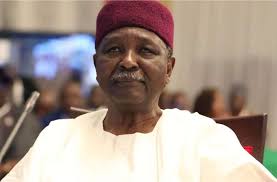

2027: Gowon, Jonathan at Book Launch, Renew Plea for National Unity
ShareBy David Torough, Abuja Former Head of State, General Yakubu Gowon, yesterday declared that Nigeria would survive its present political,...